
Run Tag Logic at the Read Point, on 4 or 8 Channels
A 2.0GHz quad-core host, 4 or 8 antenna ports, and a 1300+ tags/sec read rate.
The U300 is a fixed UHF RFID reader for read points that stay in one place: a doorway, a lane, a shelf, a line station. Receive sensitivity is listed at < -84dBm and output power at 1W (30dBm), adjustable across +5~+30dBm. Two configurations share the same 247 x 151 x 35mm aluminum alloy body, one with four antenna ports and one with eight. The engine is based on Impinj E Series chips and supports Impinj Gen2X, while Android 11 runs on a Quad-Core 2.0GHz CPU with 2GB + 32GB memory, so filtering and business rules run on the reader itself.

- Impinj E SeriesRFID engine chip family
- Impinj Gen2XSupported by the engine
- EPC Class 1 Gen 2UHF air interface
- ISO 18000-6CUHF air interface
- Android 11Operating system
- IEEE802.11 b/g/n2.4G WLAN
- Bluetooth 4.0Short-range radio link
- 10/100 Base-TRJ45 Ethernet port
- POE and POE+802.3af 13W, 802.3at 25.5W
- HDMI Type A720p HD video output
- RP-TNC Female50Ω RF connector
- JavaSDK development language
Overview
A fixed reader earns its place by never moving: it is bolted above a door, beside a conveyor, or under a shelf, and it has to keep counting for years without anyone touching it. The U300 is built for that job. One aluminum alloy host, 247 x 151 x 35mm, carries a Quad-Core 2.0GHz CPU, 2GB + 32GB of memory and either four or eight 50Ω antenna ports.
What sets this host apart is how much of the work stays on it. The read rate reaches 1300+ tags/sec, receive sensitivity is listed at < -84dBm, and output power runs 1W (30dBm) with +5~+30dBm adjustment, or 2W (33dBm) as an option. Because Android 11 runs on the host, tag filtering and port switching can execute at the read point, and the network sees results instead of raw reads.
The RFID engine is based on Impinj E Series chips and supports Impinj Gen2X. Integration uses the CedaGlo Software Development Kit in Java, built with Eclipse or Android Studio, and the host exposes 1 x RS-232, 1 x RJ45, 1 x USB Host, 1 x USB Device, HDMI Type A and four isolated input plus four isolated output optocouplers. Power arrives as DC (24V), POE (802.3af 13W) or POE+ (802.3at 25.5W). Explore the full range of fixed RFID readers.
Key Features
Platform and Connectivity
- Android 11, Java SDK support
- Quad-Core 2.0GHz CPU
- 2GB RAM + 32GB ROM
- IEEE802.11 b/g/n, Bluetooth 4.0
- 10/100 Base-T Ethernet (RJ45)
UHF RFID Performance
- 1300+ tags/sec fastest read rate
- Receive sensitivity < -84dBm
- 1W (30dBm), +5~+30dBm adjustable
- Optional 2W (33dBm) output power
- EPC Class 1 Gen 2 / ISO 18000-6C
Body, Ports and Power
- Aluminum alloy body, 35mm deep
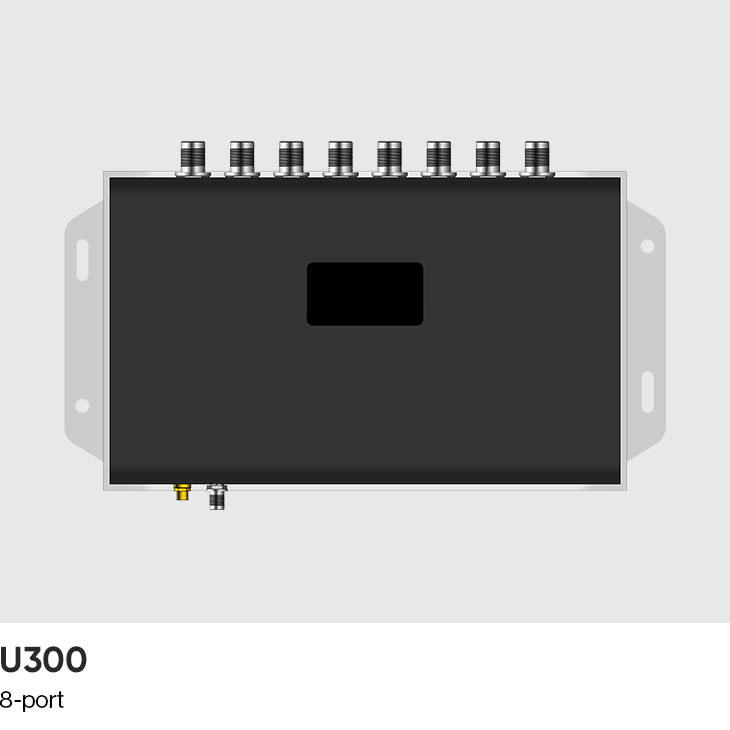
- 4 or 8 RP-TNC Female ports
- DC 10V – 24V, POE and POE+
- 4 in / 4 out isolated optocouplers
- Operating temp -25°C to 65°C
Features & Functions at a Glance
Choose Your Configuration
| Feature | U300 4 Channel | U300 8 Channel |
|---|---|---|
| Best for | One read point at a time: a single doorway, a production line station, a library shelf run, a medical device cabinet | Wide read zones that need several antennas aimed at once: dock doors, vehicle lanes, retail portals, large asset rooms |
| Form factor | Aluminum Alloy host, 247 x 151 x 35mm / 9.72 x 5.94 x 1.38in | |
| Shared RFID performance | Identical in both configurations | |
| Engine | Based on Impinj E Series chips | |
| Protocol | EPC global UHF Class 1 Gen 2 / ISO 18000-6C, Supports Impinj Gen2X | |
| Output Power | 1W (30dBm, support +5~+30dBm adjustable, POE / DC power supply). Optional 2W (33dBm, support +10~+33dBm adjustable, POE+ / DC power supply) | |
| Receive Sensitivity | < -84dBm | |
| Fastest Read Rate | 1300+ tags/sec | |
| Where they differ | The two rows below are the only differences | |
| Antenna Port | 4 Channel 50Ω RF Connector RP-TNC Female | 8 Channel 50Ω RF Connector RP-TNC Female |
| Weight | 1366g / 48.22oz (Host Only) | 1528g / 53.90oz (Host Only) |
| Platform | Common to both configurations | |
| Operating System | Android 11 | |
| CPU | Quad-Core 2.0GHz | |
| RAM+ROM | 2GB + 32GB | |
| Comm Interface | 1 x RS-232, 1 x RJ45, 1 x USB Host, 1 x USB Device | |
| Power | DC (24V), POE (802.3af 13W), POE+ (802.3at 25.5W) | |
Antenna compatibility – both configurations use the same 50Ω RP-TNC Female connector and support multiple antennas, such as 6dBic, 9dBic, etc. Antenna models, cable lengths and the 2W output option are confirmed in writing with the order.
Every value in this table matches the full Specifications section below.
A Closer Look at the Hardware
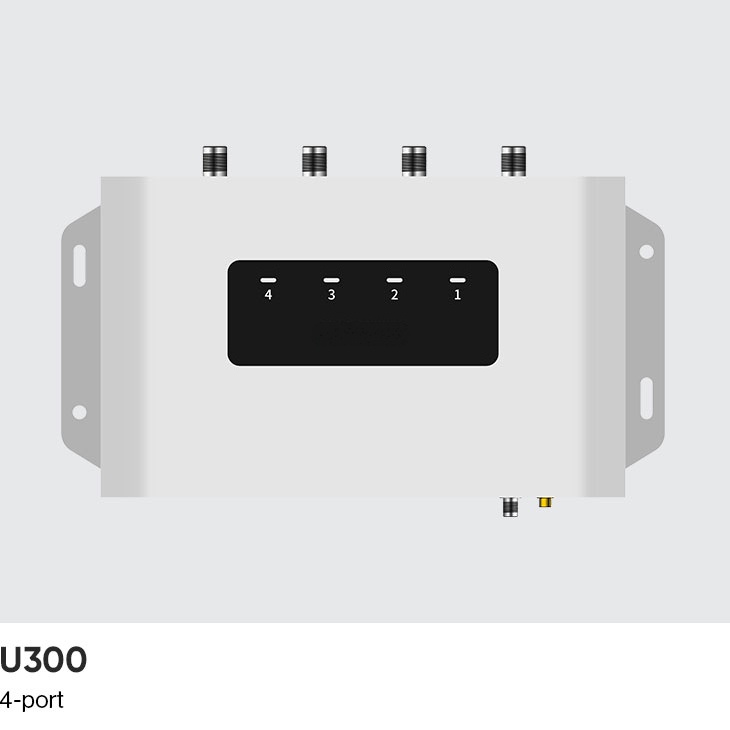
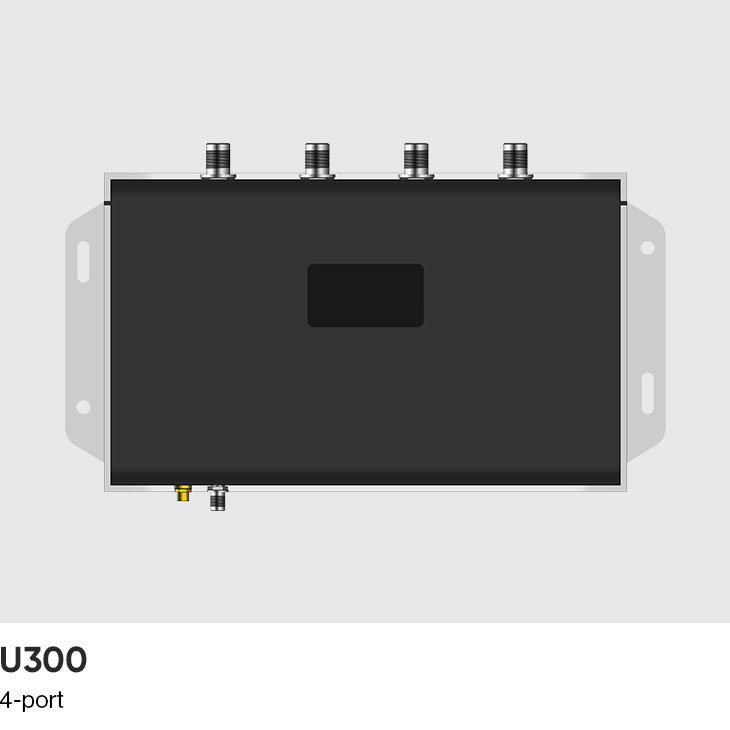
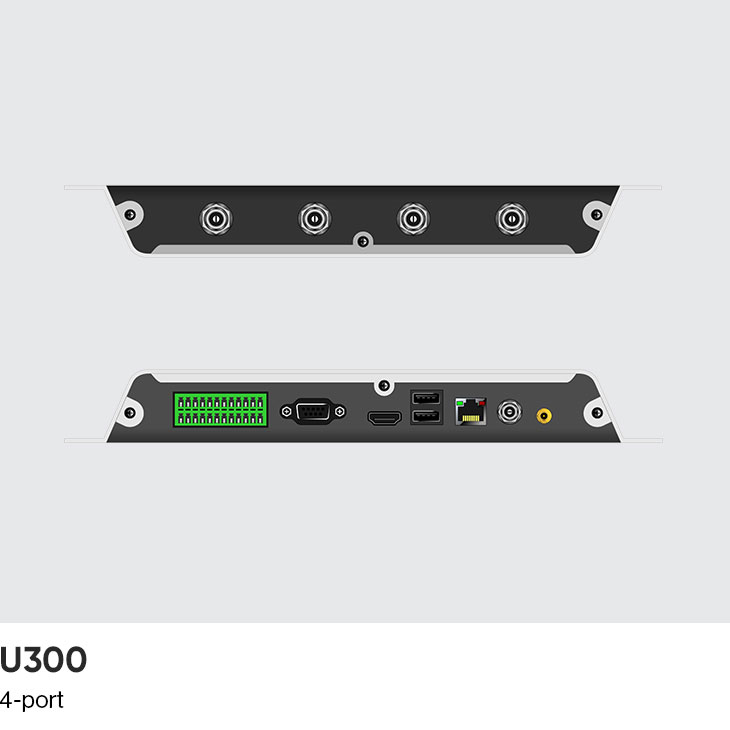
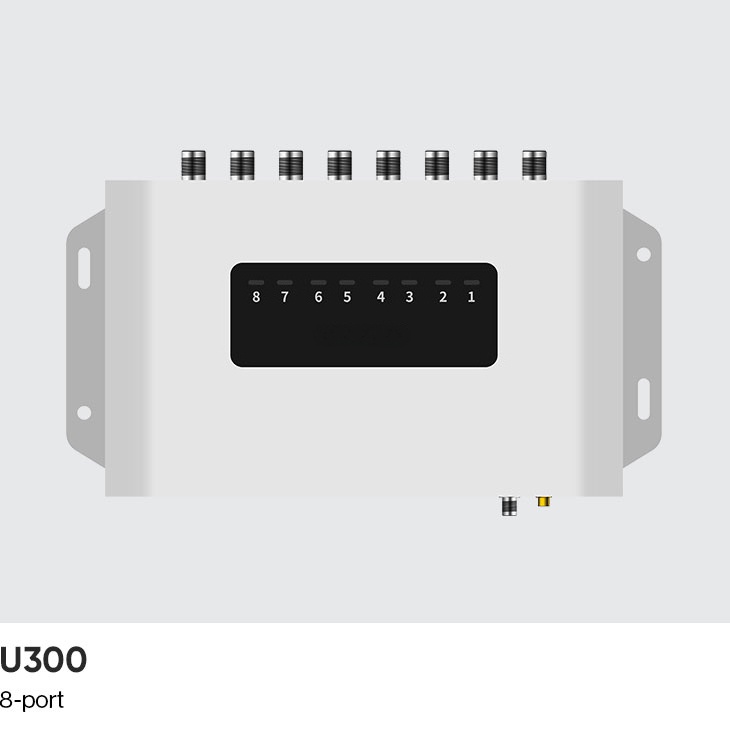
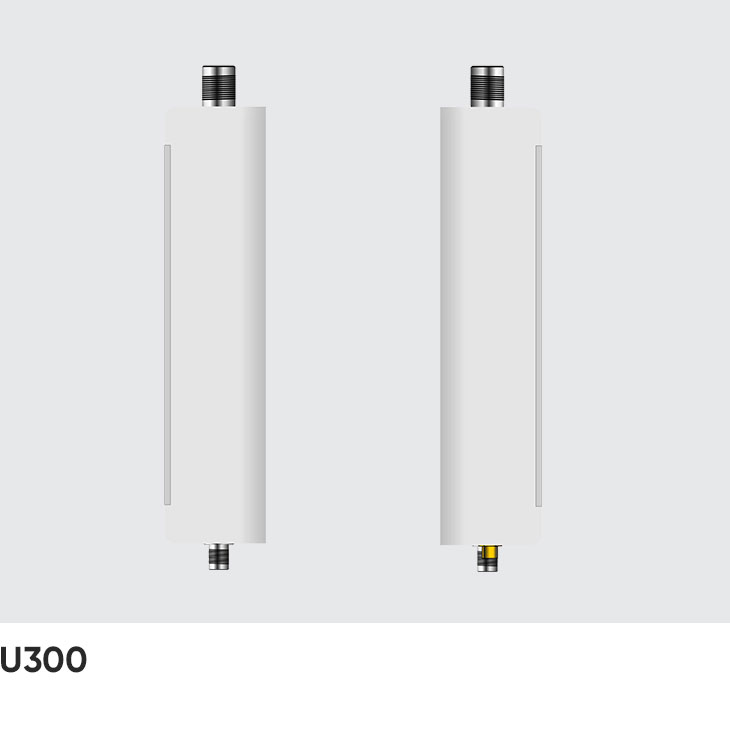
Two edges, two jobsThe antenna ports occupy the top edge on their own. Everything else lines up on the bottom edge: the GPIO terminal block, 1 x RS-232, HDMI Type A, 1 x USB Host, 1 x USB Device, 1 x RJ45 and the DC input. RF cable and data cable leave the host in opposite directions, so a cable tray runs along one side only.
One indicator per channelThe front panel carries a numbered indicator for every antenna port, 1 through 8 on this configuration and 1 through 4 on the other. A technician standing under the portal can see which port is active without opening a laptop or reading a log.
Flat back, slotted flangesThe back of the Aluminum Alloy host is flat, and a slotted flange sits on each side. The slots take the bolts, so the reader sits against a wall, a column or a gantry plate with nothing protruding behind it. Air Cooling means no vent stack to keep clear.
Specifications
Physical Characteristics
- Dimensions
- 247 x 151 x 35mm / 9.72 x 5.94 x 1.38in
- Weight
- 4 Channel: 1366g / 48.22oz (Host Only)
8 Channel: 1528g / 53.90oz (Host Only) - Material
- Aluminum Alloy
- Input Voltage
- DC 10V – 24V
- Standby Current
- < 140mA
- Comm Interface
- 1 x RS-232, 1 x RJ45, 1 x USB Host, 1 x USB Device
- GPIO
- 4 x input optocouplers, 4 x output optocouplers, with isolation
- Baud Rate
- 115200bps
- Cooling Mode
- Air Cooling
- Work Current
- 600mA +/-5% @ DC 24 V Input
- Display Interface
- HDMI Type A, supports 720p HD video output
Communication
- Ethernet interface
- 10/100 Base-T Ethernet (RJ45)
- WLAN
- IEEE802.11 b/g/n, 2.4G
- Bluetooth
- Bluetooth 4.0
Developing Environment
- Operating System
- Android 11
- SDK
- Support Software Development Kit
- Language
- Java
- Tool
- Eclipse / Android Studio
Performance
- CPU
- Quad-Core 2.0GHz
- RAM+ROM
- 2GB + 32GB
User Environment
- Operating Temp.
- -25°C to 65°C / -13°F to 149°F
- Storage Temp.
- -40°C to 85°C / -40°F to 185°F
- Humidity
- 10% - 95%
UHF RFID
- Engine
- Based on Impinj E Series chips
- Frequency
- 865-868MHz / 920-925MHz / 902-928MHz
- Protocol
- EPC global UHF Class 1 Gen 2 / ISO 18000-6C
Supports Impinj Gen2X - Antenna
- Support multiple antennas, such as 6dBic, 9dBic, etc.
- Power
- DC (24V), POE (802.3af 13W), POE+ (802.3at 25.5W)
- Output Power
- 1W (30dBm, support +5~+30dBm adjustable, POE / DC power supply)
Optional 2W (33dBm, support +10~+33dBm adjustable, for Latin America, etc., POE+ / DC power supply) - Output Power Precision
- +/- 1dB
- Output Power Flatness
- +/- 0.2dB
- Receive Sensitivity
- < -84dBm
- RSSI
- Support
- Ambient Temp Monitor
- Support
- Fastest Read Rate
- 1300+ tags/sec
- Antenna Detector
- Support
- Antenna Port
- 4 / 8 Channel 50Ω RF Connector RP-TNC Female
Every row above is transcribed from the U300 configuration sheet. Items not listed there are not offered on this page.
Why Buy the U300 From CedaGlo
Components You Can Verify
The engine is based on Impinj E Series chips and supports Impinj Gen2X. Both facts sit in the specifications above, in the same words the component vendor uses, so your engineers can check them before a purchase order exists.
Configured Before It Ships
Channel count, the optional 2W output and the antenna choice are decided at order time, not on your dock. We build and label each host to that order, so the box arriving at the site matches the read point it was bought for.
Trial Units Before Volume
Install a single host on the doors that actually matter, with your own tags and your own middleware. If the counts do not hold up under real traffic, the pilot stops there and nothing further is committed on either side.
Serviceable for the Long Run
Spare hosts, antennas and cables come from the same supply that shipped the first unit. Warranty length, spare part years and the return process are confirmed in writing with each order, rather than promised on a web page.
Frequently Asked Questions
How fast can the U300 read tags?
The configuration sheet lists a fastest read rate of 1300+ tags/sec and a receive sensitivity of less than -84dBm. Those figures describe the RFID engine, which is based on Impinj E Series chips and supports Impinj Gen2X. What a given site counts also depends on tag model, antenna gain, cable loss and how the tags move through the field, so run a trial at the read point before sizing the installation.
Should I order the 4 Channel or the 8 Channel host?
Count the antennas the read point needs. The 4 Channel host drives four 50 ohm RP-TNC Female ports and weighs 1366g / 48.22oz for the host only, and the 8 Channel host drives eight and weighs 1528g / 53.90oz. Nothing else changes between them: the same Android 11 platform, the same engine, the same interfaces and the same output power range, so one software image covers both.
What is inside the reader?
The RFID engine is based on Impinj E Series chips and supports Impinj Gen2X. The host runs Android 11 on a Quad-Core 2.0GHz CPU with 2GB + 32GB of memory. Integration uses the CedaGlo Software Development Kit in Java, built with Eclipse or Android Studio, and the host exposes 1 x RS-232, 1 x RJ45, 1 x USB Host, 1 x USB Device and HDMI Type A with 720p HD video output.
How long can I keep buying and servicing this model?
Production life, spare part supply and the return process are confirmed in writing with your order. What this page can state is technical: the U300 runs on standard interfaces, 10/100 Base-T Ethernet on RJ45, RS-232 at 115200bps, USB Host and USB Device, so an integration written against it does not depend on a proprietary link that only one supplier can service.
How much environment can it take?
The configuration sheet lists an operating temperature of -25 degrees Celsius to 65 degrees Celsius, a storage temperature of -40 degrees Celsius to 85 degrees Celsius, and humidity of 10% to 95%. The body is Aluminum Alloy and the cooling mode is air cooling. No ingress protection rating is listed on the sheet, so for washdown areas or outdoor mounting, plan an enclosure.
How is the reader maintained after installation?
Each antenna port has a numbered indicator on the front panel, and the reader reports RSSI, an antenna detector result and an ambient temperature reading, so a loose connector or a failing cable shows up as data instead of as a missing count. Application and firmware updates reach the host over the RJ45 port or over IEEE802.11 b/g/n.
Related Products
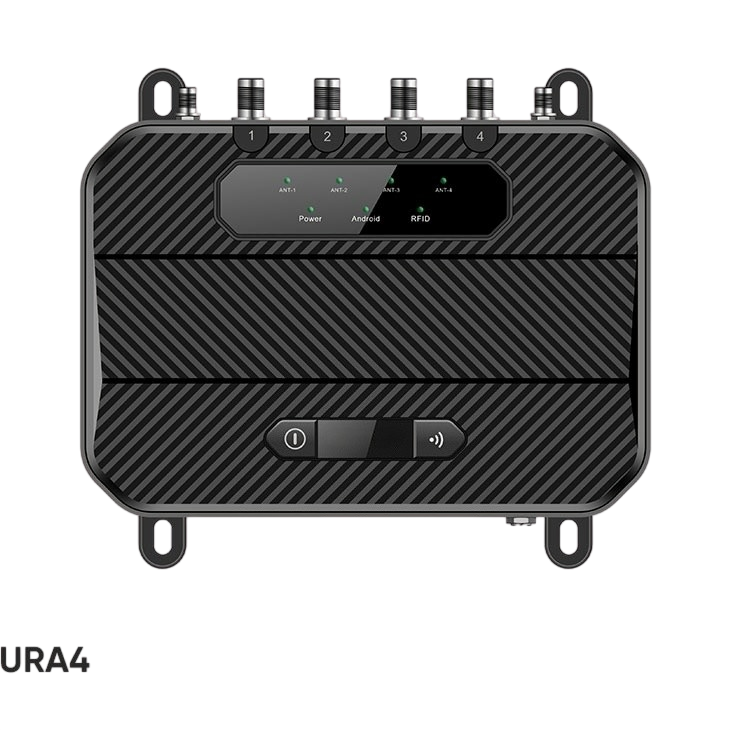
URA4 Fixed RFID Readers | Android 13
Four-channel fixed UHF reader on Impinj E Series chips. Reads 1300+ tags/sec, 4 channel 50Ω TNC ports, Android 13 on an 2.0 GHz processor.
View Details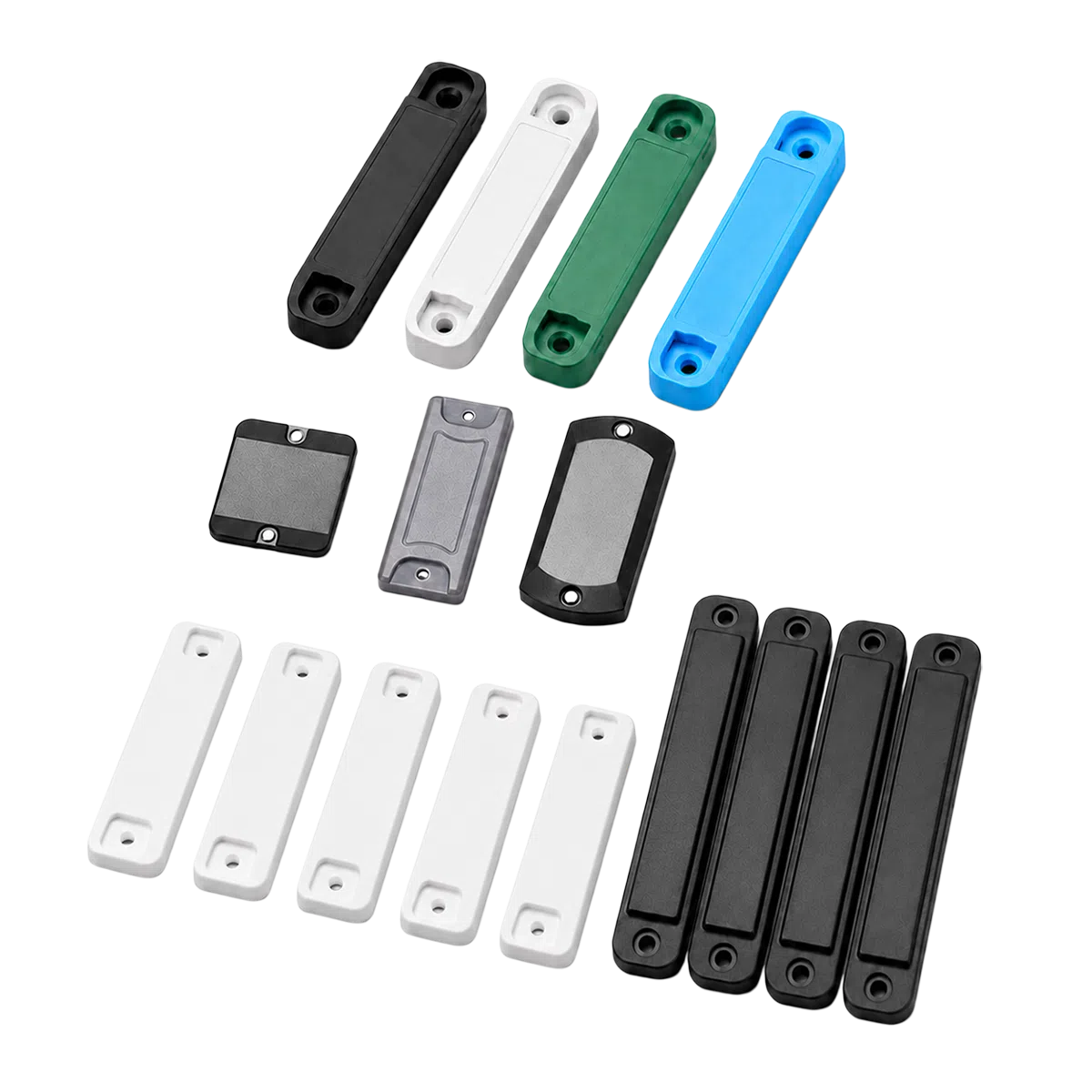
ABS UHF Anti-Metal RFID Tags for Industrial Asset Tracking
Durable on-metal RFID tags from CedaGlo for asset management, warehouse racks, tools, data centers, utilities and equipment tracking.
View Details
Printed RFID Labels | Custom Finished RFID
Custom finished RFID labels from CedaGlo with printable face stock, adhesive backing, barcode, QR code, serial number and UHF/NFC chip.
View Details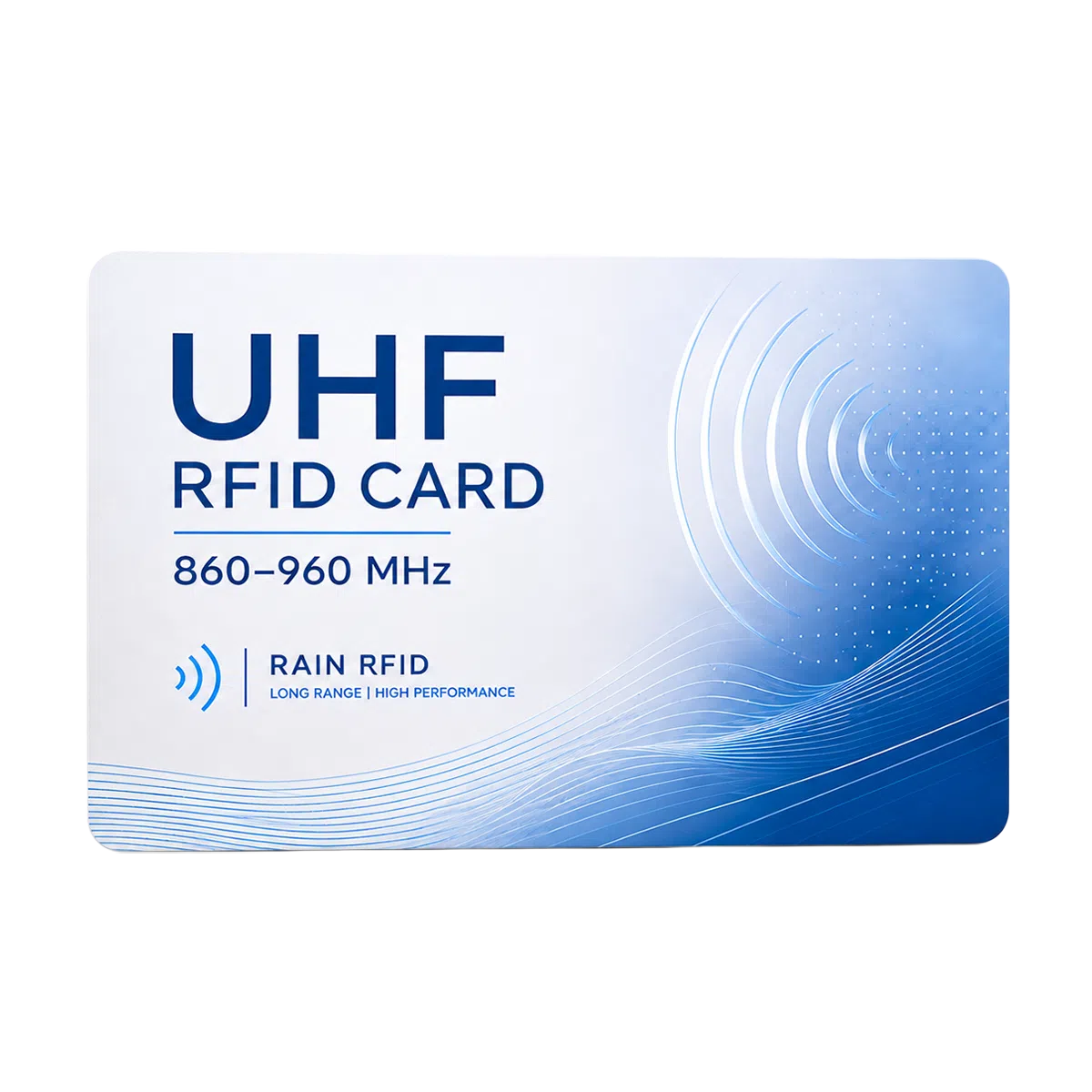
UHF Card | 860–960 MHz RAIN RFID Card
Standard CR80 UHF RFID cards with Impinj, NXP UCODE, Alien Higgs chip options. Ideal for parking, asset tracking & warehouse inventory. OEM/ODM available.
View DetailsSame Host, Four Ports or Eight
Both versions run one Impinj E Series engine and one Android 11 build on a Quad-Core 2.0GHz CPU; only the channel count and the weight change. Your application, your spare units and your install procedure carry across both. Send us the tag model, how many antennas each read point needs, and whether power arrives as DC, POE or POE+.