
CedaGlo RFID Waste Bin Tag | LF HF RAIN UHF Screw-Mount
Multi-Frequency Screw-Mount Transponder for Smart Waste Management Integration
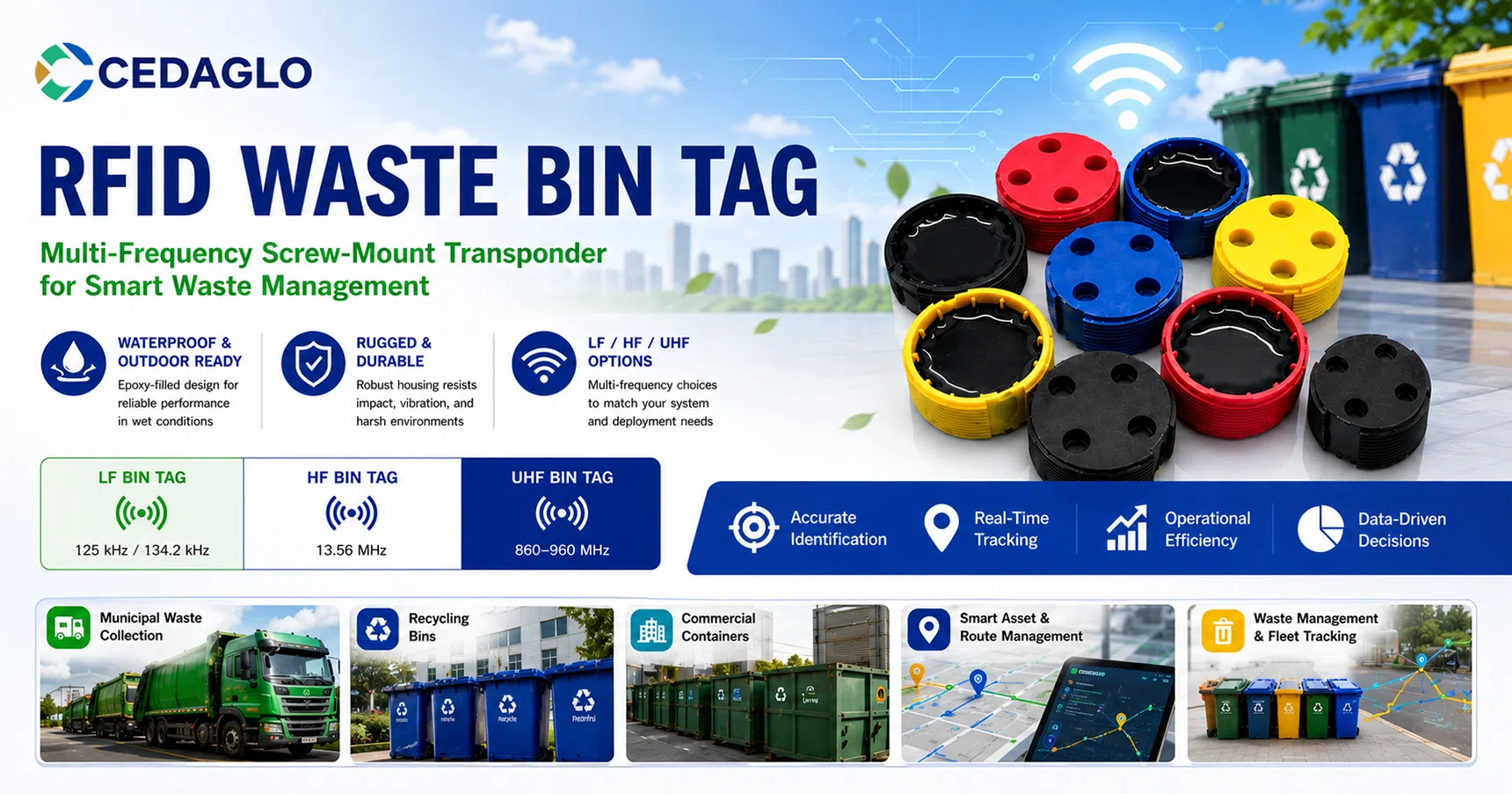
CedaGlo RFID Waste Bin Tags are passive, ruggedized transponders developed for RFID system integrators, waste-container manufacturers and smart sanitation projects. Available in LF, HF and RAIN UHF configurations, they provide a unique digital identity for municipal bins, recycling containers and commercial waste assets. The threaded screw-mount housing, epoxy-encapsulated electronics and project-level encoding services support integration with handheld, fixed and vehicle-mounted RFID systems.
-
📡
LF / HF /
RAIN UHF Options -
🔩
Threaded
Screw-Mount Housing -
⚙️
Factory UID / EPC
Encoding -
🛡️
Outdoor Epoxy-
Encapsulated Build
What the RFID Waste Bin Tag Does
The CedaGlo RFID Waste Bin Tag is a passive RFID transponder designed for automated identification of waste bins, recycling containers and reusable collection assets. Each tag carries a unique electronic identity that can be linked to a container, customer, address, route, service contract, waste stream or maintenance record in the integrator's software platform.
CedaGlo supplies model-specific LF, HF or RAIN UHF configurations rather than one tag operating on all three bands at the same time. This allows the chip, protocol, memory, antenna and regional frequency plan to be matched to the installed reader infrastructure. The tag identifies the container; fill level, weight, GPS position and lifting-event data come from separate sensors, weighing systems or vehicle electronics and are associated with the tag ID in the collection platform.
Built for Modern Waste Management Systems
- Automated Container Identification Give every bin a stable electronic identity that can be captured without line-of-sight, enabling accurate tracking and reporting across the entire fleet.
- Collection & Service Verification Record which container was lifted, when it was serviced and which vehicle performed the collection — supporting audit trails and SLA compliance.
- Weight-Linked Billing & PAYT Associate the container ID with weighing data for transparent charge calculation and pay-as-you-throw service reporting by address or account.
- Recycling & Sorting Compliance Track container type, waste stream, collection frequency and exception events to support sorting compliance and contamination control programs.
- Container Ownership & Lifecycle Control Link bins to customers, addresses, depots, maintenance history and replacement records for full asset lifecycle visibility.
- Reader & Platform Integration Match tag protocol, memory and encoding to truck-mounted readers, middleware and municipal systems for seamless backend data flow.
Key Technical Highlights
- Engineering-plastic housing with epoxy encapsulation
- Threaded screw-mount body with spanner-drive face
- Designed for vibration, lifting, tipping and collection cycles
- Custom housing colors available by project (MOQ applies)
- LF 125 / 134.2 kHz — Unique-compatible, FDX-B or HDX; EN 14803 where applicable
- HF 13.56 MHz — ISO/IEC 15693 preferred; ISO/IEC 14443A by project
- RAIN UHF 860–960 MHz — EPC Gen2 / ISO/IEC 18000-63; regional tuning required
- Model-specific configuration matched to installed reader infrastructure
- Pre-encode UID, EPC or user memory before shipment
- Matching CSV / Excel data files for system import
- Custom serial-number structures and visible asset codes
- Sample testing and pilot validation before volume production
Choose Your Frequency Configuration
Configuration note: final frequency, IC, protocol and regional RAIN UHF band must be matched to the customer's reader specification before production.
Product Overview & Dimensions
Multiple Color Variants
Black Tags — Standard
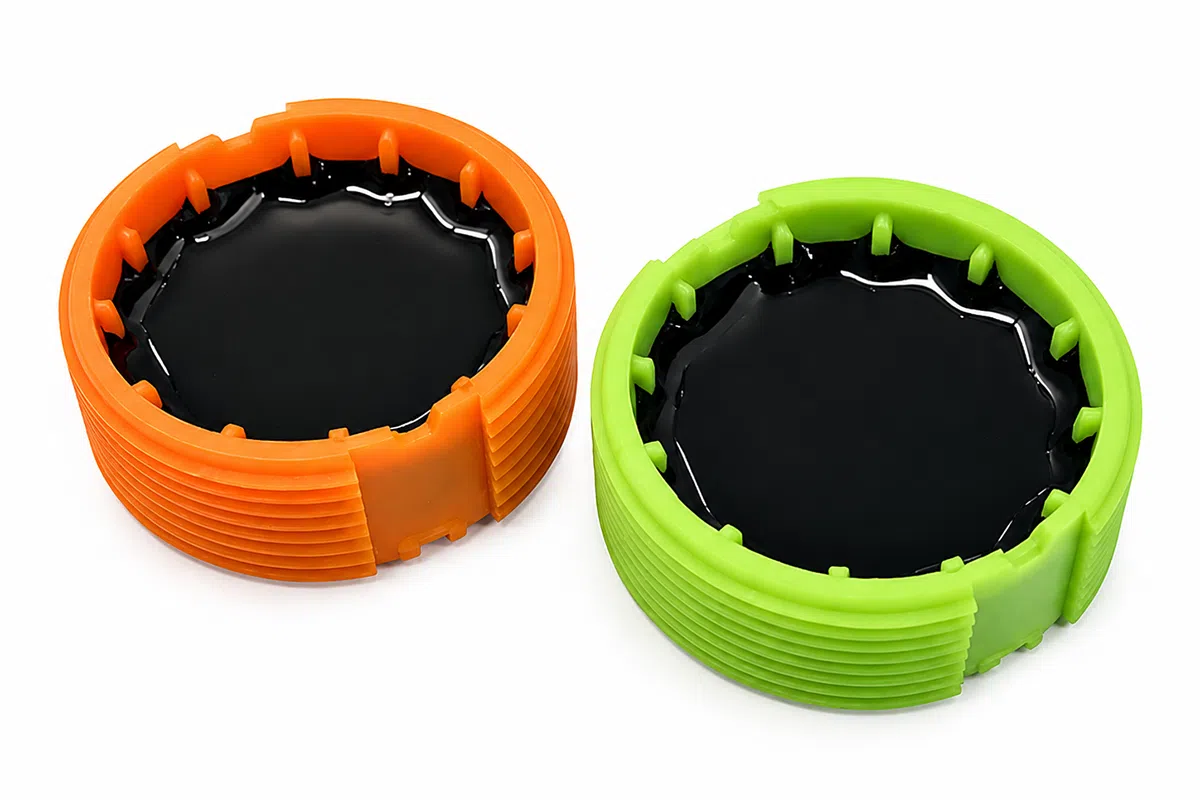
Close-Up Details
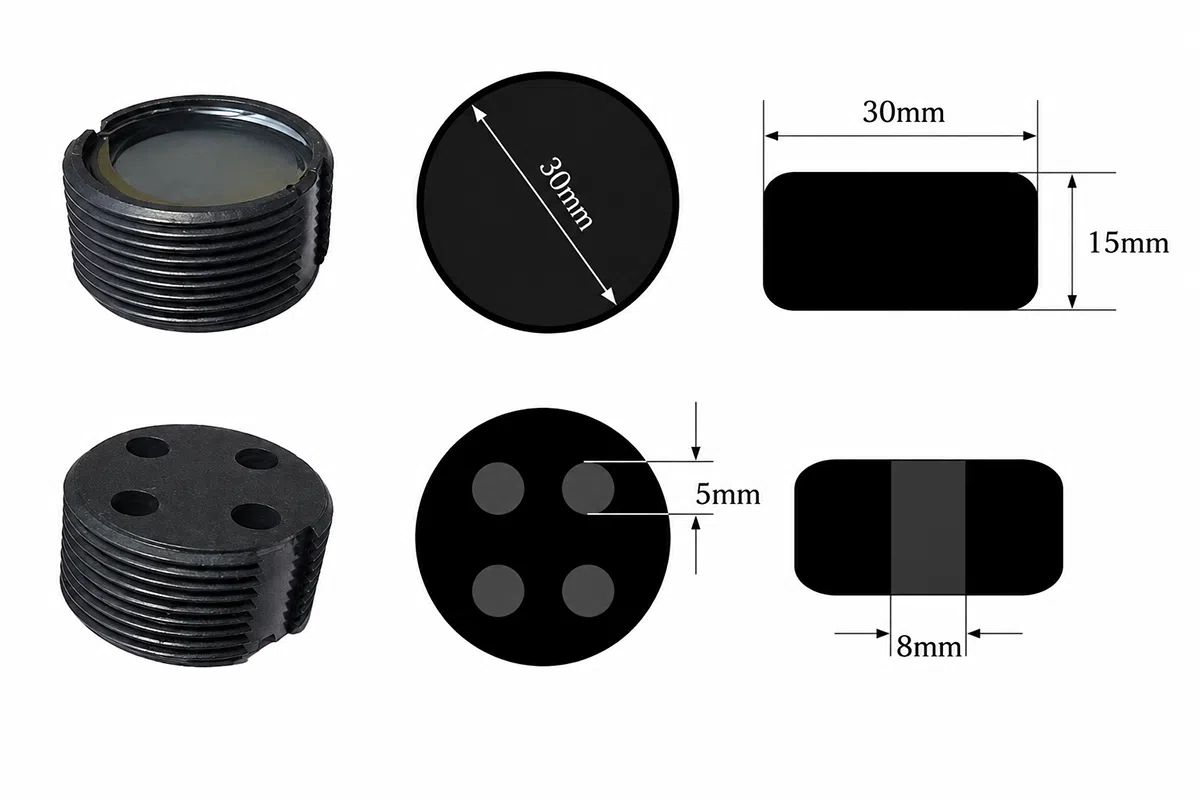
Dimensions & Mounting
Technical Specifications
| Specification | Value |
|---|---|
| Product Type | Passive RFID waste bin tag / screw-mount bin transponder |
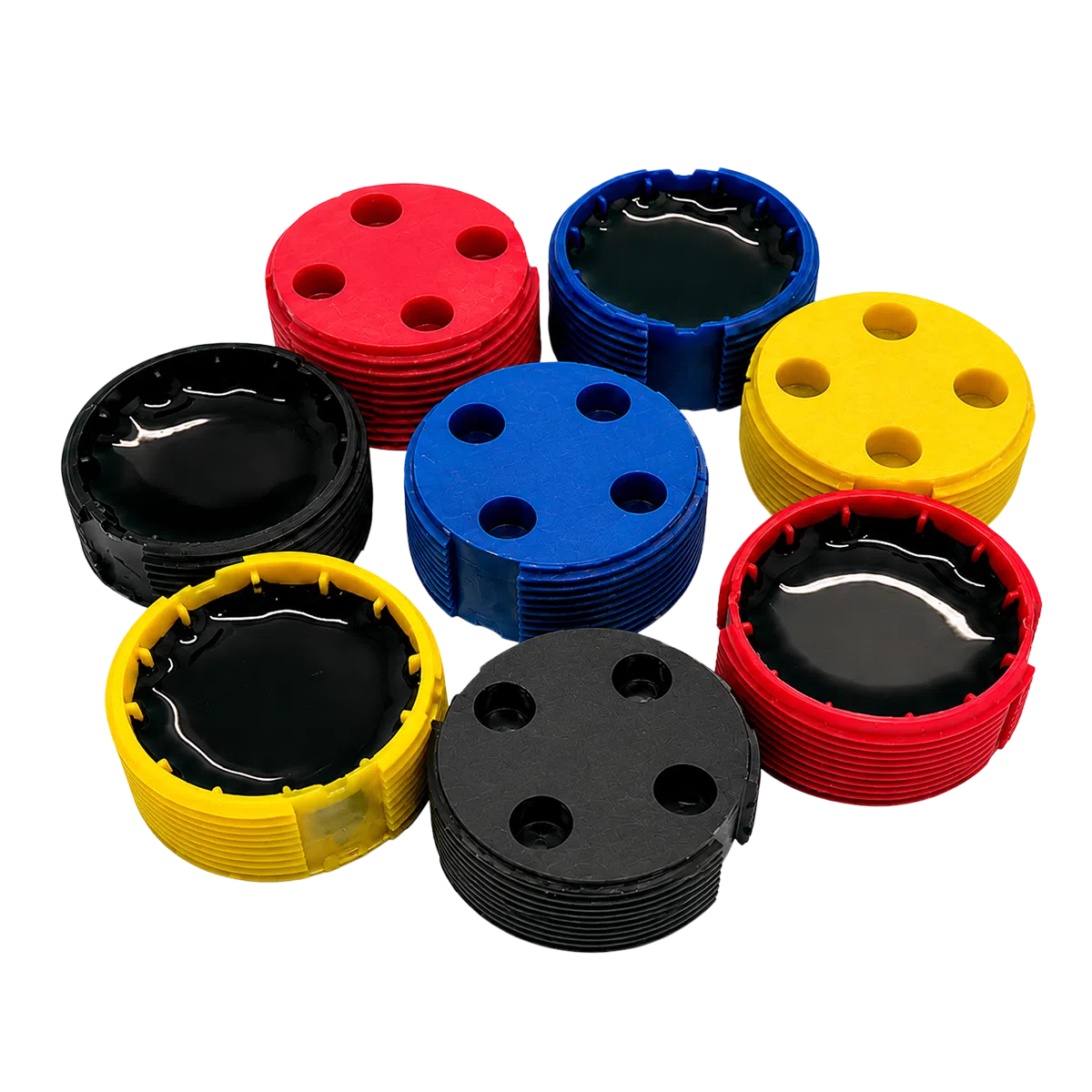
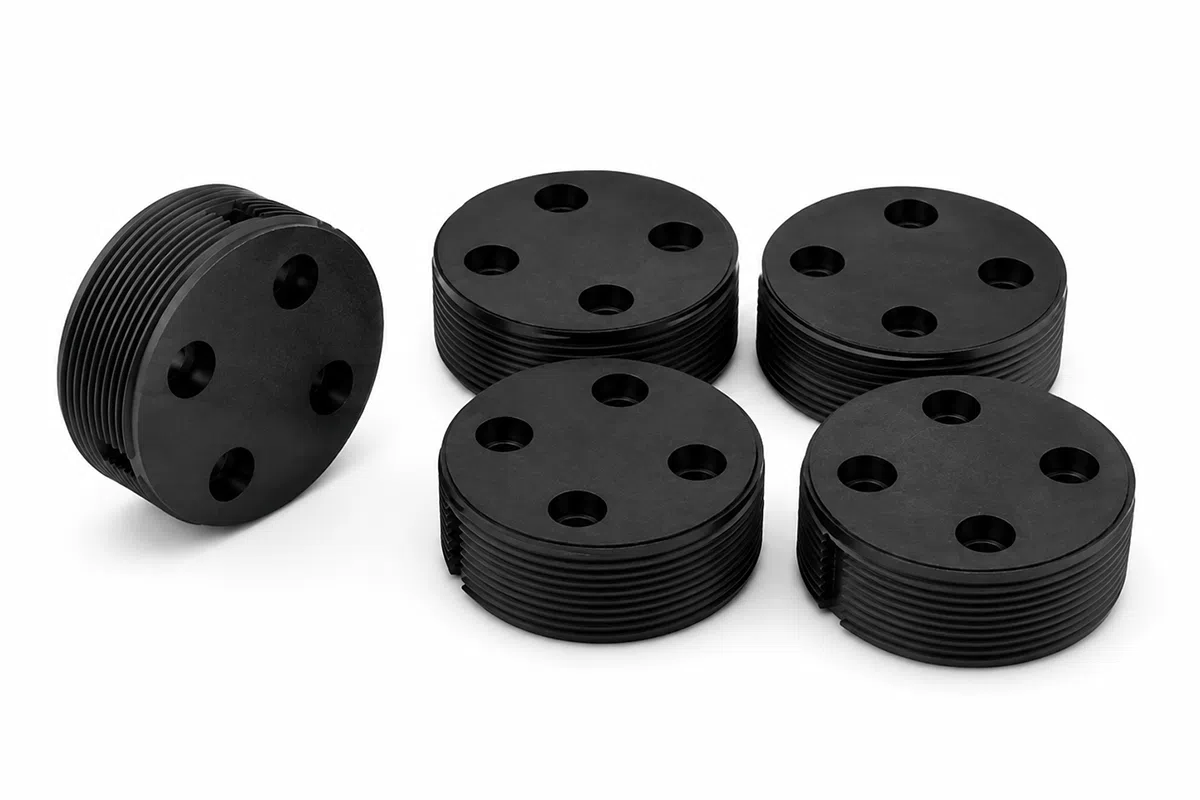
| Standard Housing | Round threaded housing with four-hole spanner-drive face |
| Typical Dimensions | Ø30 mm (diameter) × 15 mm (height); mounting hole Ø5.5 mm; confirm final engineering drawing before deployment |
| Housing Material | PPS / ABS with epoxy encapsulation; exact resin grade confirmed by model |
| Mounting | Threaded screw-mount installation; four face holes are spanner-drive pattern |
| Frequency Options | LF 125 kHz / 134.2 kHz | HF 13.56 MHz | RAIN UHF 860–960 MHz |
| LF Protocol Options | Unique-compatible, FDX-B or HDX configurations; EN 14803 where applicable |
| HF Protocol Options | ISO/IEC 15693 recommended; ISO/IEC 14443A available by project |
| RAIN UHF Protocol | EPC Class 1 Gen2 / ISO/IEC 18000-63; regional tuning required |
| Memory / Encoding | UID, EPC and user memory depend on chip; factory encoding and matched data-file delivery available |
| Typical Read Range | LF / HF: up to approx. 10 cm | RAIN UHF: project-dependent; validate on actual reader, antenna and bin |
| Ingress Protection | IP68 (confirm by selected housing configuration and test evidence) |
| Operating Temperature | −40°C to +85°C (verify against selected chip and housing datasheet) |
| Bin Surface | Standard configuration for plastic bins; metal containers require on-metal design or validated mounting |
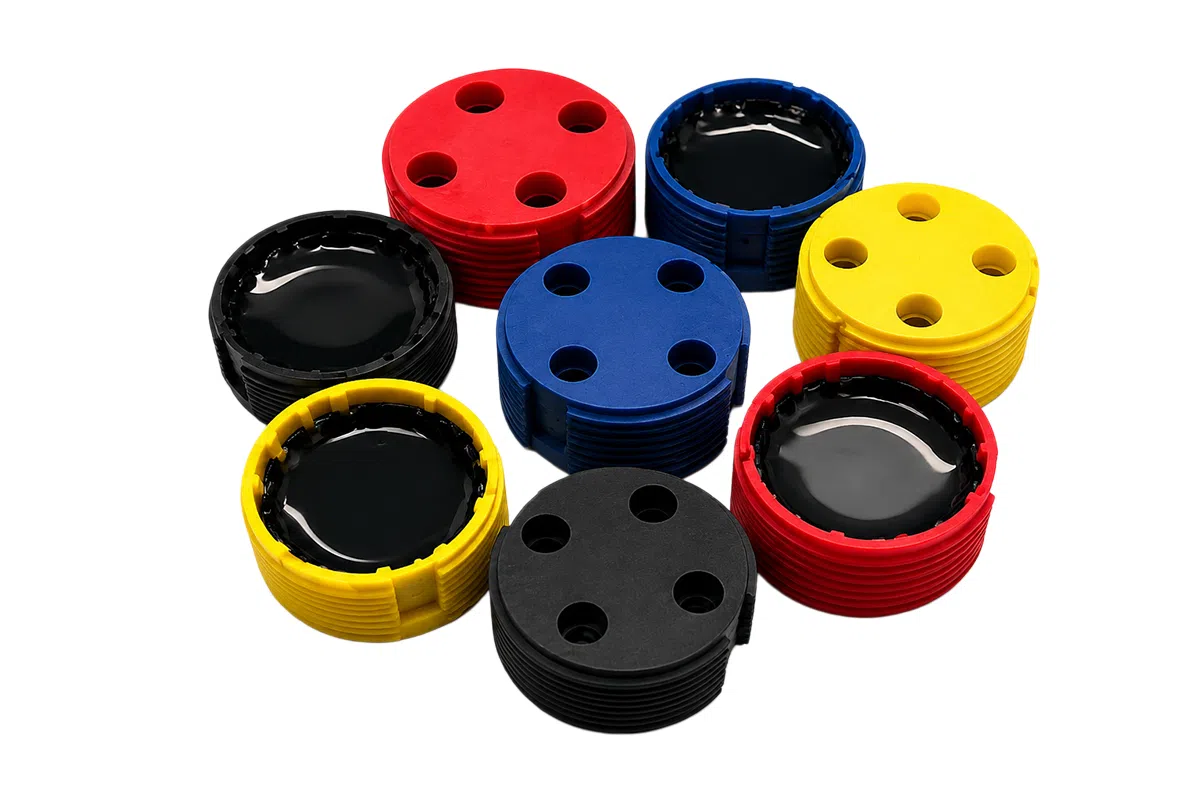
| Color | Black (standard); red, blue, yellow, green, orange or custom colors subject to MOQ |
| Marking | Laser logo, serial number or visible asset code where housing surface permits |
| Applications | Municipal waste bins, recycling bins, commercial containers, returnable waste assets and PAYT systems |
Volume Pricing
| Quantity | Unit Price (USD / pc) |
|---|---|
| 100 – 499 pcs | From US$0.60 |
| 500 – 999 pcs | From US$0.55 |
| 1,000+ pcs | Contact us for project pricing |
Final pricing depends on selected frequency, chip, memory, housing material, color, encoding, marking, packaging and order quantity. Contact CedaGlo for an exact project quotation.
Application Scenarios
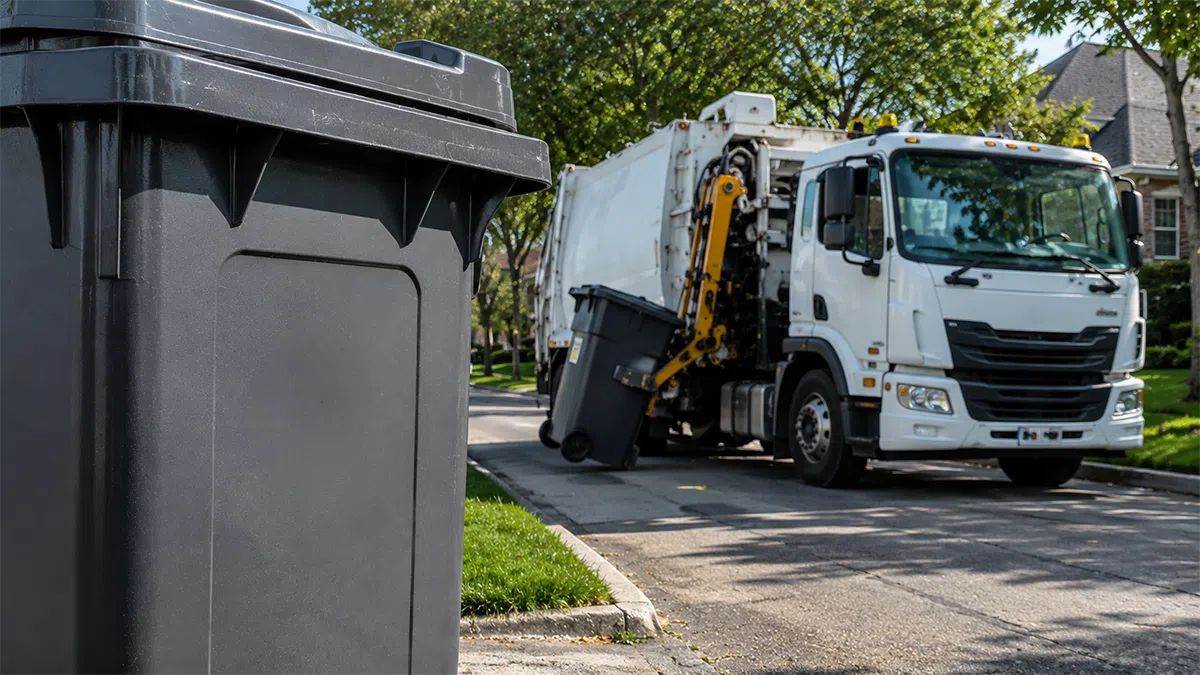
Municipal Waste Collection
Supports unique bin identification and collection-event verification by address, route or service account.
- Captures container ID at each service event
- Links bin to address and collection route
- Supports service audit and compliance reporting
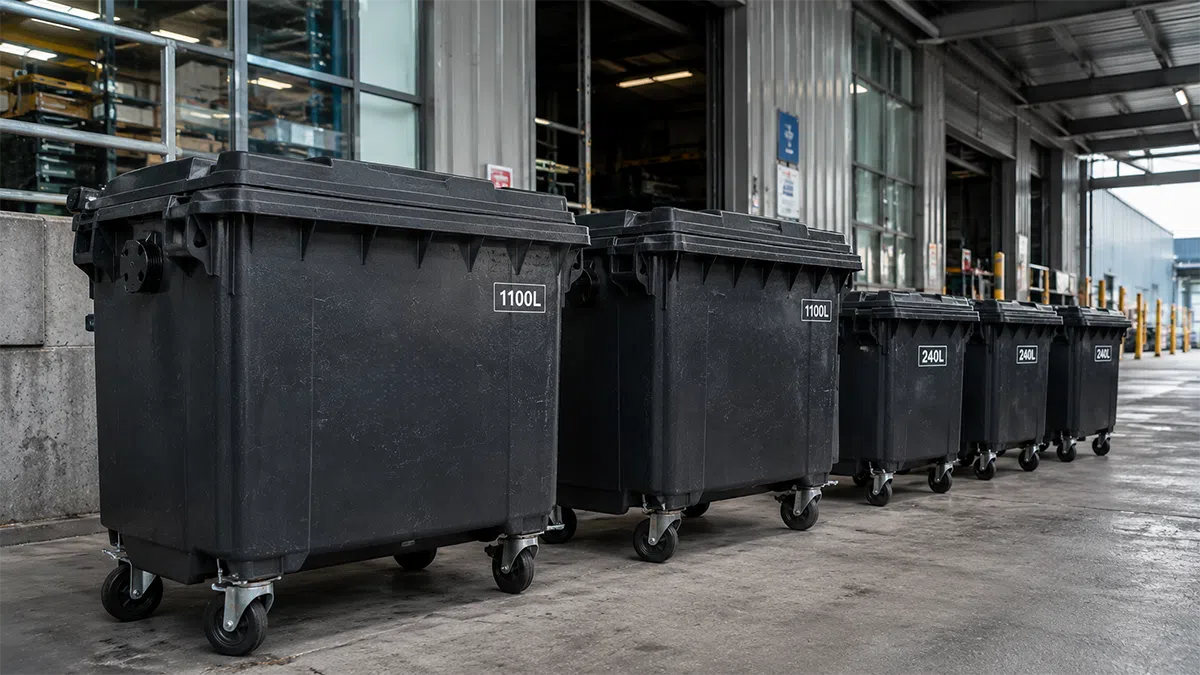
Commercial & Industrial Waste
Links each container to a customer account, site, service contract and collection history for asset ownership control.
- Ties bin to customer and service contract
- Records site-level collection history
- Supports billing and exception management
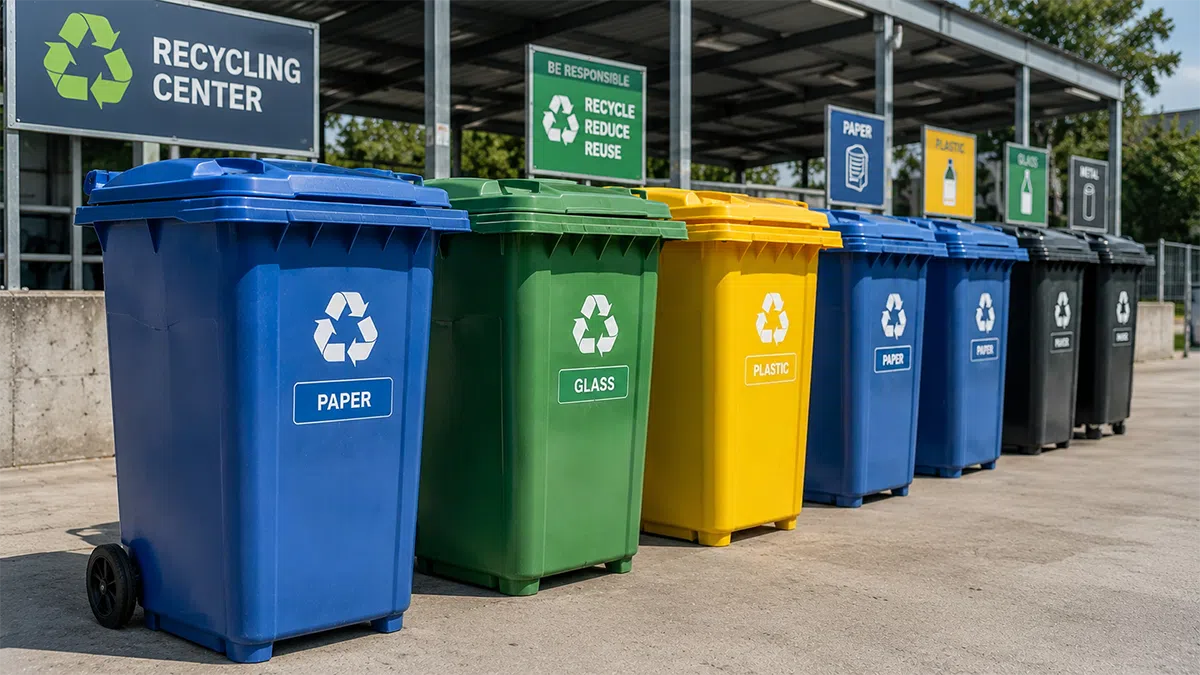
Recycling & Returnable Containers
Tracks recycling bins and reusable containers across distribution, collection, maintenance and recovery cycles.
- Identifies waste stream per container
- Monitors lifecycle and return events
- Reduces contamination and asset loss
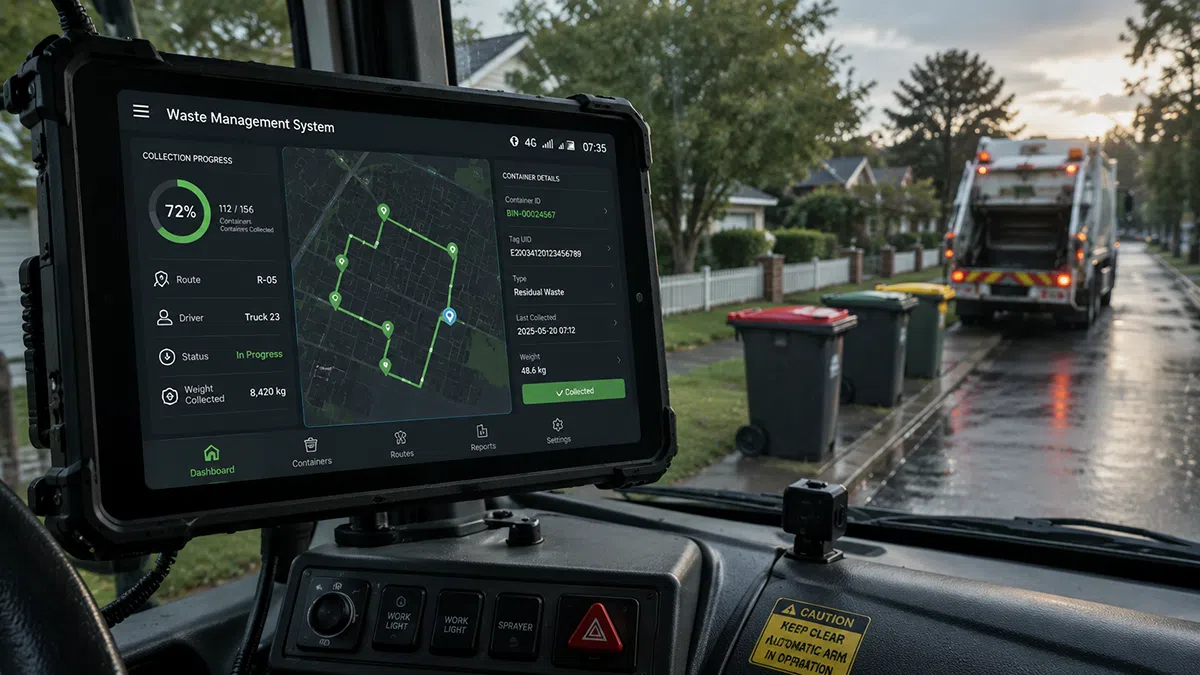
Pay-As-You-Throw (PAYT) Programs
Supports account-based collection records, weight-linked billing and transparent service reporting for PAYT programs.
- Maps bin ID to account and billing record
- Integrates with weighing and vehicle systems
- Generates exception records for disputes
Protocols & Compatibility
Why System Integrators Choose CedaGlo
Project-Matched RFID Configuration
Select LF, HF or RAIN UHF according to installed reader infrastructure, regional band, protocol and required read behavior. One configuration, purpose-built for your system.
Rugged Encapsulated Construction
Engineering-plastic housing and epoxy encapsulation protect the RFID element against moisture, dirt, vibration and daily collection handling in harsh outdoor environments.
Factory Encoding & Data Matching
Pre-encode UID, EPC or user memory and receive a matching CSV or Excel data file ready for system import — reducing deployment time and eliminating on-site programming errors.
OEM & Deployment Support
Custom colors, laser marking, mechanical adaptation and sample validation are available for volume projects, from pilot run through to long-term repeat supply.
Frequently Asked Questions
Which frequency variant should I select for a waste bin RFID project?
Choose the frequency that matches your installed reader ecosystem and operational read zone. LF (125 / 134.2 kHz) is common in established waste-management systems and controlled close-range reads. HF (13.56 MHz) supports close-range read/write applications such as handheld inspection and depot service. RAIN UHF (860–960 MHz) is preferred when longer read distance or faster multi-tag capture is required for vehicle-mounted automated collection. Send us your reader model and protocol and we will recommend the correct tag configuration.
Is the CedaGlo RFID bin tag compatible with DIN 30745 bin nests and EN 14803 systems?
DIN 30745 covers waste-container RFID identification and form-factor requirements, while EN 14803 is relevant to specific LF waste-container identification configurations. Compatibility depends on the selected housing model and documentation. CedaGlo can provide a DIN-style housing or EN 14803 LF configuration when the project specification requires it. Please share the bin nest drawing and reader protocol so we can confirm the correct model before production.
Can the same tag be used on both plastic and metal waste containers?
The standard screw-mount waste bin tag is optimized for plastic containers. Metal surfaces can detune the RFID antenna and significantly reduce read performance. For metal bins, CedaGlo recommends selecting a dedicated on-metal configuration or confirming a validated mounting position through sample testing on the actual container and reader setup before deployment.
Can CedaGlo pre-encode UID or EPC data and provide matching database files before shipment?
Yes. CedaGlo can encode EPC or supported user-memory fields, lock memory where required, and supply a matching data file in CSV or Excel format. Before mass production, please provide the encoding rule, field length, numbering sequence, password policy and required file format. Sample encoding is available for review before volume production begins.
Related Products
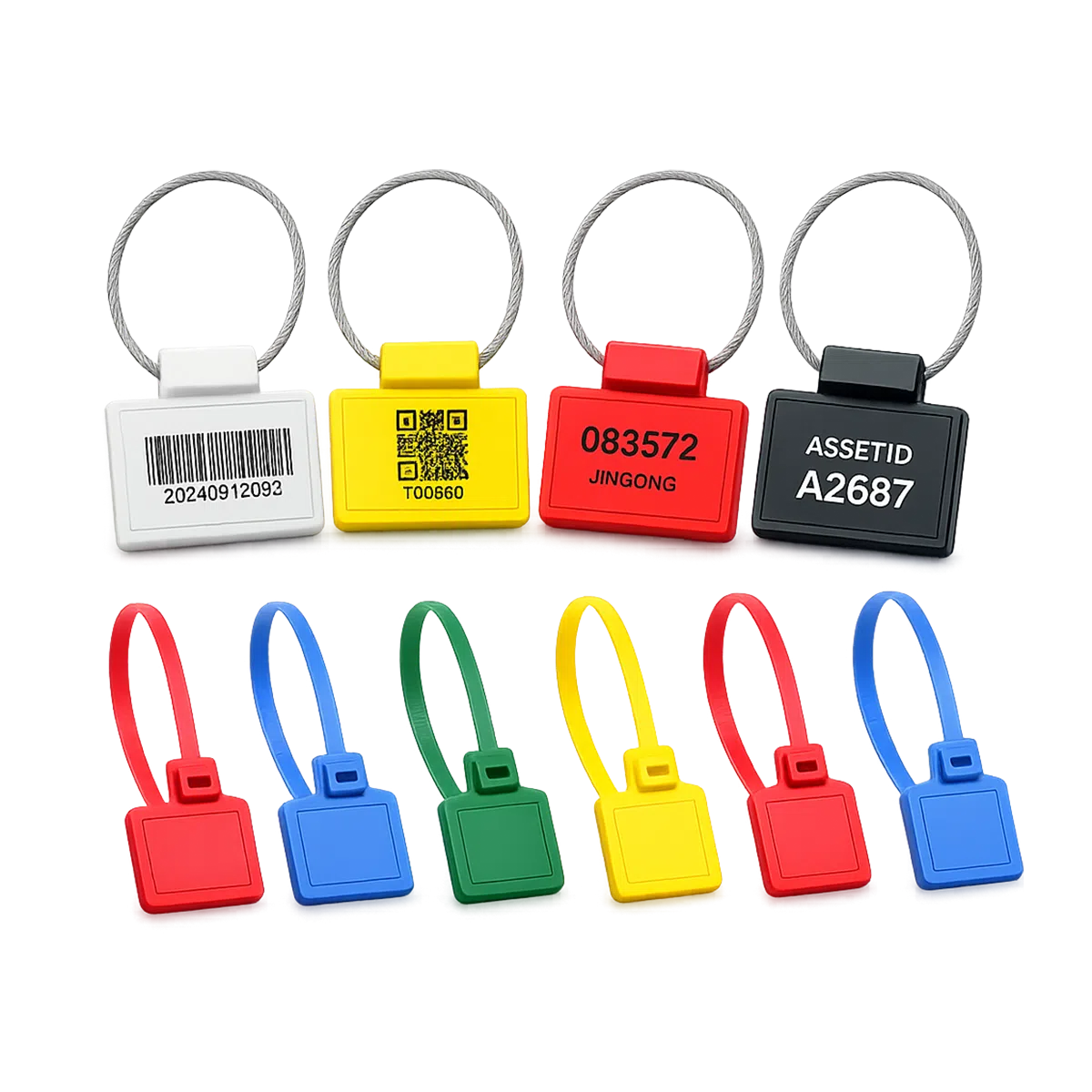
Custom Tamper-Evident RFID Cable Seal Tag
Tamper-evident RFID cable and seal tie tags with stainless steel wire, plastic strap options, custom printing, barcode, QR code and EPC/UID encoding.
View Details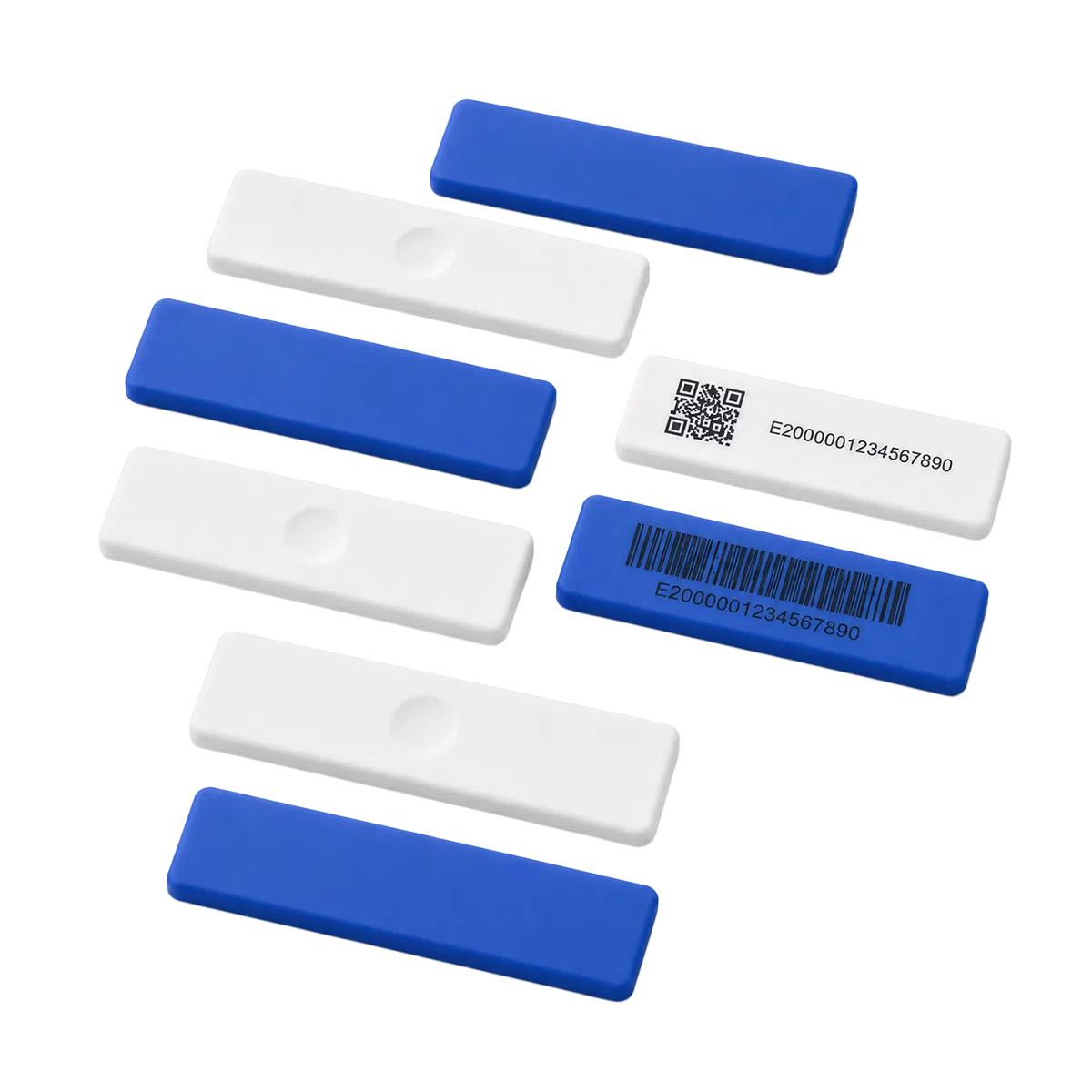
UHF Silicone RFID Laundry Tag for Washable Linen & Garments
Waterproof washable silicone RFID laundry tags from CedaGlo for hotel linen, hospital textiles, uniforms and commercial laundry management.
View Details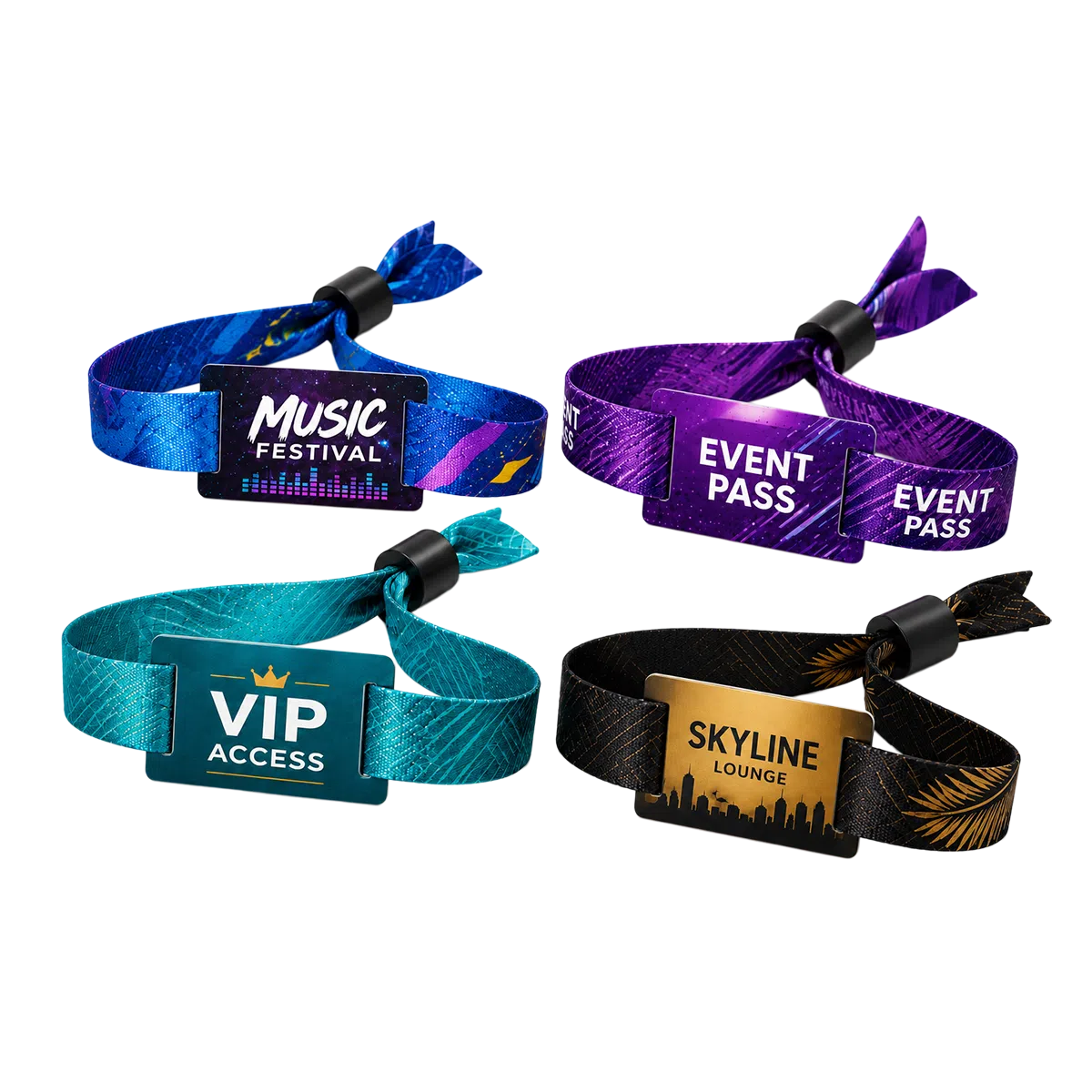
Custom RFID Fabric Wristband for Events
Custom RFID fabric wristbands for event access, cashless payment and attendee ID. Choose chip, material, lock and printing.
View Details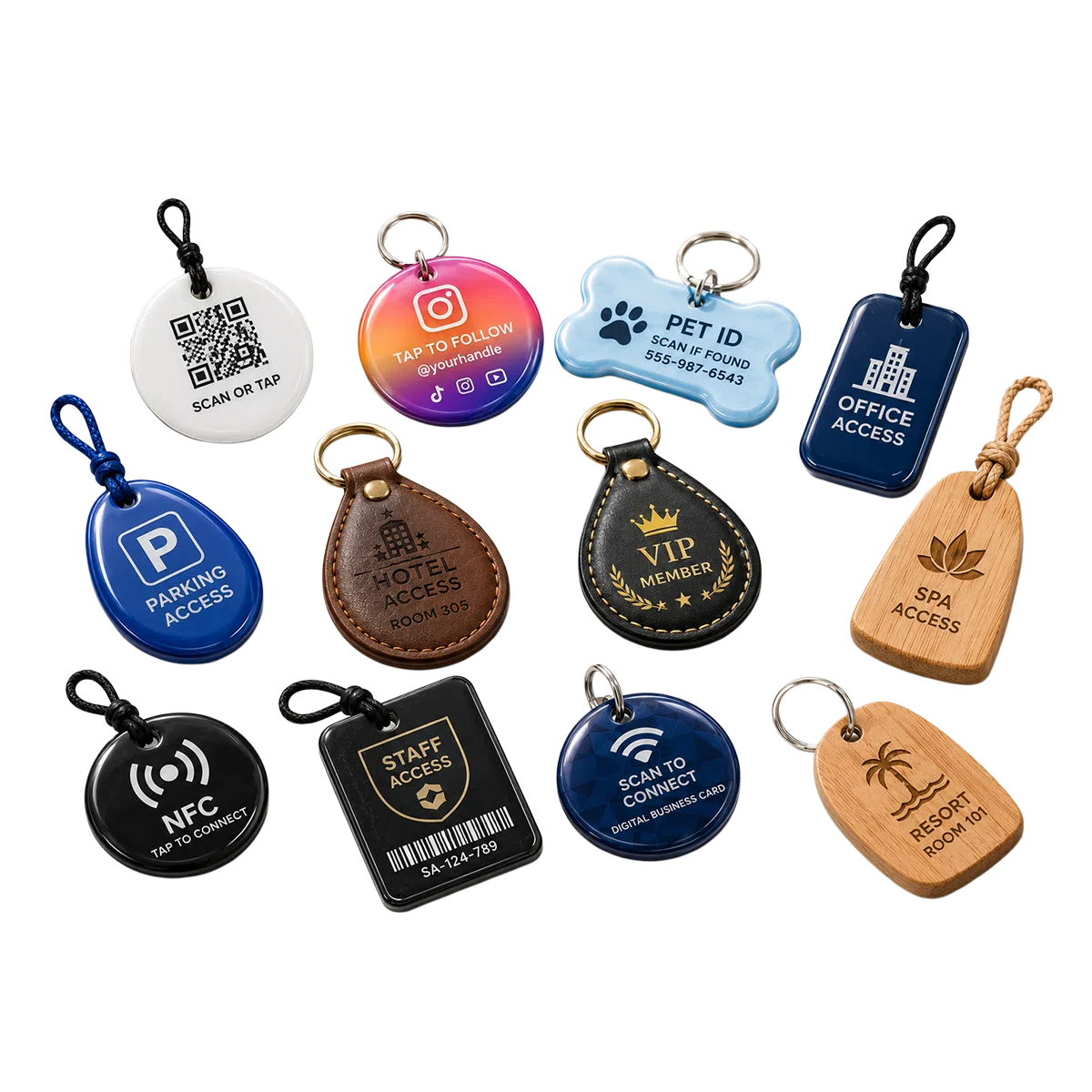
Custom RFID Keyfob │ ABS, Epoxy, Leather & Wood
Order custom RFID keyfobs in ABS, epoxy, leather or wood with LF, HF and NFC chips, logo printing, UID encoding and volume pricing support.
View DetailsMatch the Right RFID Bin Tag to Your Waste Management System
Send us your reader protocol, bin drawing, material, required read distance, encoding format and project quantity. CedaGlo will recommend a compatible LF, HF or RAIN UHF configuration and prepare sample and volume-pricing options.