One Desktop Reader for UHF Tags, HF Cards and PSAM
15 cm on UHF, 5 cm on HF, and output power adjustable to +25 dBm.
The R1 reads and writes UHF tags at up to 15 cm and HF cards at up to 5 cm from a single desktop housing. Its UHF engine is based on Impinj E Series chips and supports Impinj Gen2X, working through a circular polarized antenna with output power adjustable from +5 dBm to +25 dBm. The HF side operates at 13.56 MHz across five card standards, and two PSAM slots run ISO7816 T=0, T=1. The body measures 117 mm x 117 mm x 25 mm, weighs 170 g, and connects over USB Type-C on a 1.2 m cable.
- Impinj E SeriesUHF engine chip platform
- Impinj Gen2XSupported by the engine
- ISO18000-6CUHF air interface
- EPC C1G2UHF tag data standard
- 13.56 MHzHF operating frequency
- ISO/IEC 14443AHF proximity cards
- ISO/IEC 14443BHF proximity cards
- ISO/IEC 15693HF vicinity cards
- ISO/IEC 18000-3 mode 3HF air interface
- JIS X 6319-4HF card standard
- ISO7816 T=0, T=1PSAM slot protocol
- USB Type-CHost interface on the body
Overview
The R1 is a desktop reader and writer for work where the tag comes to the operator rather than the operator going to the tag. It handles UHF tags at up to 15 cm and HF cards at up to 5 cm, and its output power steps from +5 dBm to +25 dBm, so a counter that issues cards all day and a bench that verifies a handful of items can run the same device. It is used most often in access control, attendance and anti-counterfeiting work, where an operator taps one item at a time and needs the read to land the first time.
What separates it from a single-band reader is the spread of what one housing accepts. The UHF side is an Impinj E Series engine with Impinj Gen2X. The HF side works at 13.56 MHz and covers ISO/IEC 14443A, ISO/IEC 14443B, ISO/IEC 15693, ISO/IEC 18000-3 mode 3 and JIS X 6319-4. Two PSAM slots run ISO7816 T=0, T=1. A site that issues secure cards and also tracks tagged goods stops needing two devices on one desk.
Every number on this page comes from one configuration sheet. The UHF engine is based on Impinj E Series chips, the antenna is circular polarized, the unit takes DC3.5-5.25V and draws 0.4 W on standby, and the host connection is USB Type-C on a 1.2 m cable. Explore the full range of fixed RFID readers.
Key Features
UHF Reading and Writing
- Engine based on Impinj E Series chips
- Impinj Gen2X supported
- 865-868 MHz / 920-925 MHz / 902-928 MHz
- +5 dBm to +25 dBm adjustable
- Max read range 15 cm
Card Standards on the HF Side
- HF at 13.56 MHz, 5 cm range
- ISO/IEC 14443A, 14443B, 15693
- ISO/IEC 18000-3 mode 3 and EPC class-1 HF
- JIS X 6319-4 supported
- 2 PSAM slots, ISO7816 T=0, T=1
Desk Footprint and Power
- 117 mm x 117 mm x 25 mm
- 170 g / 6.0 oz.
- USB Type-C, 1.2 m cable
- DC3.5-5.25V input, 0.4 W standby
- -25 ℃ to 65 ℃ operating
Features & Functions at a Glance
A Closer Look at the Hardware
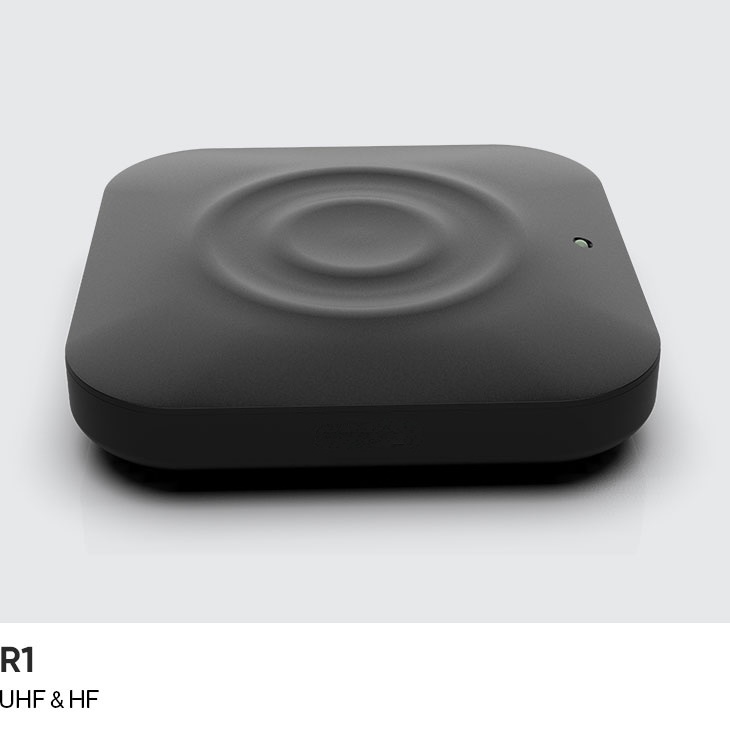
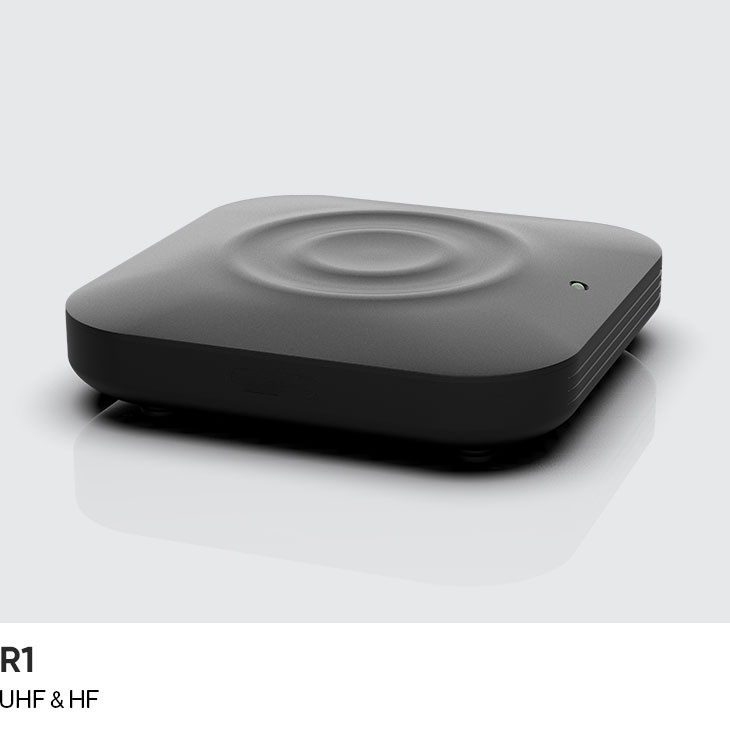
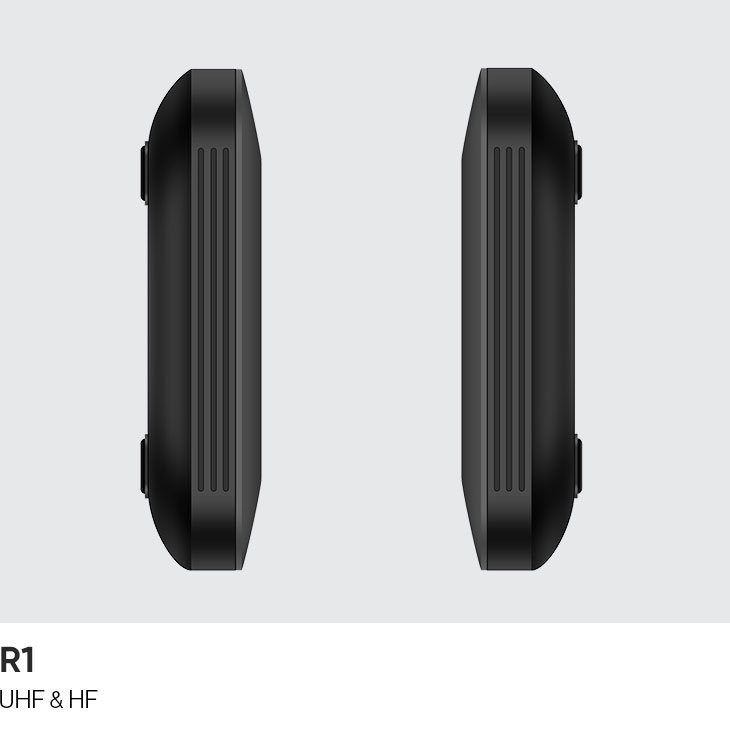
Rings molded into the top faceConcentric rings are pressed into the upper surface, and a single LED indicator sits in the corner beside them. The configuration sheet lists notification as LED indicator, buzzer.
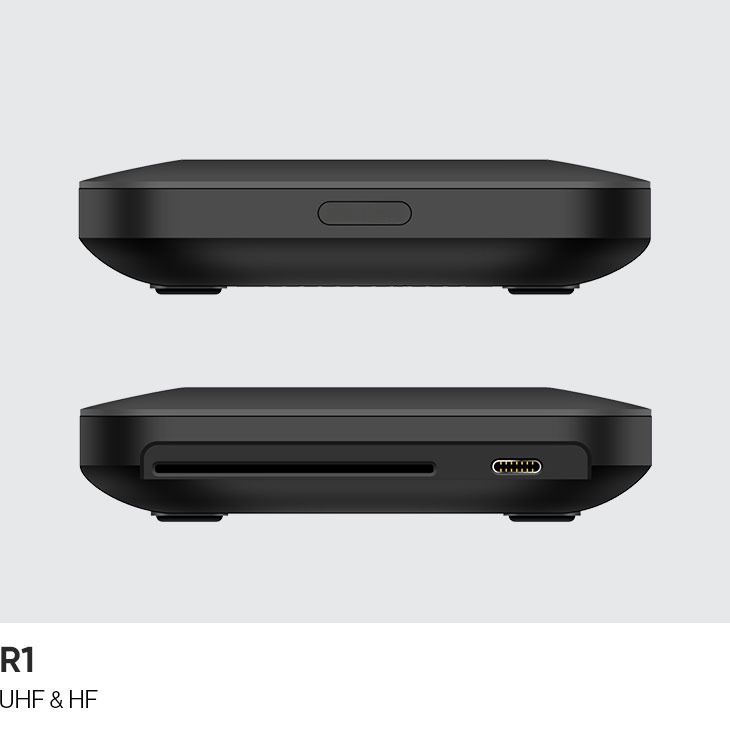
Card slot beside the interfaceOne edge carries a full-width slot and the USB Type-C interface side by side; the opposite edge holds a small recessed opening. The cable that connects to the host measures 1.2 m.
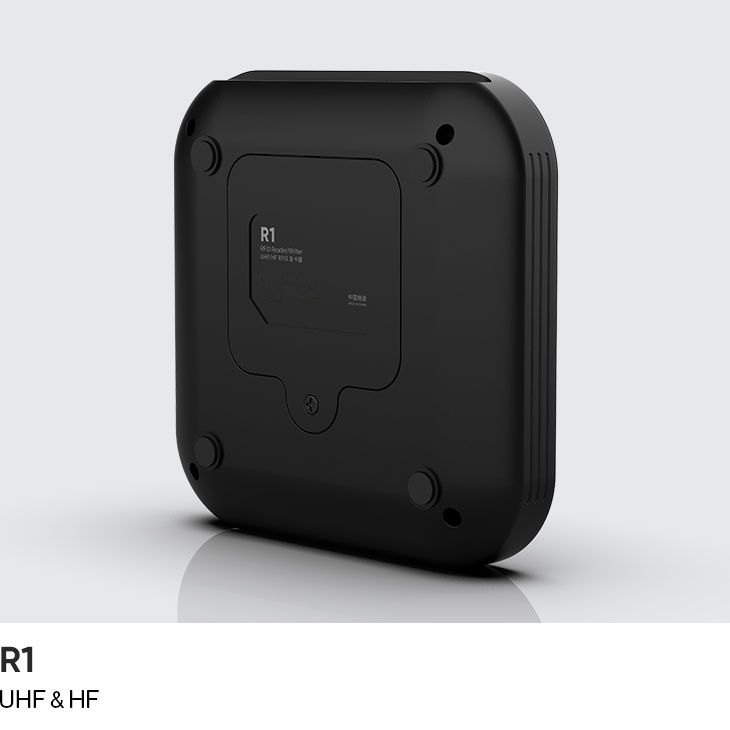
Flat base with corner feetFour round feet stand at the corners of the base, and the recessed panel between them carries the product label. One screw holds the cover, and the side walls are ribbed along their length.
Specifications
Physical Characteristics
- Dimensions
- 117 mm x 117 mm x 25 mm
- Weight
- 170 g / 6.0 oz.
- Notification
- LED indicator, buzzer
- Interfaces
- USB Type-C
- Cable
- 1.2 m
Power
- Input Voltage
- DC3.5-5.25V
- UHF
- 5W@25dBm
- HF
- 2 W
- Standby
- 0.4 W
User Environment
- Operating Temp.
- -25 ℃ to 65 ℃
- Storage Temp.
- -40 ℃ to 85 ℃
- Humidity
- 10% - 95%
UHF RFID
- Engine
- Based on Impinj E Series chips
- Frequency
- 865-868 MHz / 920-925 MHz / 902-928 MHz
- Impinj Gen2X
- Supported
- Protocol
- ISO18000-6C/EPC C1G2
- Antenna
- Circular Polarized Antenna
- Output Power
- +5 dBm to +25 dBm adjustable
Accuracy: +/-1 dB - Max Read Range
- 15 cm
PSAM
- Slots
- 2 slots
- Protocol
- ISO7816 T=0, T=1
HF RFID
- Frequency
- 13.56 MHz
- Protocol
- ISO/IEC 14443A
ISO/IEC 14443B
ISO/IEC 15693
ISO/IEC 18000-3 mode 3/EPC class-1 HF
JIS X 6319-4 - Range
- 5 cm
Every row above is transcribed from the R1 configuration sheet. Items not listed there are not offered on this page.
Why Buy the R1 From CedaGlo
Components You Can Verify
The chip platform and every protocol number on this page are named, so your engineers can open the component vendor documentation and confirm what the reader is built from before a single reader ships to your site.
Ordering and Lead Times
We quote the frequency band and the quantity as one line item, and we state the delivery week in writing before you raise a purchase order. If a date moves, you hear about it from us rather than from a missed shipment.
Run a Pilot on Your Counter
Ask for one reader, put your own labels and cards through it, and keep it long enough to watch how it behaves during a real shift. Volume pricing stays open while you evaluate, so the pilot costs you time instead of budget.
Support After the Invoice
One contact handles quotations, returns and technical questions, so nobody has to rebuild the history of your case. Repair and replacement terms are written into your order, which means a later disagreement is settled by paperwork.
Frequently Asked Questions
How far does the R1 read?
The configuration sheet gives a maximum UHF read range of 15 cm and an HF range of 5 cm, and both figures are quoted on this page exactly as they appear there. Read range moves with the tag chip, the label size and the material the tag is fixed to, so run your own tags on the device before you write a distance into a specification.
Does the R1 come in more than one version?
The configuration sheet describes one hardware build, so there is no separate model to choose between. The UHF engine covers 865-868 MHz, 920-925 MHz and 902-928 MHz, so tell us which band your site works in and confirm it in writing on the purchase order.
What is the reader built from?
The UHF side is based on Impinj E Series chips and supports Impinj Gen2X, working through a circular polarized antenna with output power adjustable from +5 dBm to +25 dBm at an accuracy of plus or minus 1 dB. The HF side operates at 13.56 MHz, and two PSAM slots run ISO7816 T=0, T=1.
How long can we keep buying the same unit and its spare parts?
Availability, spare part terms and lead times are confirmed in writing with your order. We do not publish a lifecycle promise on a product page, because the commitment that protects you is the one written into your contract, and that is the one we are willing to sign.
What temperature and humidity can it work in?
The configuration sheet gives an operating range of -25 degrees Celsius to 65 degrees Celsius, storage from -40 degrees Celsius to 85 degrees Celsius, and humidity from 10% to 95%. No ingress protection rating is listed on that sheet, so we do not claim one for the R1.
How do we get service if a reader fails?
Send us the serial number and a short account of what the reader does or fails to do, and we will confirm the return steps for you. Repair, replacement and turnaround terms are agreed with your order rather than promised in advance on a web page.
Related Products
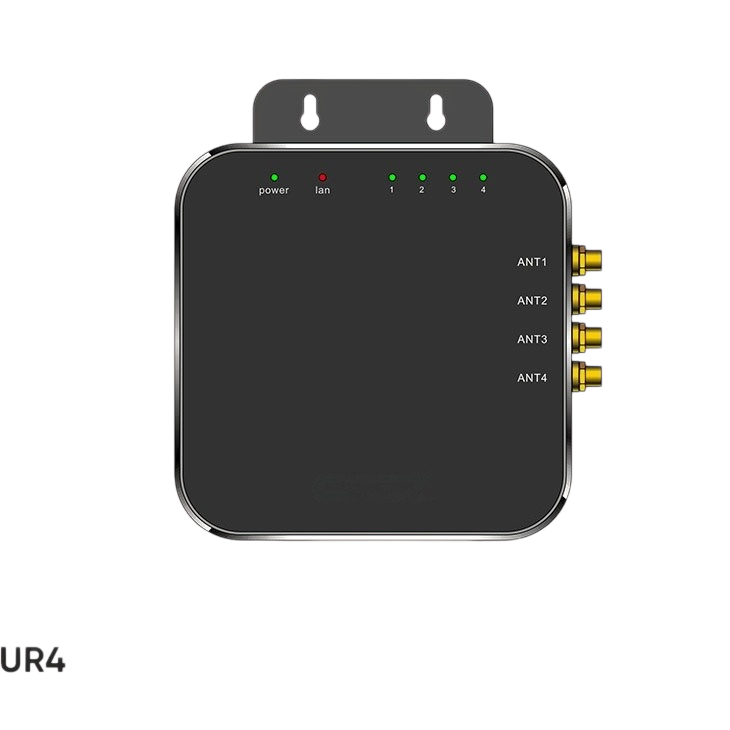
UR4 Fixed RFID Reader
Four-port fixed UHF RFID reader. 4 channel 50 ohm SMA port, 1300+ tags/sec fastest read rate, engine based on Impinj E Series chips. RS-232 and RJ45.
View Details
Printed RFID Labels | Custom Finished RFID
Custom finished RFID labels from CedaGlo with printable face stock, adhesive backing, barcode, QR code, serial number and UHF/NFC chip.
View Details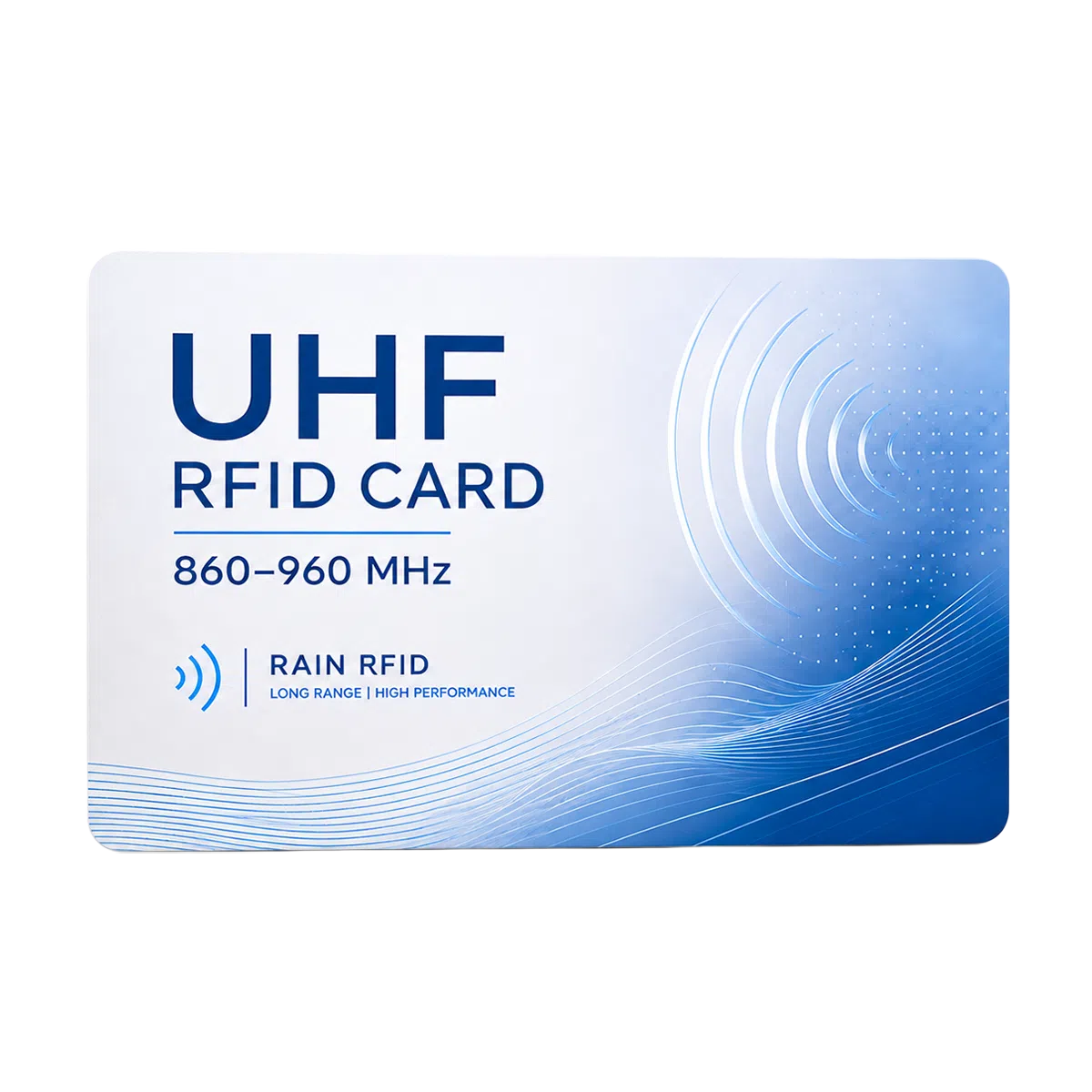
UHF Card | 860–960 MHz RAIN RFID Card
Standard CR80 UHF RFID cards with Impinj, NXP UCODE, Alien Higgs chip options. Ideal for parking, asset tracking & warehouse inventory. OEM/ODM available.
View Details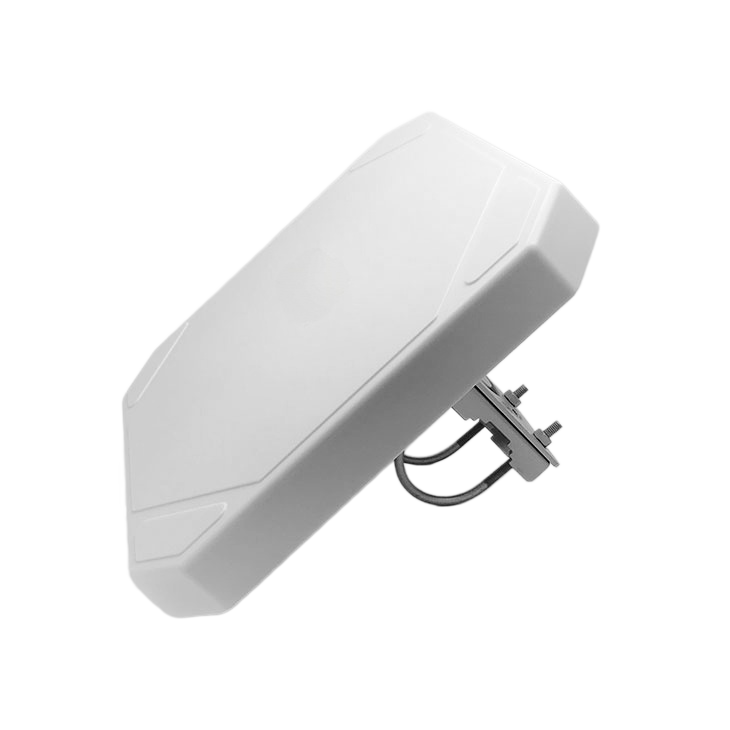
9dBi UHF RFID Panel Antenna
9dBi RHCP panel antenna, 60 by 55 degree 3dB beam-width, N-Type Female at 50 ohms, IP67 sealed, 255 by 255 by 30 mm.
View DetailsTry the R1 Against Your Own Labels
The UHF engine is built on Impinj E Series chips with Gen2X support, and power adjusts from +5 dBm to +25 dBm. One device therefore reads tagged goods, writes issued cards and holds two PSAM slots on one USB Type-C connection, so IT qualifies a single item instead of three. Send us your tag chip, your frequency band, and a sample card.