Eight Antenna Ports on One Reader Body
Reads 550+ tags/sec across eight 50Ω SMA channels from a 102.8 mm square body.
The UR8 drives eight antenna ports from a single enclosure and reads 550+ tags/sec under circular polarization. Two configurations share that hardware and differ only in transmit power: the 1W reader is adjustable from +5 to +30dBm, the optional 2W reader from +10 to +33dBm. Both are built on Impinj E Series chips, hold receive sensitivity below -78dBm, and report RSSI. Hosts connect over 10/100 Base-T Ethernet (RJ45) or RS-232 at 115200 bps.
- Impinj E SeriesReader engine silicon
- EPC Class 1 Gen 2GS1 UHF air interface
- ISO 18000-6CPublished UHF standard
- 865-868 MHzAlso 920-925, 902-928
- 10/100 Base-TWired network standard
- RJ45Ethernet connector
- RS-232Serial data interface
- 115200 bpsListed serial baud rate
- 50Ω SMA portsCoaxial RF connector
- 6dBic and 9dBicSupported antenna gains
- DC 9V – 12VListed input voltage
Overview
The UR8 puts eight antenna channels on one 50Ω SMA port set, inside a 102.8 mm square aluminium alloy body that weighs 450 g / 15.87 oz. without antenna. It reads at 550+ tags/sec under circular polarization, holds receive sensitivity below -78dBm, and keeps output power to +/- 1dB precision with +/- 0.2dB flatness. Cooling is by air, and standby current stays under 30mA.
Eight channels on one chassis is the reason to specify this reader: a single power feed and a single host link cover a whole portal or a run of shelving, and the built-in antenna detector plus the ambient temperature monitor report the state of that hardware back to the host instead of leaving a dead port to be found by hand. Output power is adjustable from +5 to +30dBm on the 1W configuration and from +10 to +33dBm on the optional 2W configuration.
The reading engine is based on Impinj E Series chips and works to EPC global UHF Class 1 Gen 2 / ISO 18000-6C across 865-868 MHz, 920-925 MHz and 902-928 MHz, supporting antennas such as 6dBic and 9dBic. Hosts connect over 10/100 Base-T Ethernet (RJ45) or RS-232 at 115200 bps, on a DC 9V – 12V supply. Explore the full range of fixed UHF RFID readers.
Key Features
Host Connection and Power
- 10/100 Base-T Ethernet (RJ45)
- RS-232 / RJ45 comm interface
- Baud rate 115200 bps
- Input voltage DC 9V – 12V
- Standby current under 30mA
Body and Operating Envelope
- Aluminium alloy, 450 g / 15.87 oz.
- Air cooling
- Operating -25 °C to 65 °C
- Storage -40 °C to 85 °C
- Humidity 5% RH to 95% RH
UHF Reading Performance
- 550+ tags/sec, circular polarization
- Receive sensitivity < -78dBm
- 1W, with 2W optional
- Power precision +/- 1dB
- 8 channel 50Ω SMA port
Features & Functions at a Glance
Choose Your Configuration
| Feature | UR8 (1W) | UR8 (2W) |
|---|---|---|
| Best for | Eight-port coverage at up to 30dBm, so one reader replaces the wiring of two smaller units | The same eight ports with up to 33dBm on tap for longer cable runs |
| Form factor | 102.8 mm(L) x 102.8 mm(W) x 34.2 mm(H), 450 g / 15.87 oz. (without antenna) | |
| Shared hardware | Identical in both configurations | |
| Antenna ports | 8 channel 50Ω SMA port | |
| Comm interface | RS-232 / RJ45 | |
| Ethernet interface | 10/100 Base-T Ethernet (RJ45) | |
| Baud rate | 115200 bps | |
| Input voltage | DC 9V – 12V | |
| Work current | 800mA +/-5% @ DC 12V Input | |
| Standby current | < 30mA | |
| Cooling mode | Air cooling | |
| Material | Aluminium alloy | |
| Fastest read rate | 550+ tags/sec (circular polarization) | |
| Receive sensitivity | < -78dBm | |
| Radio output | The row below is the only difference between the two configurations | |
| Output power | 1W (30dBm, support +5~+30dBm adjustable) | 2W Optional (33dBm, support +10~+33dBm adjustable) |
| Platform | Common to both configurations | |
| Engine | Based on Impinj E Series chips | |
| Protocol | EPC global UHF Class 1 Gen 2 / ISO 18000-6C | |
| Frequency | 865-868 MHz / 920-925 MHz / 902-928 MHz | |
| RSSI | Supported | |
| Antenna detector | Supported | |
| Ambient temp monitor | Supported | |
Antenna compatibility — both configurations present the same 8 channel 50Ω SMA port and support a variety of antennas, such as 6dBic, 9dBic. Antenna gain is chosen at order time and is not part of the reader configuration.
Every value in this table matches the full Specifications section below.
A Closer Look at the Hardware
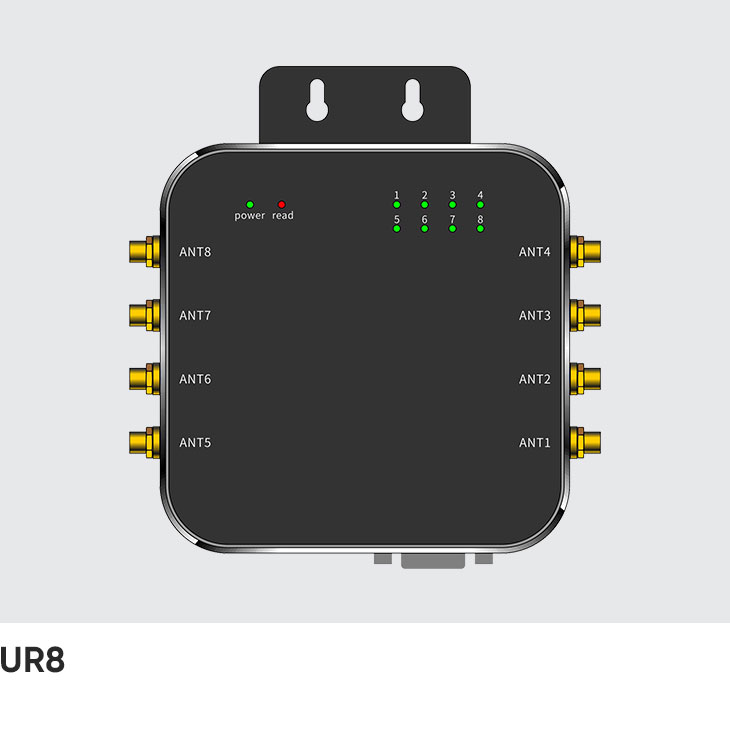
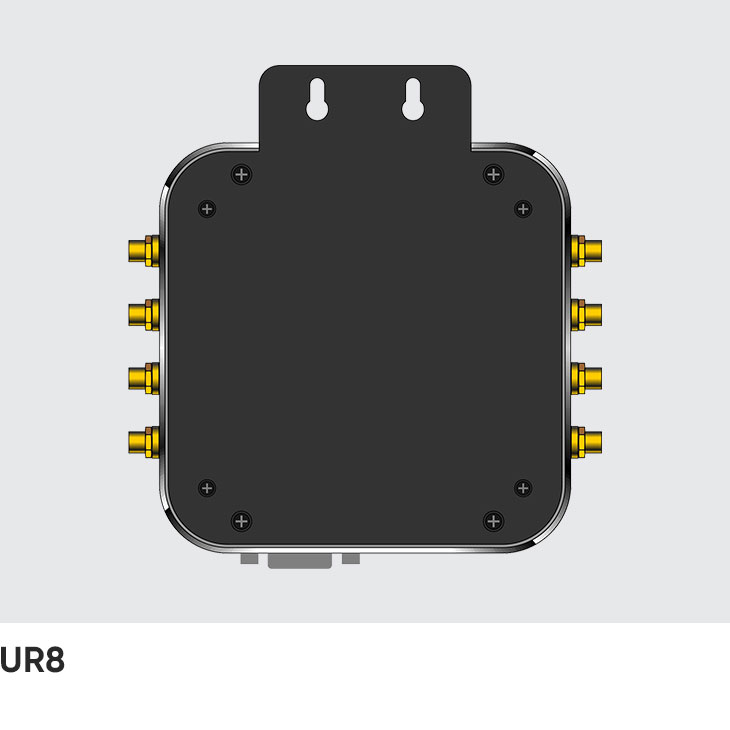
Bracket on the rear faceA two-slot bracket sits above the closed rear panel, and eight screws hold the aluminium alloy body together at the corners. The slots take fasteners that are already in the wall, so the reader hangs without opening the enclosure.
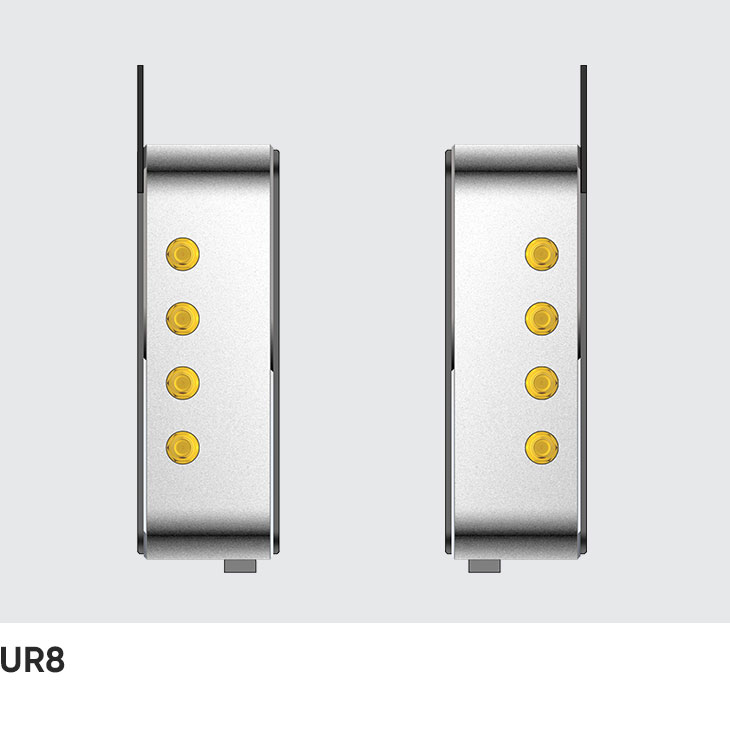
Four SMA ports per sideThe 8 channel 50Ω SMA port is split four to the left face and four to the right. Antenna cables leave the body in two directions instead of crowding a single edge, which keeps the bend radius workable in a shallow enclosure.
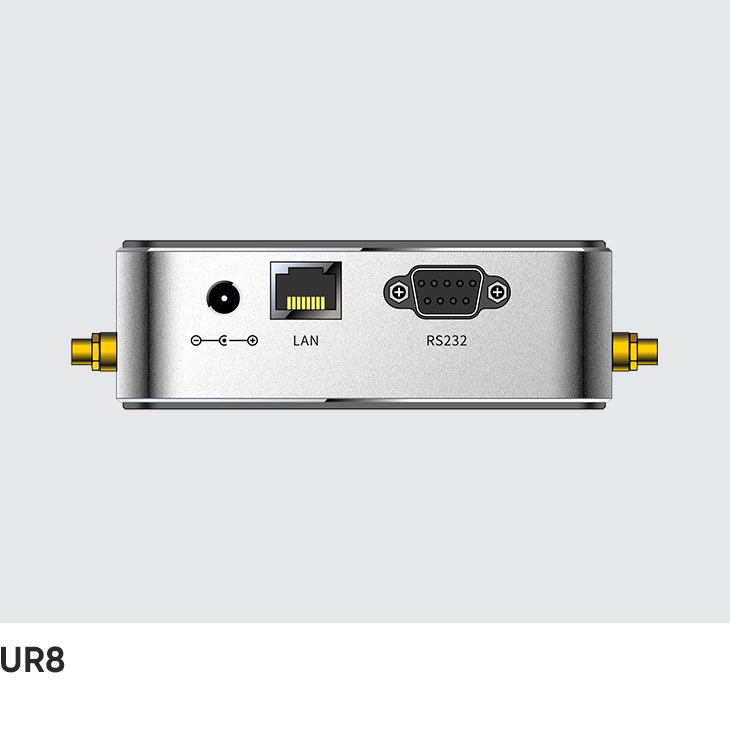
Power and host on one faceThe DC jack, the 10/100 Base-T Ethernet (RJ45) socket and the RS-232 connector share a single face. Both antenna faces stay clear, so the cable that carries data and the cables that carry RF never cross at the body.
Specifications
Physical Characteristics
- Dimensions
- 102.8 mm(L) x 102.8 mm(W) x 34.2 mm(H)
- Weight
- 450 g / 15.87 oz. (without antenna)
- Material
- Aluminium alloy
- Input Voltage
- DC 9V – 12V
- Standby Current
- < 30mA
- Comm Interface
- RS-232 / RJ45
- Baud Rate
- 115200 bps
- Cooling Mode
- Air cooling
- Work Current
- 800mA +/-5% @ DC 12V Input
- Ethernet interface
- 10/100 Base-T Ethernet (RJ45)
User Environment
- Operating Temp.
- -13℉ to 149℉ / -25 °C to 65 °C
- Storage Temp.
- -40℉ to 185℉ / -40 °C to 85 °C
- Humidity
- 5% RH to 95% RH (non condensing)
UHF RFID
- Engine
- Based on Impinj E Series chips
- Frequency
- 865-868 MHz / 920-925 MHz / 902-928 MHz
- Protocol
- EPC global UHF Class 1 Gen 2 / ISO 18000-6C
- Fastest Read Rate (circular polarization)
- 550+ tags/sec
- Output Power
- 1W (30dBm, support +5~+30dBm adjustable) 2W Optional (33dBm, support +10~+33dBm adjustable)
- Output Power Precision
- +/- 1dB
- Output Power Flatness
- +/- 0.2dB
- Receive Sensitivity
- < -78dBm
- RSSI
- Supported
- Ambient Temp Monitor
- Supported
- Antenna Detector
- Supported
- Antenna Port
- Supporting a variety of antennas, such as 6dBic, 9dBic
- Communication Mode
- 8 channel 50Ω SMA port
Every row above is transcribed from the UR8 configuration sheet. Items not listed there are not offered on this page.
Why Buy the UR8 From CedaGlo
Parts you can look up
Every silicon and interface claim here names something published: Impinj E Series chips, EPC global UHF Class 1 Gen 2, ISO 18000-6C, 10/100 Base-T Ethernet. Check each one with its owner before you raise an order with us.
Two power levels, one build
Both configurations use the same body, the same eight ports and the same host interfaces, so choosing 1W or 2W is a radio decision for your installers. Mounting drawings, cable schedules and integration work are written once and stay valid.
Prove it on your bench
Take a unit and run it against your own tags, your own antennas and your own host software before a purchase order exists. A mismatch found during your pilot costs a week; the same mismatch found after delivery costs a project.
Answers that outlast the order
Firmware, documentation and spare-part terms are confirmed in writing with each order rather than promised on a web page, so your maintenance team holds a document it can act on. Repeat orders are built against the specification sheet quoted here.
Frequently Asked Questions
How many tags can the UR8 read per second?
The configuration sheet lists a fastest read rate of 550+ tags/sec, measured with circular polarization. Treat that as a peak figure under the stated condition rather than a guaranteed field rate, because throughput on site depends on your tag population, your antenna layout and how many of the eight ports you have populated.
Should I order the 1W or the 2W configuration?
The 1W reader delivers 30dBm and supports +5 to +30dBm adjustable. The optional 2W reader delivers 33dBm and supports +10 to +33dBm adjustable. Everything else is identical, including the 8 channel 50 ohm SMA port, the aluminium alloy body and the host interfaces, so the two configurations share one integration effort.
What reading engine is inside the UR8?
The engine is based on Impinj E Series chips and works to EPC global UHF Class 1 Gen 2 and ISO 18000-6C. Listed frequency coverage is 865-868 MHz, 920-925 MHz and 902-928 MHz, receive sensitivity is listed below -78dBm, and output power precision is listed at plus or minus 1dB with flatness at plus or minus 0.2dB.
How is long-term availability handled?
Firmware releases, documentation and spare-part availability are confirmed in writing with your order, because those terms depend on the order rather than on the hardware. The specification sheet quoted on this page is the one repeat orders are built against, so a second batch matches the first.
What environmental range is the UR8 listed for?
Operating temperature is listed as minus 25 degrees Celsius to 65 degrees Celsius, or minus 13 degrees Fahrenheit to 149 degrees Fahrenheit. Storage temperature is listed as minus 40 degrees Celsius to 85 degrees Celsius. Humidity is 5% RH to 95% RH, non condensing, and the cooling mode is air cooling.
What happens if a unit needs service?
Return handling, turnaround and any replacement stock are agreed in writing with your order rather than promised here. On site, the antenna detector and the ambient temperature monitor both report to the host, so your team can see a port fault or a thermal problem before anyone schedules a visit.
Related Products
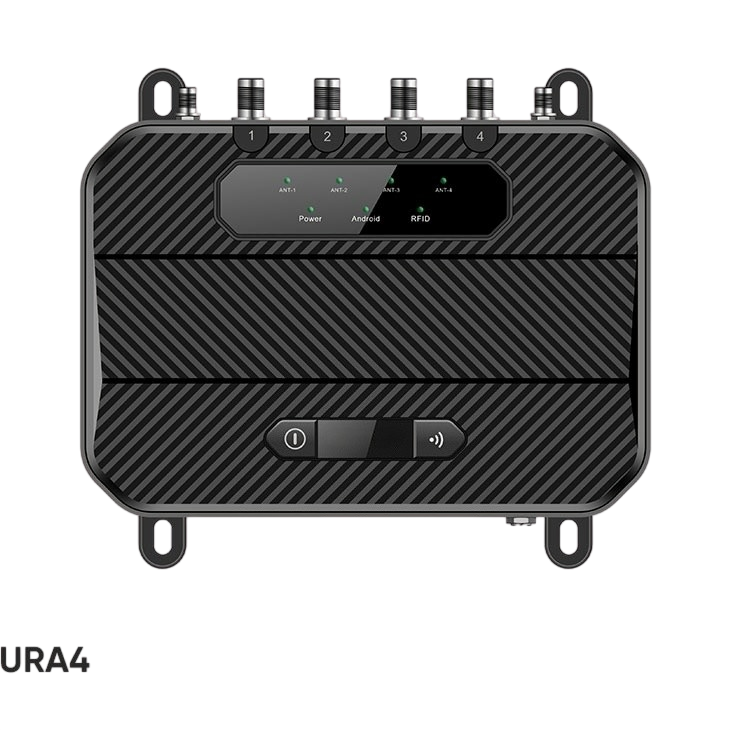
URA4 Fixed RFID Readers | Android 9
The CedaGlo URA4 is a 4 channel fixed RFID reader on Android 9.0, rated at 1300+ tags/sec, with 1W or 2W output and PoE or PoE+ power.
View Details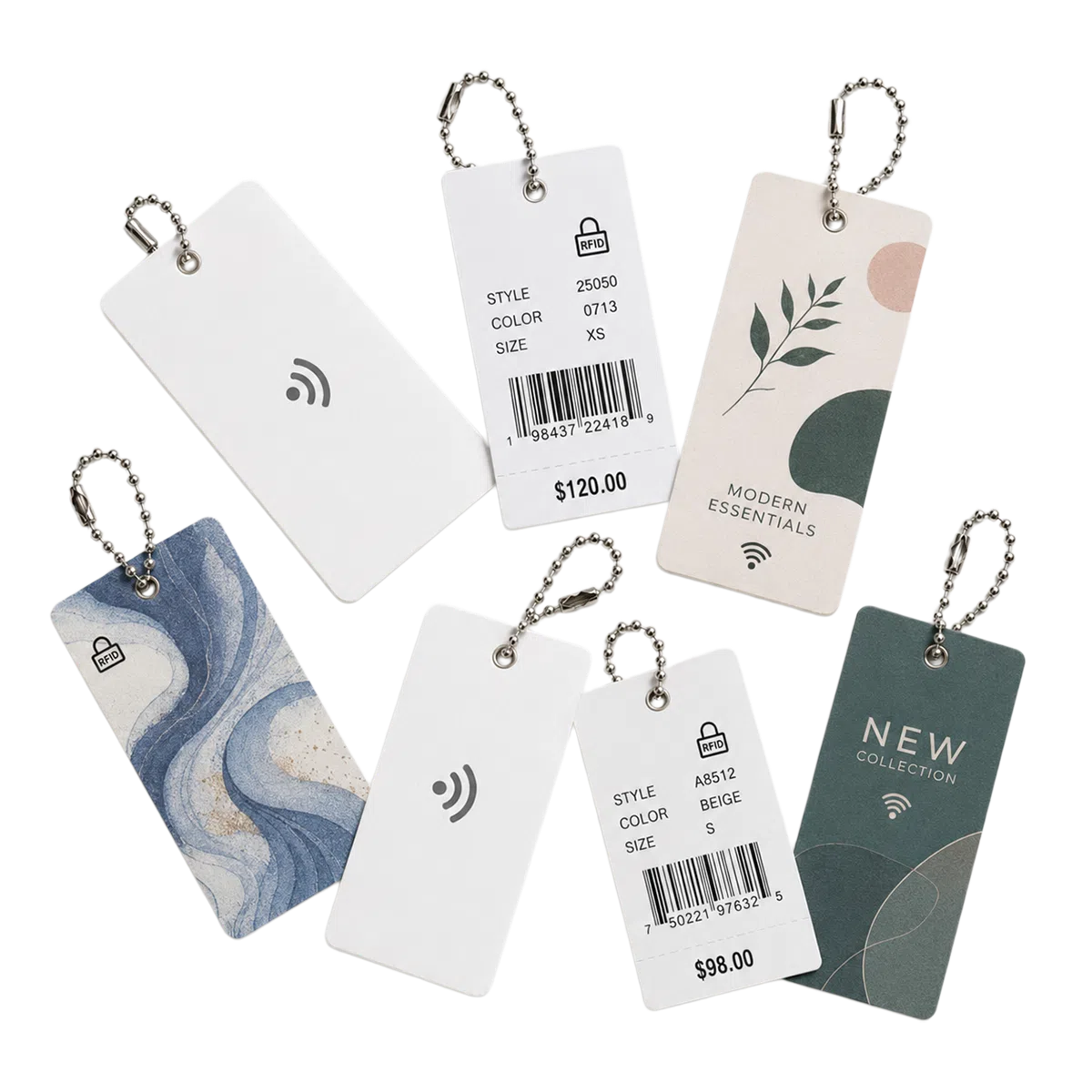
RFID Apparel Hang Tags for Retail Inventory & NFC Engagement
Custom RFID apparel hang tags from CedaGlo with UHF, NFC, barcode, QR code, artwork printing, EPC encoding and packaging options.
View Details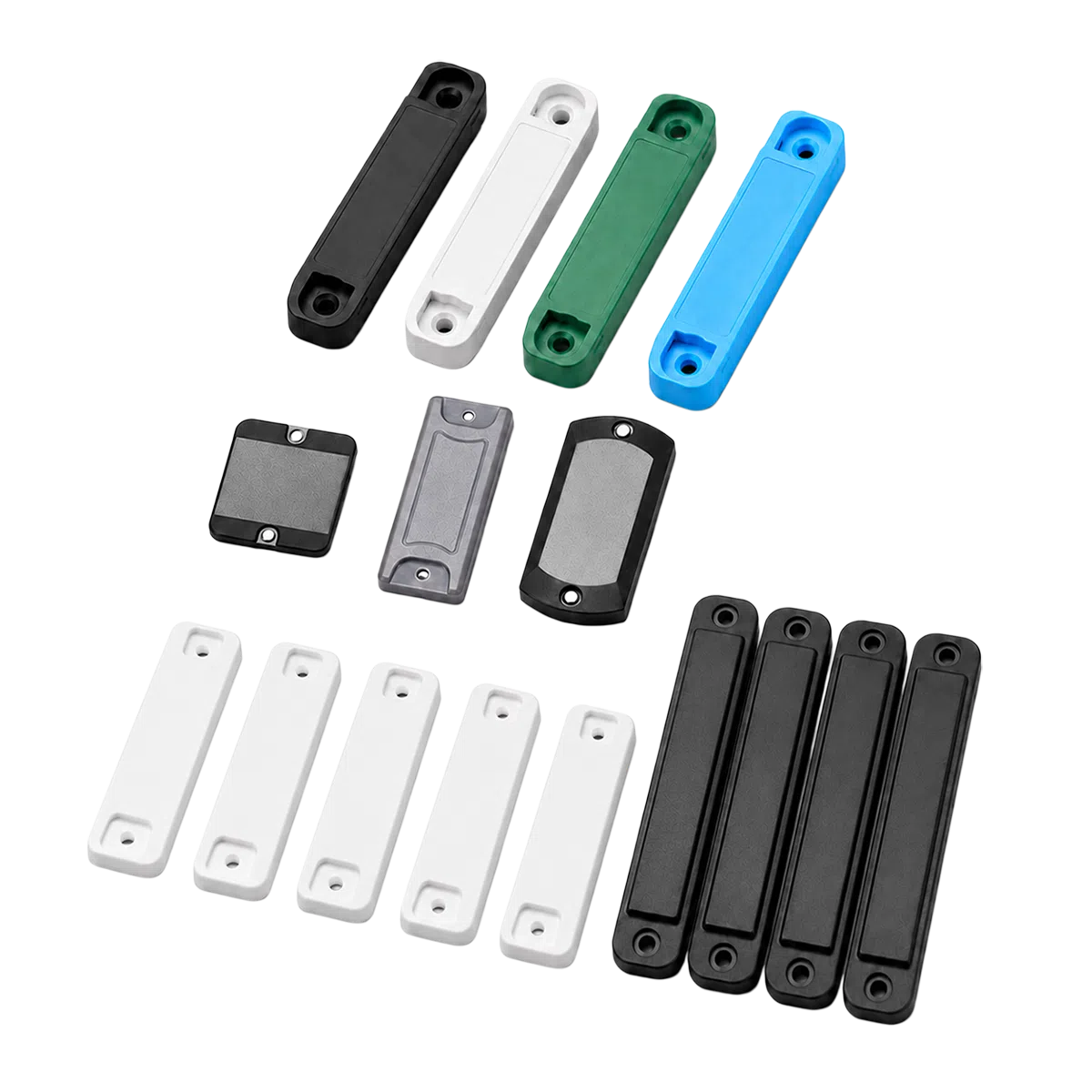
ABS UHF Anti-Metal RFID Tags for Industrial Asset Tracking
Durable on-metal RFID tags from CedaGlo for asset management, warehouse racks, tools, data centers, utilities and equipment tracking.
View Details
Printed RFID Labels | Custom Finished RFID
Custom finished RFID labels from CedaGlo with printable face stock, adhesive backing, barcode, QR code, serial number and UHF/NFC chip.
View DetailsFewer Boxes on the Wall
Eight 50Ω SMA channels, 550+ tags/sec under circular polarization, and receive sensitivity below -78dBm, all from a 102.8 mm square housing. That is one power feed, one host link and one spare on the shelf instead of two of each. Send your tag type, antenna gain and cable lengths and we will confirm the output you need.