
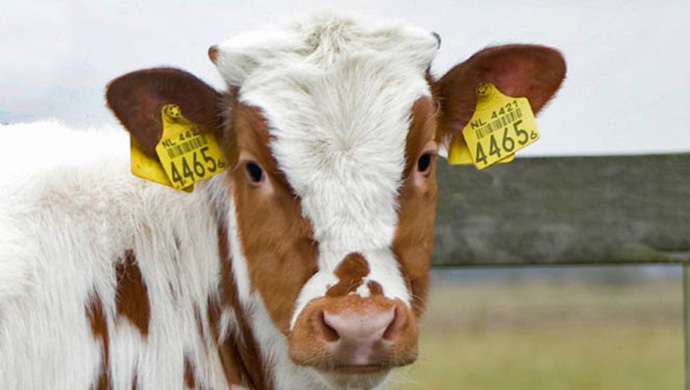
RFID Animal Tags
Every animal needs a permanent, unique ID before any other RFID use case can work. CedaGlo's RFID animal tags give farmers a durable ear tag that carries a digital profile for each animal — breed, age, medical history, and ownership — creating the foundation for accurate record-keeping and regulatory compliance across the herd.
RFID Readers
A handheld RFID reader is usually the first device a farm adds alongside tagging, letting staff scan an animal in the field during sorting, vaccination, or a health check and pull up its full record instantly — no barn-side computer required.
Fixed Readers & Gate Monitoring
As herds and facilities grow, fixed RFID readers installed at gates, chutes, and feeding stations automatically log which animals pass through and when — tracking herd movement and feeding patterns without a single manual scan.
Applications
RFID technology has penetrated various aspects of livestock management:
Health Monitoring: Tag-linked records let farmers track temperature, activity, and feeding patterns, flagging deviations early for faster intervention.
Biosecurity Measures: Quick identification of an animal's movement history helps contain disease outbreaks and enforce quarantine when needed.
Breeding Management: Detailed reproductive history and offspring lineage support more informed breeding decisions and program planning.
Supply Chain Traceability: Tag data follows each animal from farm to processing, giving buyers confidence in origin, health status, and production practices.
CedaGlo RFID technology has become an indispensable part of modern livestock management. Through the combination of ear tags and handheld and fixed readers, farms and ranches achieve better animal welfare, stronger biosecurity, and full traceability — with hardware built to match each stage of the operation, from the field to the processing line.
Frequently Asked Questions
Which RFID frequency is used for livestock ear tags?
Low frequency FDX-B and HDX are the most widely used for animal identification, and CedaGlo TPU ear tags also offer HF and UHF chip options where a longer read range or a different reader system is needed.
Which animals can CedaGlo ear tags be used on?
CedaGlo RFID ear tags are made in flag and large visual formats for cattle, sheep, goats and swine, carrying a unique ID that links to each animal's breed, age, medical history and ownership records.
Can animals be identified automatically at gates and feeders?
Yes. Fixed RFID readers at gates, chutes and feeding stations log which animals pass through and when, so movement and feeding patterns are recorded without manual scanning.
How does RFID support livestock traceability?
Tag data follows each animal from farm to processing, so buyers and inspectors can confirm origin and health status, and movement history can be pulled quickly during a disease outbreak.
Can farms order ear tags with their own numbering in small quantities?
Yes. Ear tags can be ordered from 1 piece with your colour and numbering scheme, and a custom sample costs from US$50 per order. Larger herds move to tiered pricing, and the chip can be LF FDX-B/HDX, HF or UHF to match your readers.