
RFID Bin Tags
Every bin needs a permanent, durable ID before it can be tracked through a collection route. CedaGlo's Industrial & Asset Tags — including anti-metal variants for metal dumpsters and containers — hold each bin's location, waste type, and collection schedule, so it can be identified automatically at every pickup.
RFID Readers
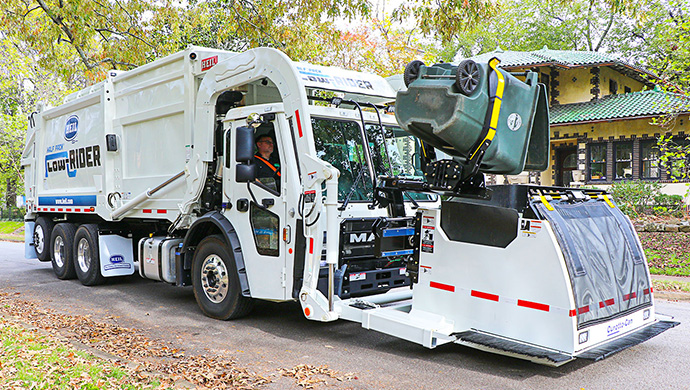
Fixed RFID readers mounted on collection vehicles are the core of this application — automatically scanning each bin's tag as it's lifted, with no driver intervention needed. Handheld readers back this up at the depot for spot checks, missed-pickup audits, and new-bin registration.
Sorting Facility Antennas
At material recovery facilities, panel antennas mounted along conveyor lines read tagged materials as they pass, letting automated systems identify and separate recyclables from general waste — a step up in infrastructure once collection is already tag-enabled.
Applications
RFID technology has penetrated various aspects of waste management:
Route Optimization: Real-time bin status and location data lets companies plan collection routes dynamically, cutting fuel use and emissions.
Asset Management: Tracking bins, vehicles, and sorting equipment supports proactive maintenance and better asset allocation across the fleet.
Compliance & Reporting: Automated pickup and disposal data makes it easy to demonstrate compliance and produce transparent reports for stakeholders.
Waste Reduction Initiatives: Tag-generated data reveals waste patterns, helping companies target minimization programs where they'll have the most impact.
CedaGlo RFID technology has become an indispensable part of modern waste management. Through the combination of bin tags, handheld and fixed readers, and antennas, waste management teams achieve efficient collection, accurate sorting, and measurable sustainability — with hardware built to match each stage of the process, from the curbside bin to the sorting line.
Frequently Asked Questions
How are RFID bin tags read during collection?
A fixed RFID reader mounted on the collection vehicle reads each bin's tag as it is lifted, so pickups are logged without driver intervention. Handheld readers handle spot checks and new-bin registration at the depot.
Which frequency is best for waste bin tags?
LF and HF tags read at up to approximately 10 cm, which suits lift-arm readers. RAIN UHF (860-960 MHz) is chosen when a longer read distance or faster multi-tag capture is needed, with its range validated on the actual reader, antenna and bin.
Do bin tags work on metal containers?
Yes, with anti-metal tag variants designed for metal dumpsters and containers. CedaGlo screw-mount bin tags are available in an IP68-rated housing, depending on the selected configuration.
What data does RFID give a waste management operator?
Each read records which bin was collected, where and when, which supports dynamic route planning, pay-as-you-throw billing, compliance reporting and waste-reduction programs.
Can a waste operator trial bin tags on one route?
Yes. Bin tags and anti-metal tags start from 1 piece, so one collection route can be fitted first. A custom sample costs from US$50 per order, and vehicle-mounted readers are quoted per configuration once the route test is done.