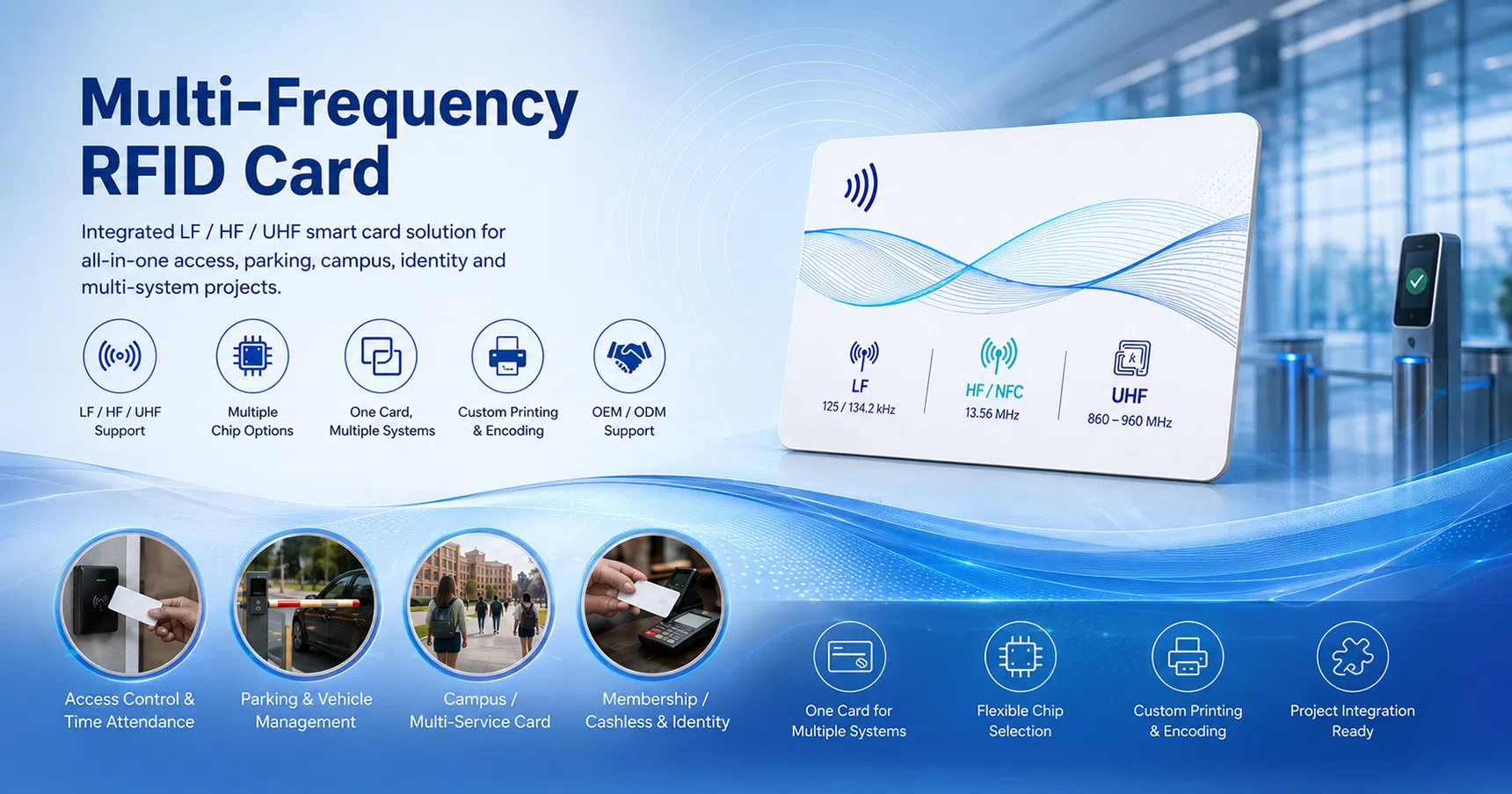
Multi-Frequency RFID Card | LF / HF / UHF Hybrid Smart Card
One Card for Access, Parking, Campus & Identity Systems
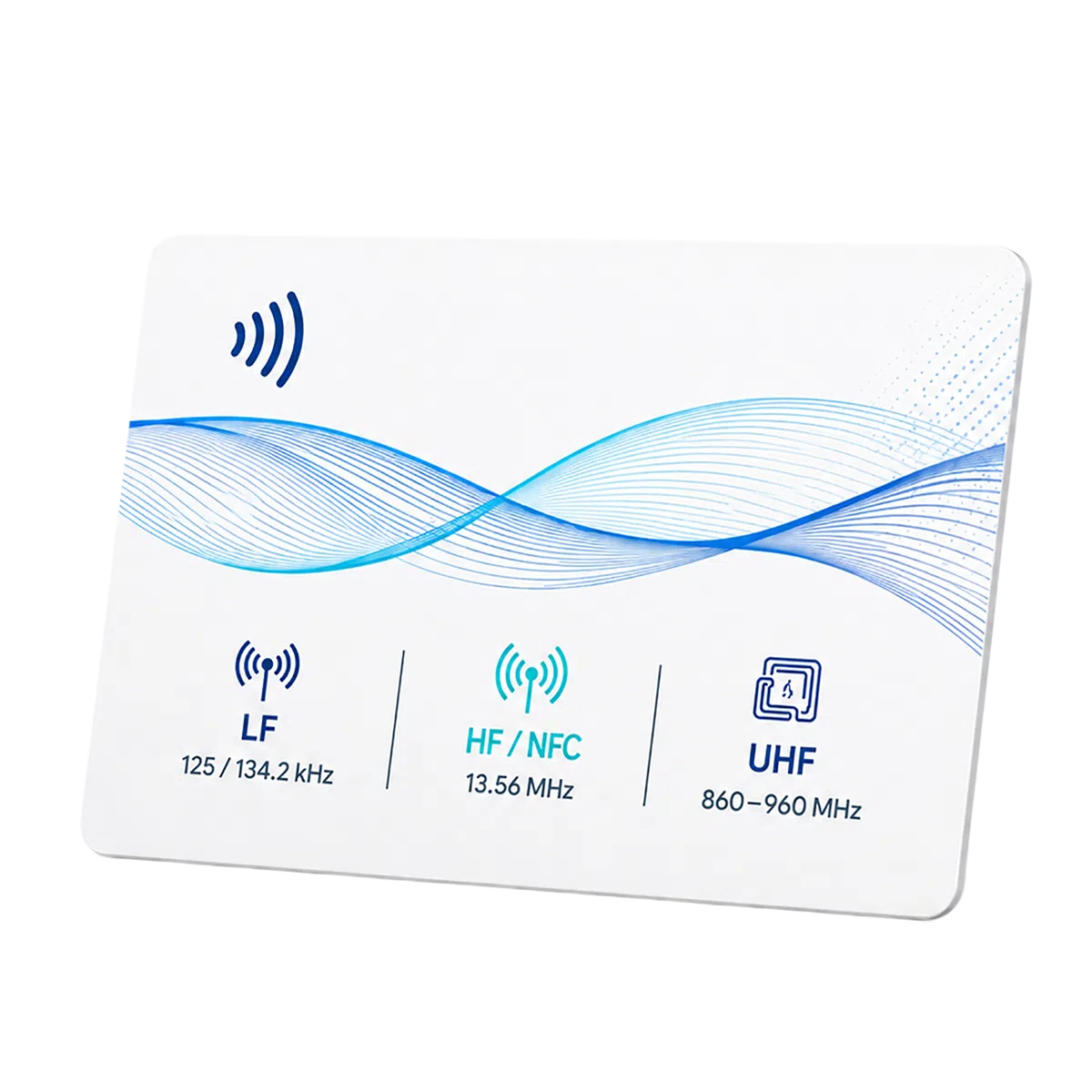
Integrate LF (125 / 134.2 kHz), HF / NFC (13.56 MHz) and UHF (860–960 MHz) into a single card body, so one credential works across access control, parking, campus and identity systems. Chip combination, memory, security level, printing and encoding are all customizable per project.
- 📡LF / HF / UHF
Support - ▣Multiple
Chip Options - 🔗One Card,
Multiple Systems - 🤝OEM / ODM
Support
Product Overview
A multi-frequency RFID card combines two or more RFID technologies — LF (125 / 134.2 kHz), HF / NFC (13.56 MHz) and UHF (860–960 MHz) — inside a single card body, so one credential can work across systems that would otherwise each require a separate card. A typical build pairs a low-frequency chip for legacy access with an HF smart-card chip for secure payment and a UHF inlay for long-range vehicle or asset reading.
These cards suit organizations running access control, parking, campus services, identity programs and other integrated deployments on mixed reader infrastructure. Card structure, chip combination, memory, security level, printing and encoding are all customizable, so the card can be matched to the exact set of readers already installed.
Industry Application Needs
- One card for multiple RFID systems and user journeys
- Compatibility with existing LF, HF, NFC and UHF reader infrastructure
- Flexible chip and security options for different project security levels
- Stable performance for daily issuance and repeated tap use
- Consistent printing, numbering and encoding across a full deployment
- Support for phased migration between LF, HF and UHF systems
Our Advantages
Dual & Multi-Frequency Builds
LF, HF/NFC and UHF combined in any two- or three-band configuration to match your systems.
Broad Chip Platform Choice
Mainstream LF, HF, NFC and UHF chip families from NXP, Impinj, EM, Microchip and more.
Engineered for Stable Multi-Band
Antenna and stack-up designed so each band performs reliably in one card body.
OEM / ODM Support
Enterprise, campus, parking and integrated identity projects supported from sample to volume.
Typical Multi-Frequency Configurations
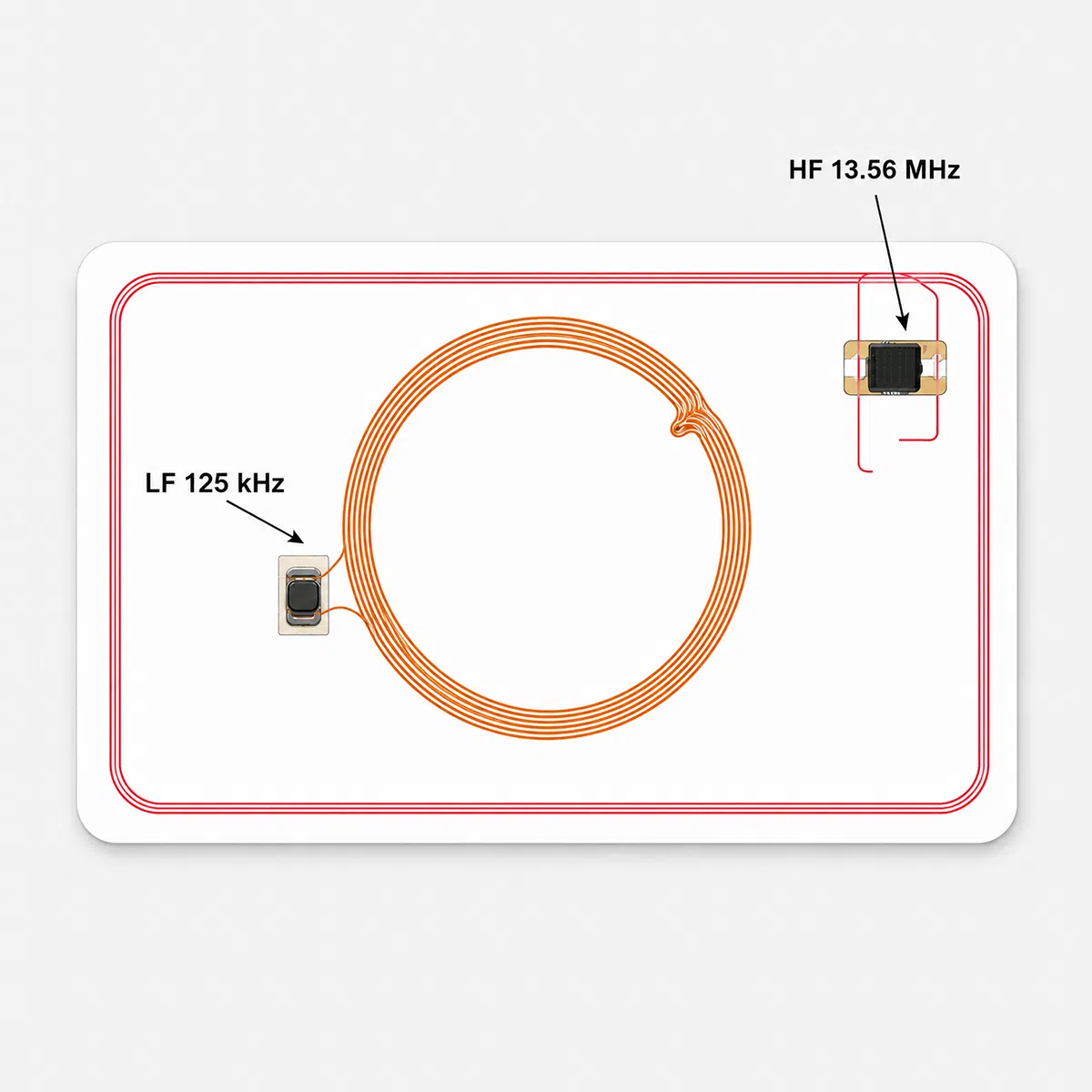
LF + HF Dual-Frequency Card
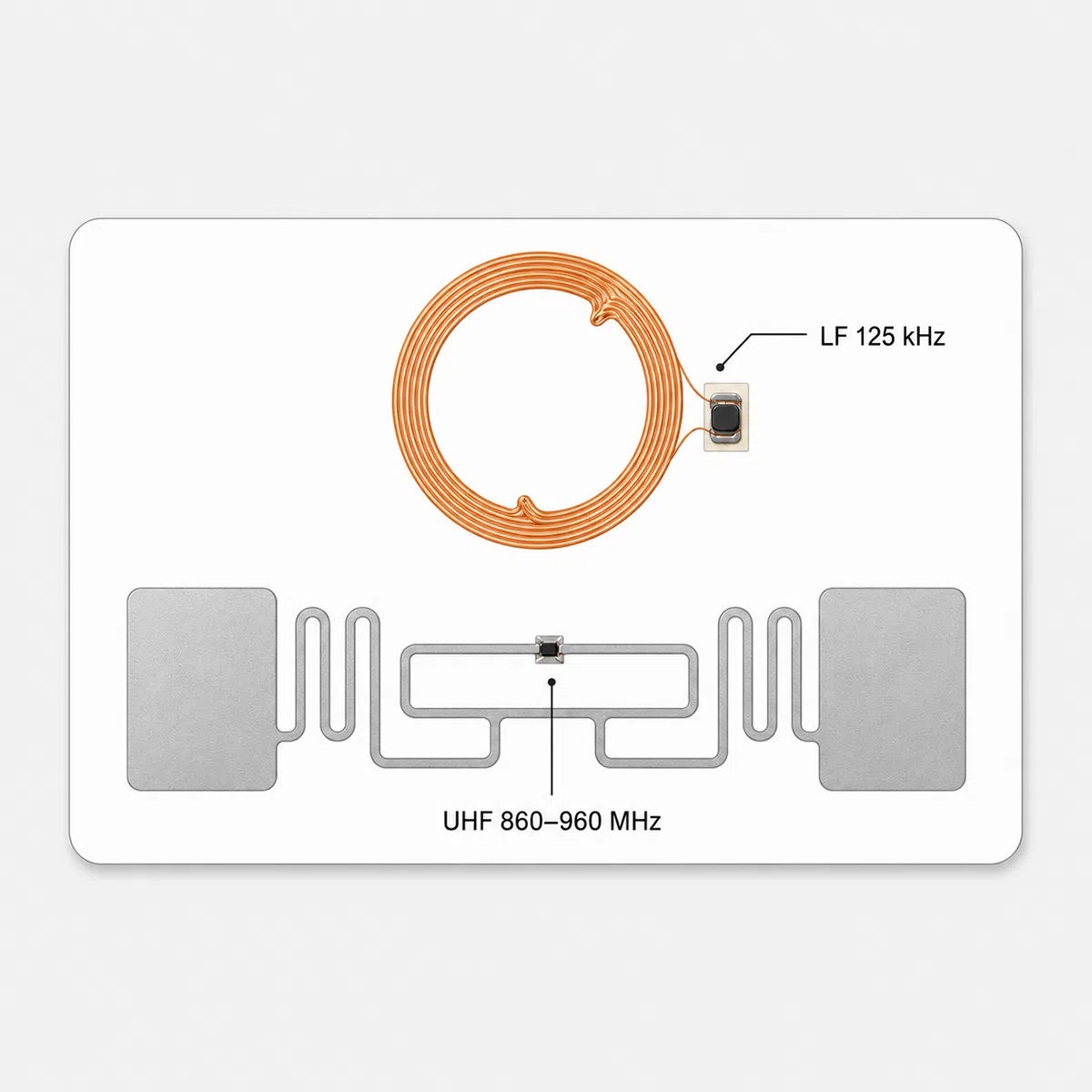
LF + UHF Dual-Frequency Card
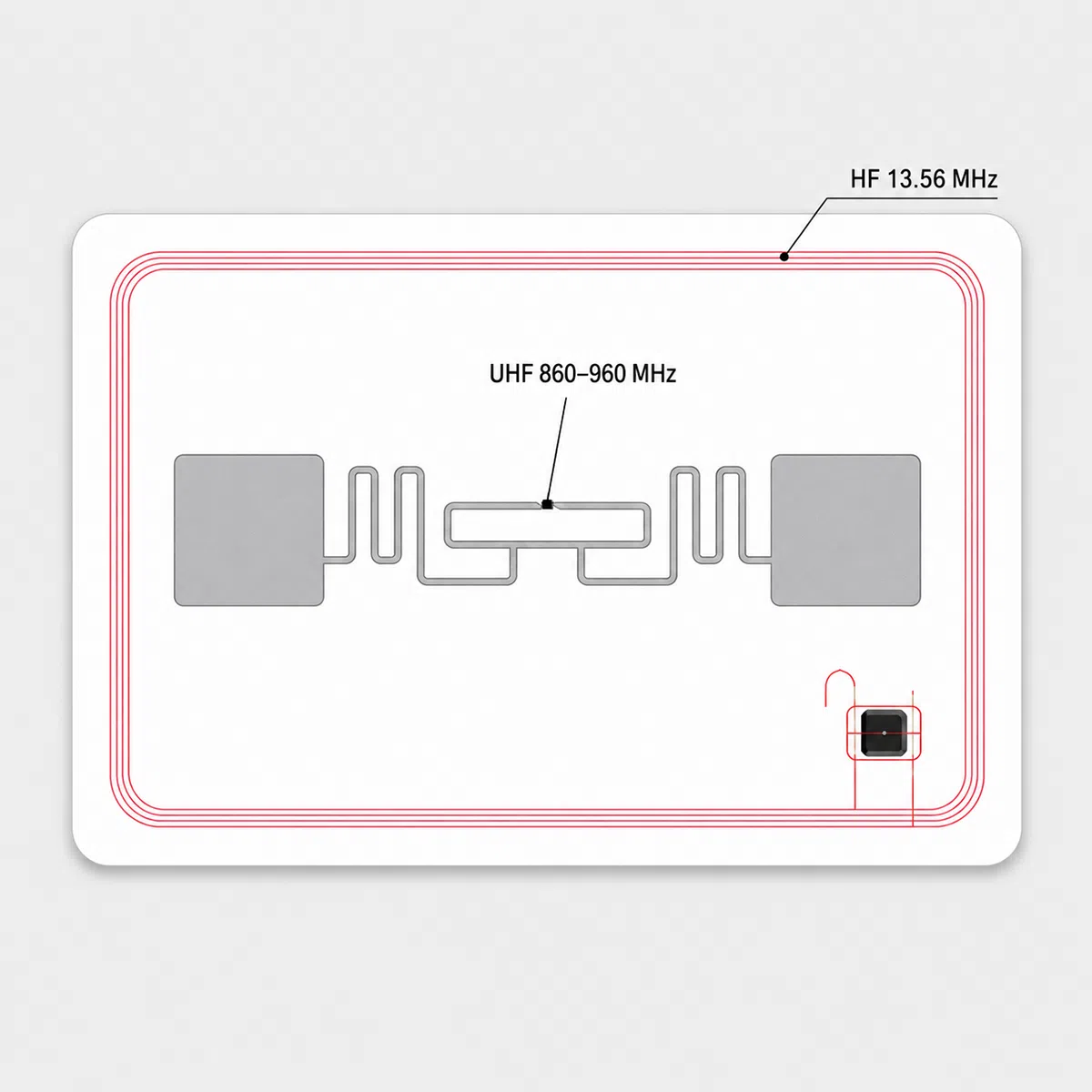
HF + UHF Hybrid Card
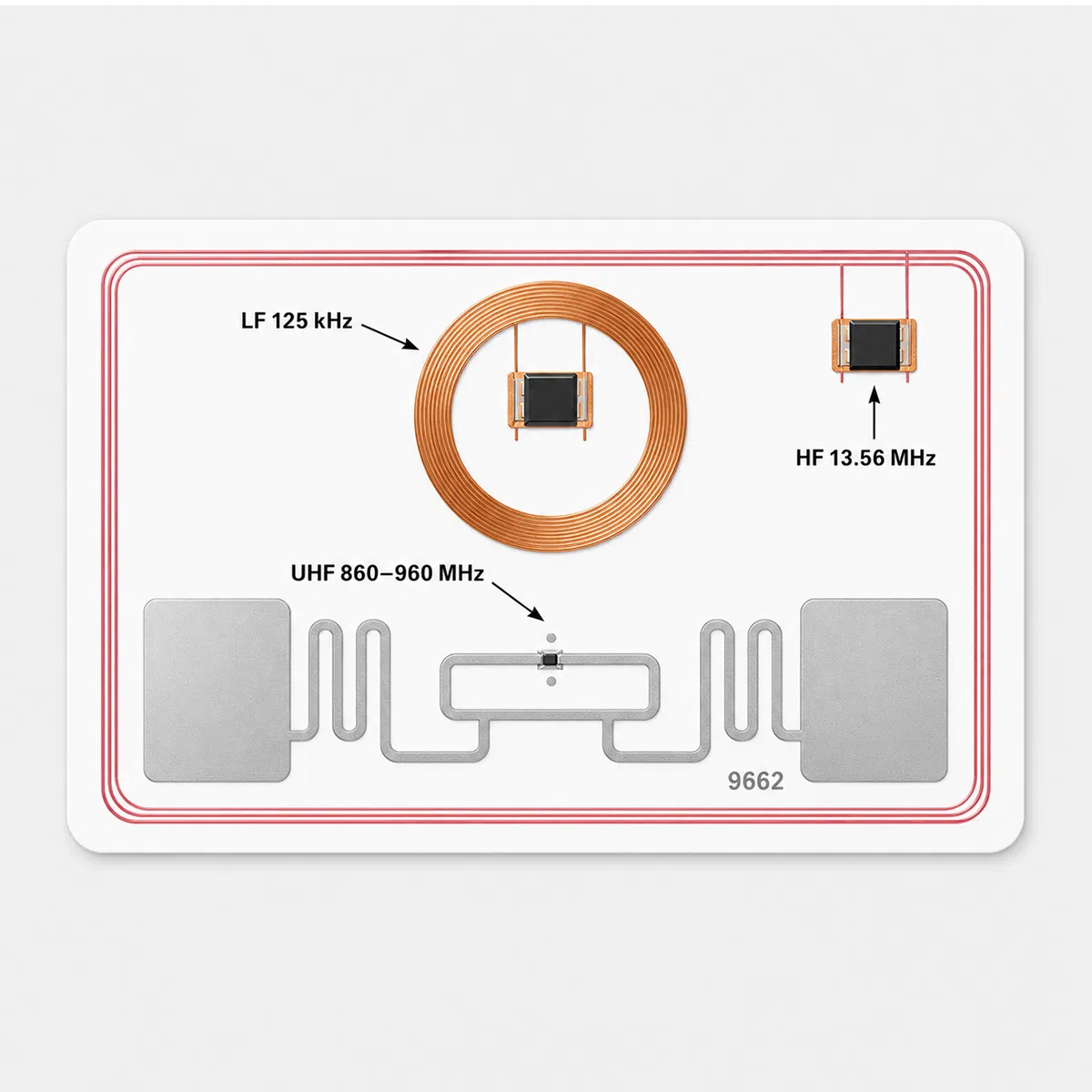
LF + HF + UHF Multi-Frequency Card
Key Technical Highlights
Key Features
- One card works across access, parking, campus and identity
- LF, HF/NFC and UHF combined in a single card body
- Fewer credentials to issue, carry and manage
- Bridges legacy LF systems to newer HF or UHF readers
- Choose the chip for each frequency band per project
- AES-128 / 256 and secure key management on HF
- EPC Gen2v2 with access and kill passwords on UHF
- Read-only or read/write depending on selected chips
- Offset, silk-screen or digital full-colour printing
- UID, serial number, barcode and QR code personalization
- Signature panel and magnetic stripe optional
- Pre-encoding and pre-programming services available
Technical Specifications
| Card Type | Multi-Frequency RFID Card / Hybrid RFID Card |
| Frequency Combination | Two or more of LF 125 / 134.2 kHz, HF 13.56 MHz, UHF 860–960 MHz |
| Common Configurations | LF + HF, LF + UHF, HF + UHF, LF + HF + UHF |
| Protocols / Standards | LF: proprietary / ISO 11784/85 (FDX-B); HF/NFC: ISO/IEC 14443A/B, ISO/IEC 15693, NFC Forum; UHF: EPC Class 1 Gen 2 / ISO/IEC 18000-63 |
| Chip Options | LF: EM4200 / T5577 / EM4305 / HITAG; HF/NFC: MIFARE Classic / Plus / DESFire, NTAG, ICODE; UHF: Impinj M700 & Monza, NXP UCODE 9, Alien Higgs |
| Memory Capacity | Varies by chip combination: LF UID-only up to ~3 kbit; HF/NFC 48 B up to 8 kB or higher; UHF 96–496-bit EPC + optional user memory |
| Read / Write Type | Read-only or read/write, depending on selected chips per band |
| Data Retention | Typically 10 years or longer, chip-dependent |
| Operating Temperature | Typically -25°C to +70°C, varies by chip and card material |
| Security / Encryption | UID-only / password / Crypto-1 / AES-128 / AES-256 / UHF access & kill password, depending on chip |
| Card Size | CR80, 85.60 × 53.98 mm standard; custom structures on request |
| Thickness | 0.76 mm standard; may vary by chip / antenna stack-up |
| Material | PVC / PET / PETG / ABS optional |
| Finish | Glossy / Matte / Frosted |
| Personalization | Offset / silk-screen / digital printing, UID / serial number, barcode, QR code, signature panel, magnetic stripe optional, encoding services |
Volume Pricing
| Quantity | Unit Price (USD / pc) |
|---|---|
| 100 – 199 pcs | From US$0.31 |
| 200 – 299 pcs | From US$0.29 |
| 300+ pcs | Contact Sales |
Final unit price depends on the chip combination, card configuration, printing and order quantity — contact us for an exact quote.
Supported Chip Platforms & Combinations
A multi-frequency card is built by combining one chip per frequency band. The table below lists common chip combinations for each of the four configurations; single-die options (EM4423 / EM4425) cover NFC + UHF on one chip. Any chip from the supported families can be paired — exact ordering codes are confirmed per project.
- NXP
- Impinj
- EM Microelectronic
- Microchip
- Alien
- STMicroelectronics
- Infineon
- Fudan
| LF Chip | HF / NFC Chip | UHF Chip | Best For |
|---|---|---|---|
| LF + HF Dual-Frequency | |||
| T5577 | MIFARE Classic EV1 | — | Access + campus, legacy-compatible, rewritable |
| EM4200 | MIFARE DESFire EV3 AES | — | Prox access + secure payment / multi-app ID |
| T5577 | MIFARE Plus EV2 AES | — | Universal LF + upgraded HF security |
| EM4305 | NTAG 216 | — | R/W access + NFC smartphone interaction |
| HITAG S | MIFARE Ultralight EV1 | — | Access + low-cost disposable / ticketing |
| LF + UHF Dual-Frequency | |||
| EM4200 | — | NXP UCODE 9 | Staff access + vehicle / parking |
| T5577 | — | Impinj M730 | Rewritable access + long-range asset read |
| HITAG S | — | Alien Higgs-3 | Industrial ID + UHF tracking |
| EM4100 | — | NXP UCODE 8 | Cost-optimized access + parking |
| EM4305 | — | Impinj M750 | R/W access + high-sensitivity UHF read |
| HF + UHF Hybrid | |||
| — | MIFARE DESFire EV3 AES | NXP UCODE 9 | Secure access + inventory / supply chain |
| — | MIFARE Classic EV1 | Impinj M730 | Access + retail / logistics UHF |
| — | ICODE SLIX2 | Alien Higgs-4 | Library / item-level retail + UHF |
| — | MIFARE DESFire EV3 AES | NXP UCODE 8 | Secure payment + logistics tracking |
| — | EM4425 — single die (NFC + UHF) AES | One chip: NFC tap + UHF read, shared memory | |
| — | EM4423 — single die (NFC + UHF) | Smart packaging: brand NFC + UHF logistics | |
| LF + HF + UHF Multi-Frequency | |||
| T5577 | MIFARE DESFire EV3 AES | NXP UCODE 9 | Full multi-system: access + campus + parking |
| EM4200 | MIFARE Classic EV1 | Impinj M730 | Cost-optimized triple-band deployment |
| T5577 | MIFARE Plus EV2 AES | Impinj M750 | High-security ID + long-range asset read |
| EM4305 | NTAG 216 | NXP UCODE 8 | Access + NFC engagement + UHF tracking |
Combinations shown are common examples; any LF, HF/NFC and UHF chip from the supported families can be paired per project. Crypto-1 (MIFARE Classic) is legacy and not recommended for new secure deployments — use MIFARE Plus / DESFire, ICODE DNA or NTAG 424 DNA instead.
Application Scenarios
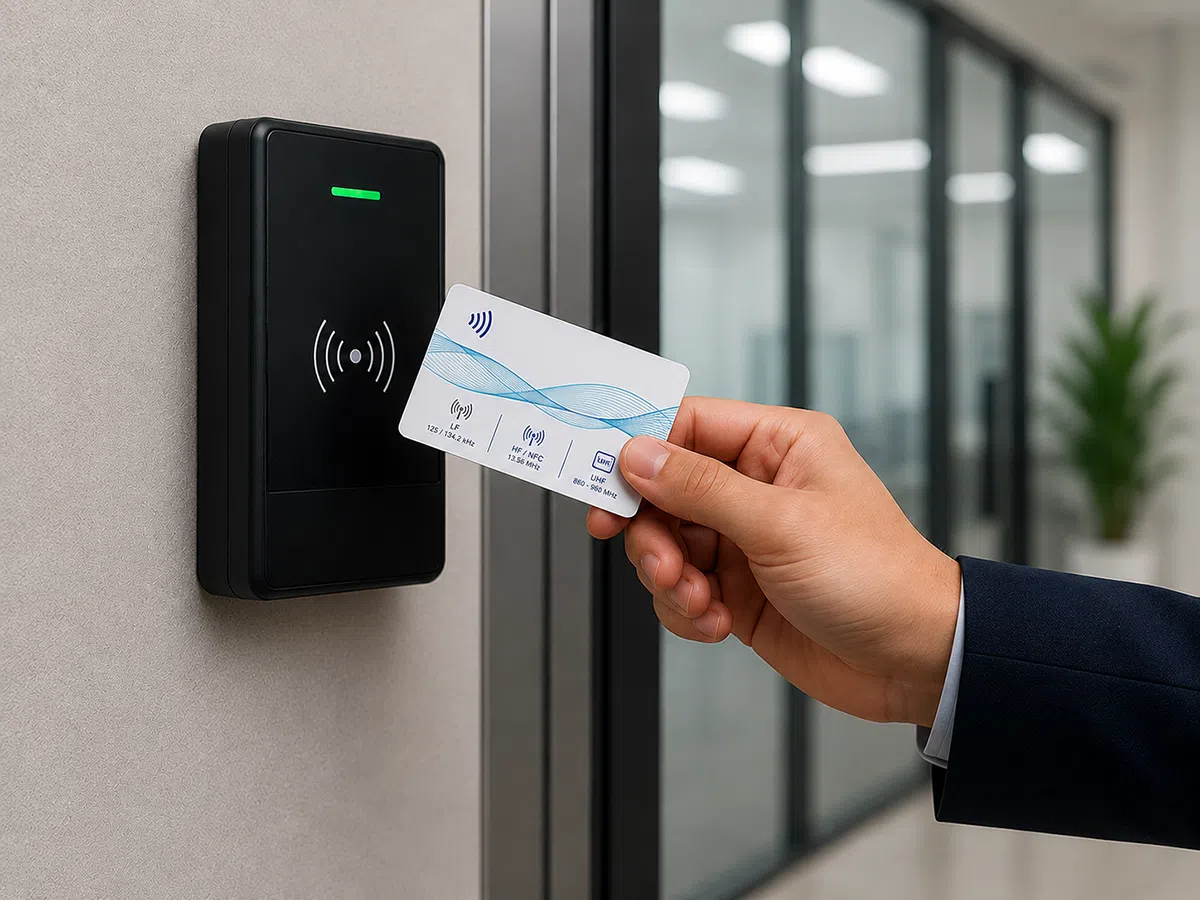
- LF or HF badge for secure door access
- Time-attendance logging on the same card
- Works with installed prox and smart-card readers
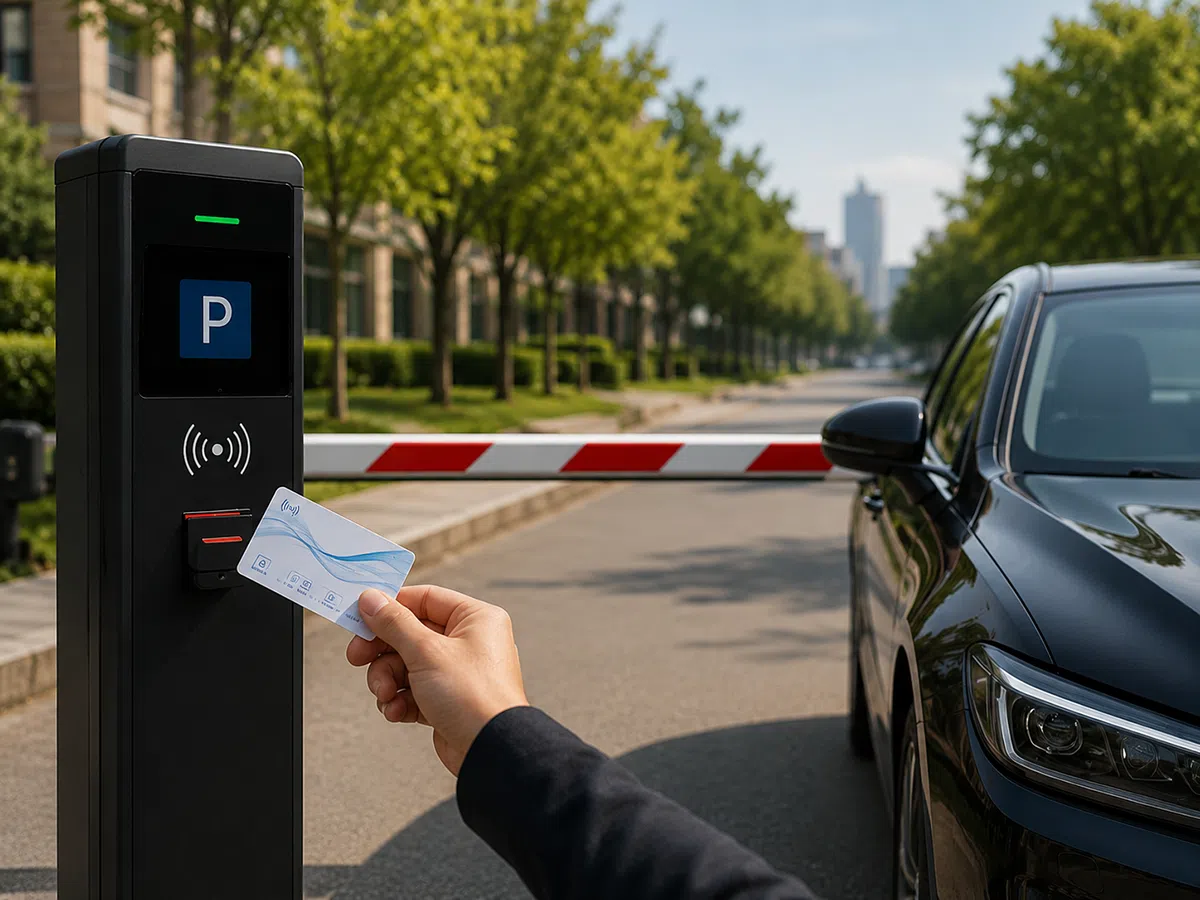
- UHF long-range read at barrier gates
- Same card handles staff door access
- Hands-free reading from several metres

- One card for library, canteen and access
- HF secure payment plus LF legacy doors
- Student or staff identity across campus
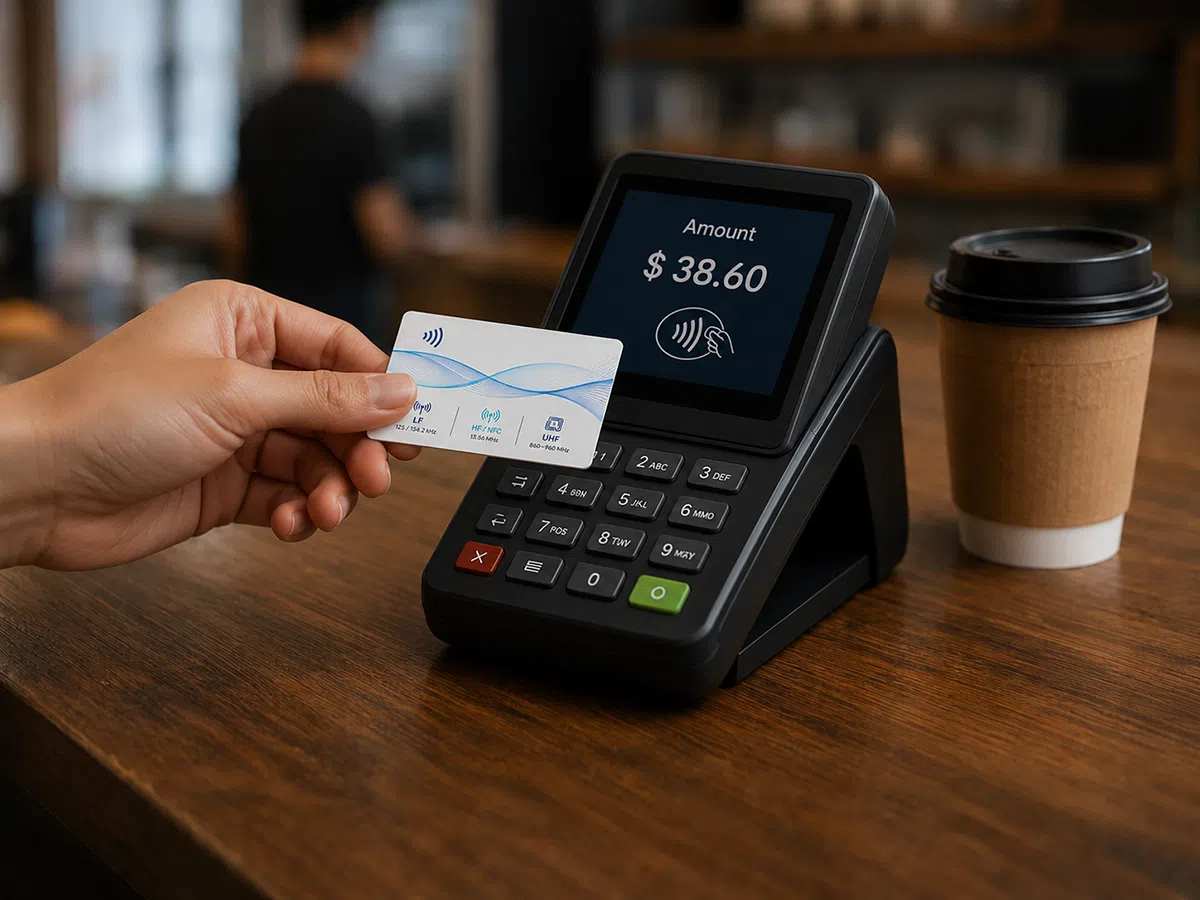
- NFC tap for loyalty and check-in
- Cashless payment with secure HF chip
- Combined membership and identity credential
Frequently Asked Questions
What frequencies and chips can a multi-frequency RFID card combine?
A multi-frequency card combines two or more of LF (125 / 134.2 kHz), HF / NFC (13.56 MHz) and UHF (860–960 MHz), with a separate chip for each band. Common choices are EM4200, T5577 or EM4305 for LF; MIFARE Classic / DESFire, NTAG or ICODE for HF/NFC; and Impinj M700, NXP UCODE 9 or Alien Higgs for UHF. Single-die options such as EM4423 and EM4425 place NFC and UHF on one chip with shared memory.
Will a multi-frequency card work with our existing LF, HF, NFC and UHF readers?
Yes. Each band in the card follows the same standards as your single-frequency cards — ISO/IEC 14443A/B and 15693 for HF/NFC, EPC Gen2v2 / ISO 18000-63 for UHF, and standard LF protocols — so existing readers read their matching band without hardware changes. We select chips to match the readers you already run; share your reader models and we will confirm compatibility before production.
Which projects benefit most from an LF / HF / UHF multi-frequency card?
They suit organizations running several RFID systems at once, such as access control plus parking, campus services and identity, where one card can replace multiple credentials. They are also useful when migrating from legacy LF systems to newer HF or UHF readers, since the card can carry both the old and new technologies during the transition.
What are the MOQ, customization options and lead time for these cards?
MOQ depends on the chip combination, typically from a few hundred up to around 1,000 pcs. Customization covers the chip chosen for each band, printing (offset, silk-screen or digital), UID / serial numbering, barcode and QR code, plus optional signature panel, magnetic stripe and pre-encoding. Lead time varies with the selected chips and printing — contact us with your configuration for exact MOQ, pricing and schedule.
Related Products
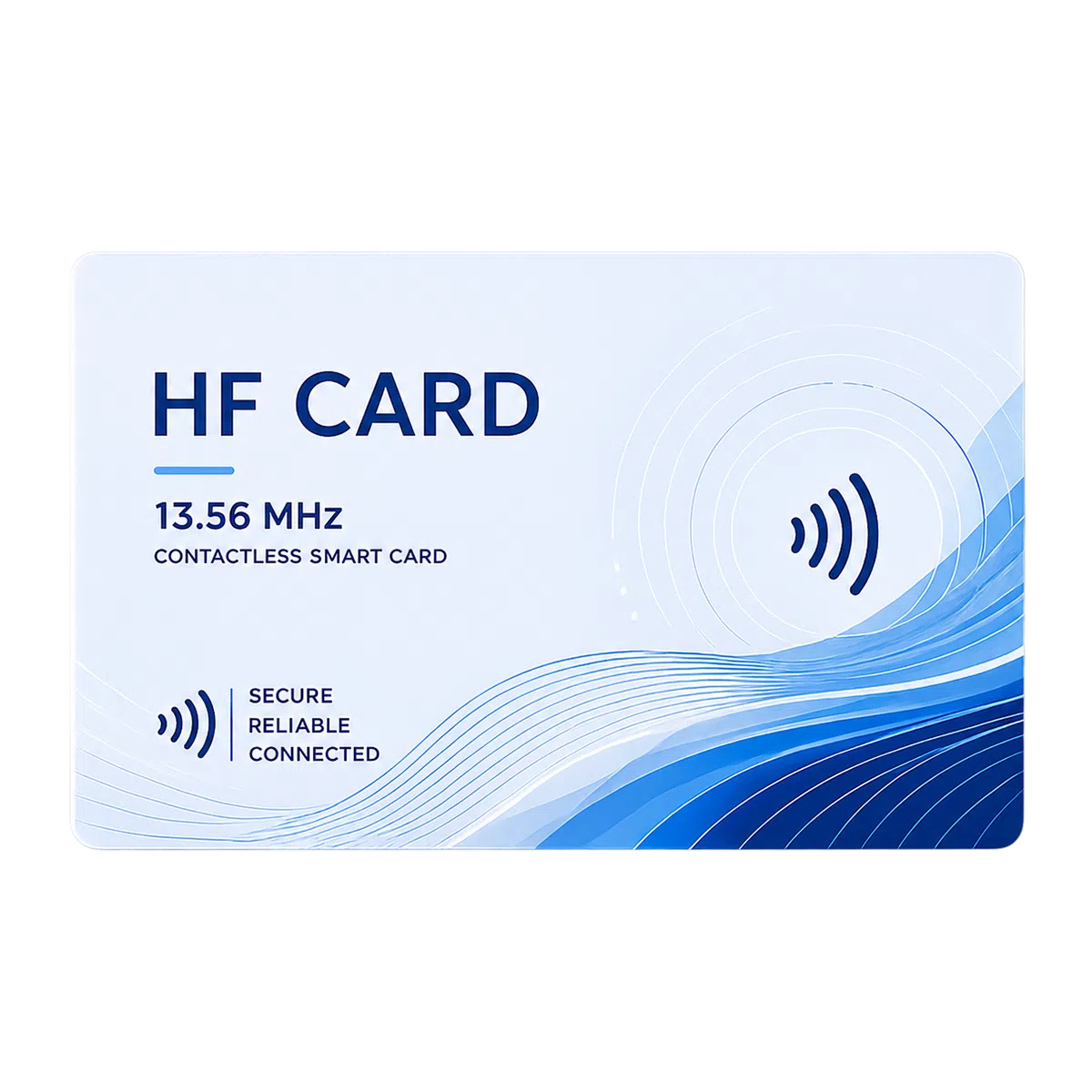
HF RFID Card | 13.56 MHz Contactless Smart Card
CedaGlo 13.56 MHz HF RFID cards with MIFARE Classic, DESFire, NTAG, ICODE chip options. Ideal for access control, transit, campus & payment. OEM/ODM available.
View Details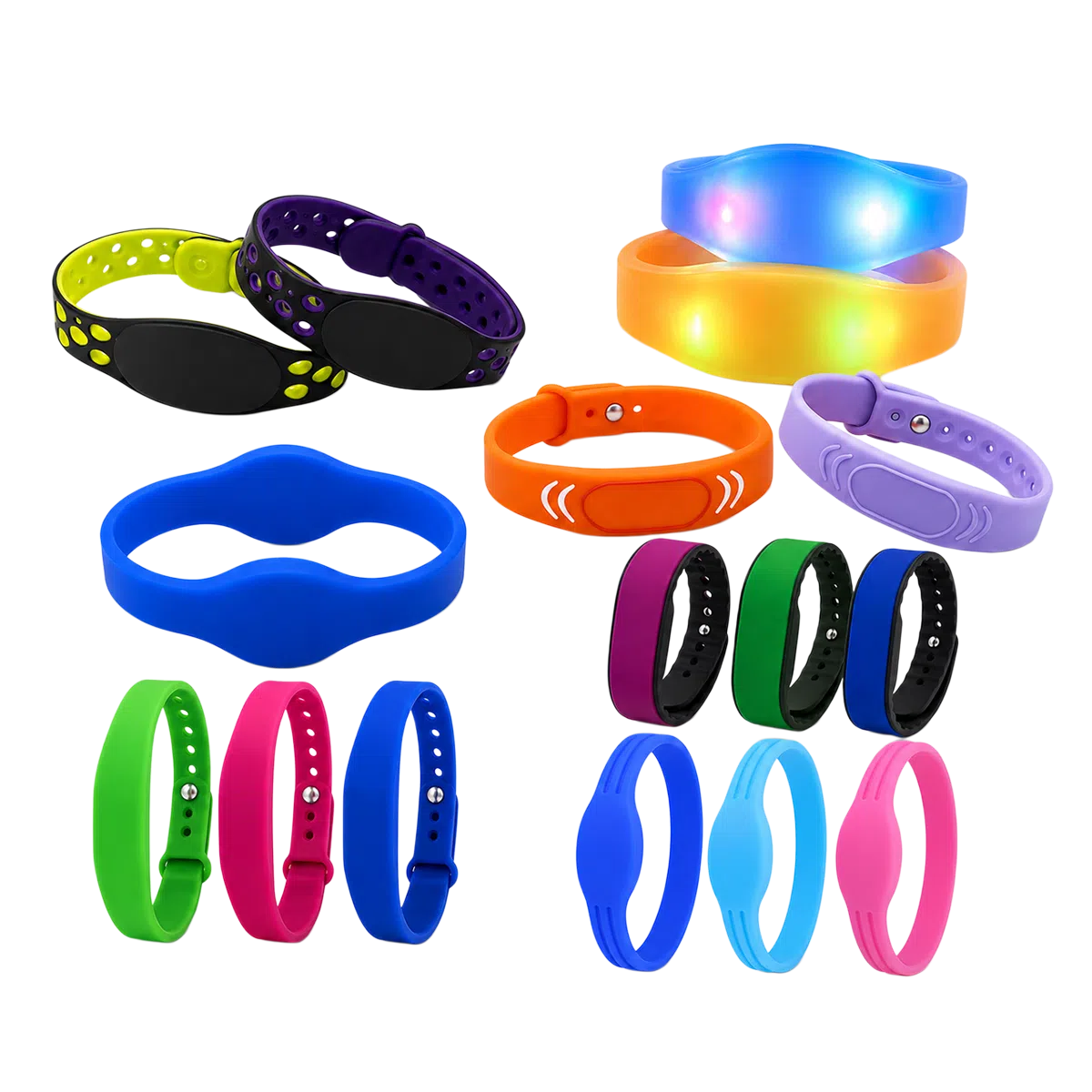
CedaGlo Custom RFID Silicone Wristbands
Reusable custom silicone RFID wristbands with LF, HF and NFC chip options for events, access control, cashless payment and brand promotion.
View Details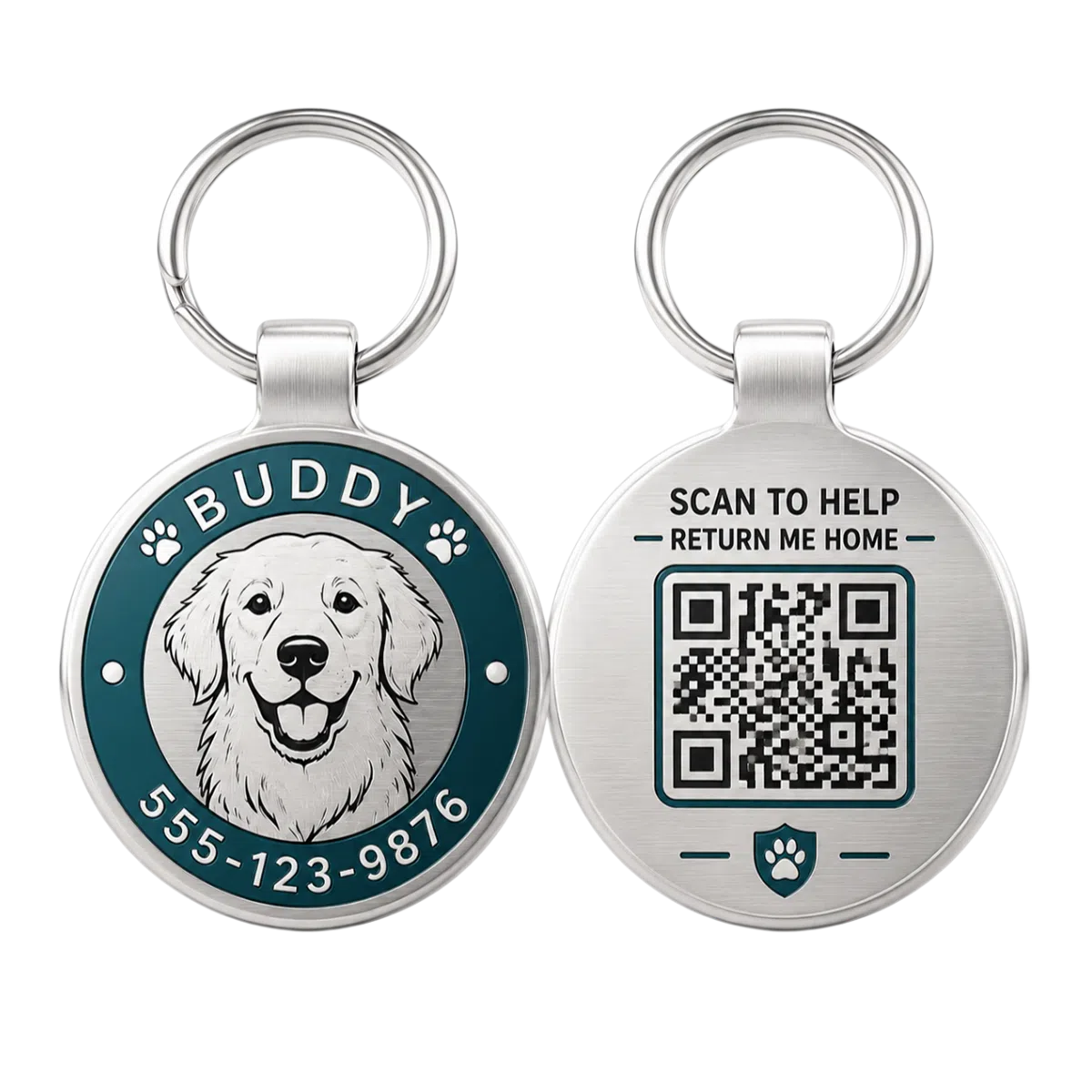
CedaGlo Custom NFC & QR Code Pet ID Tags
Custom NFC QR code pet tags with chip selection, URL encoding, private-label artwork and OEM packaging. Programmable smart tags for online profiles.
View Details
Custom RFID Fabric Wristband for Events
Custom RFID fabric wristbands for event access, cashless payment and attendee ID. Choose chip, material, lock and printing.
View DetailsOne Card, Every System — Request Your Multi-Frequency Card Quote
Tell us which LF, HF/NFC and UHF systems you run, and we will recommend the right chip combination, then quote your exact configuration and volume.