
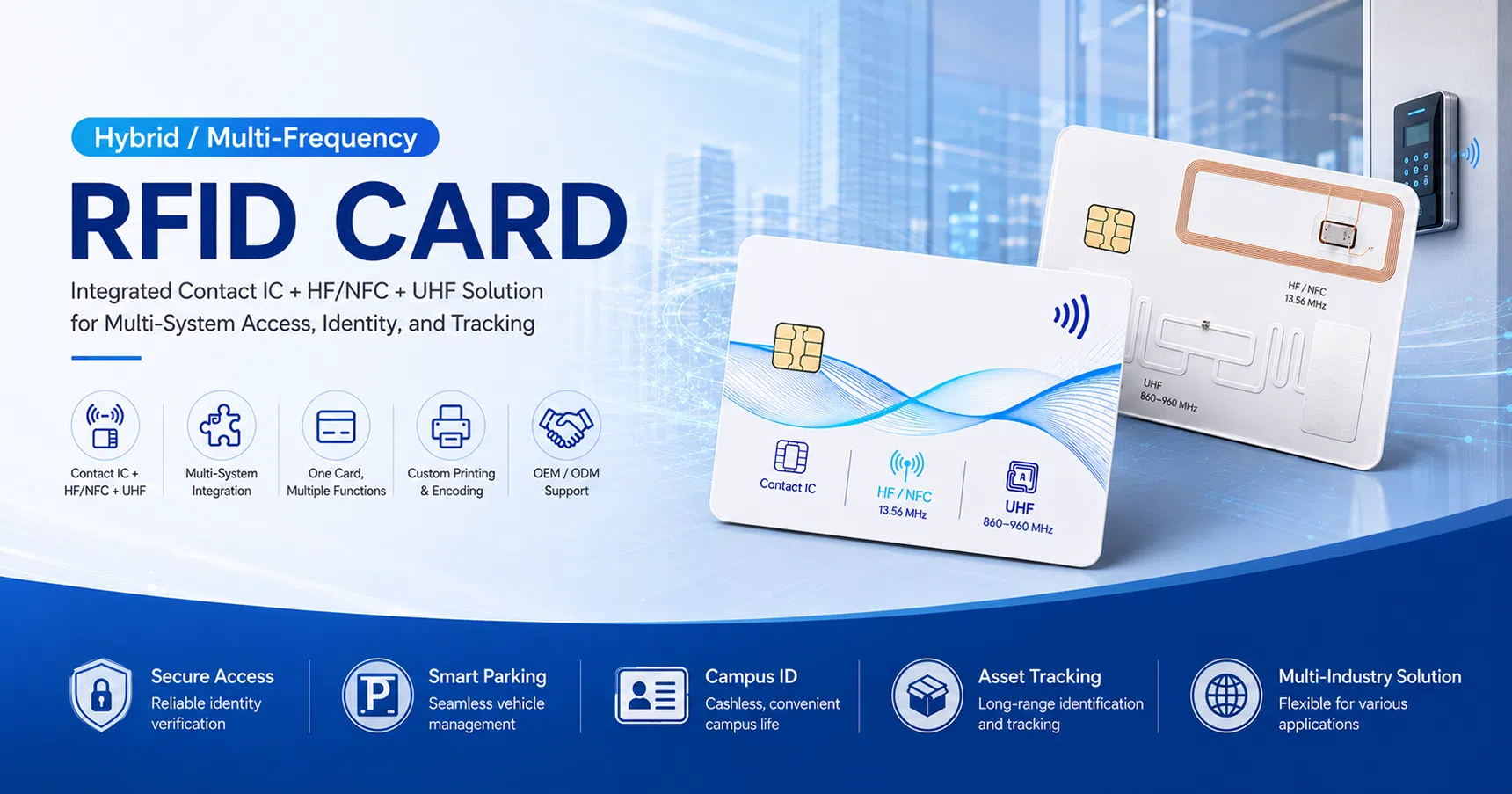
Hybrid RFID Card | Contact IC + HF/NFC + UHF Smart Card
Contact and Contactless in One Card for Secure Access, Payment & Identity
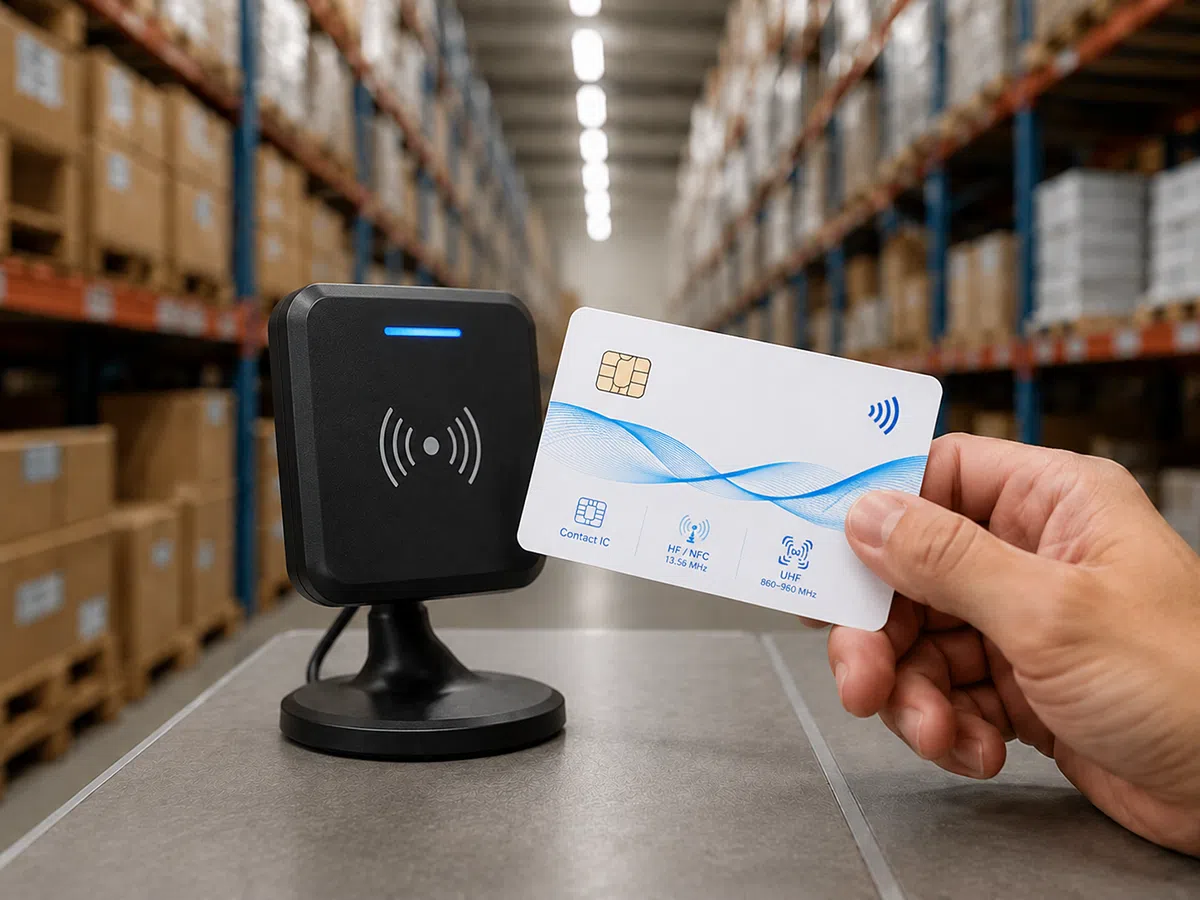
Combine a contact IC chip with HF / NFC (13.56 MHz) and UHF (860–960 MHz) in a single card body, so one credential handles secure contact transactions, short-range contactless interaction and long-range identification. Chip combination, memory, security level, printing and encoding are all customizable per project.
- Contact IC +
HF/NFC + UHF - Multiple
Chip Options - One Card,
Multiple Systems - OEM / ODM
Support
Product Overview
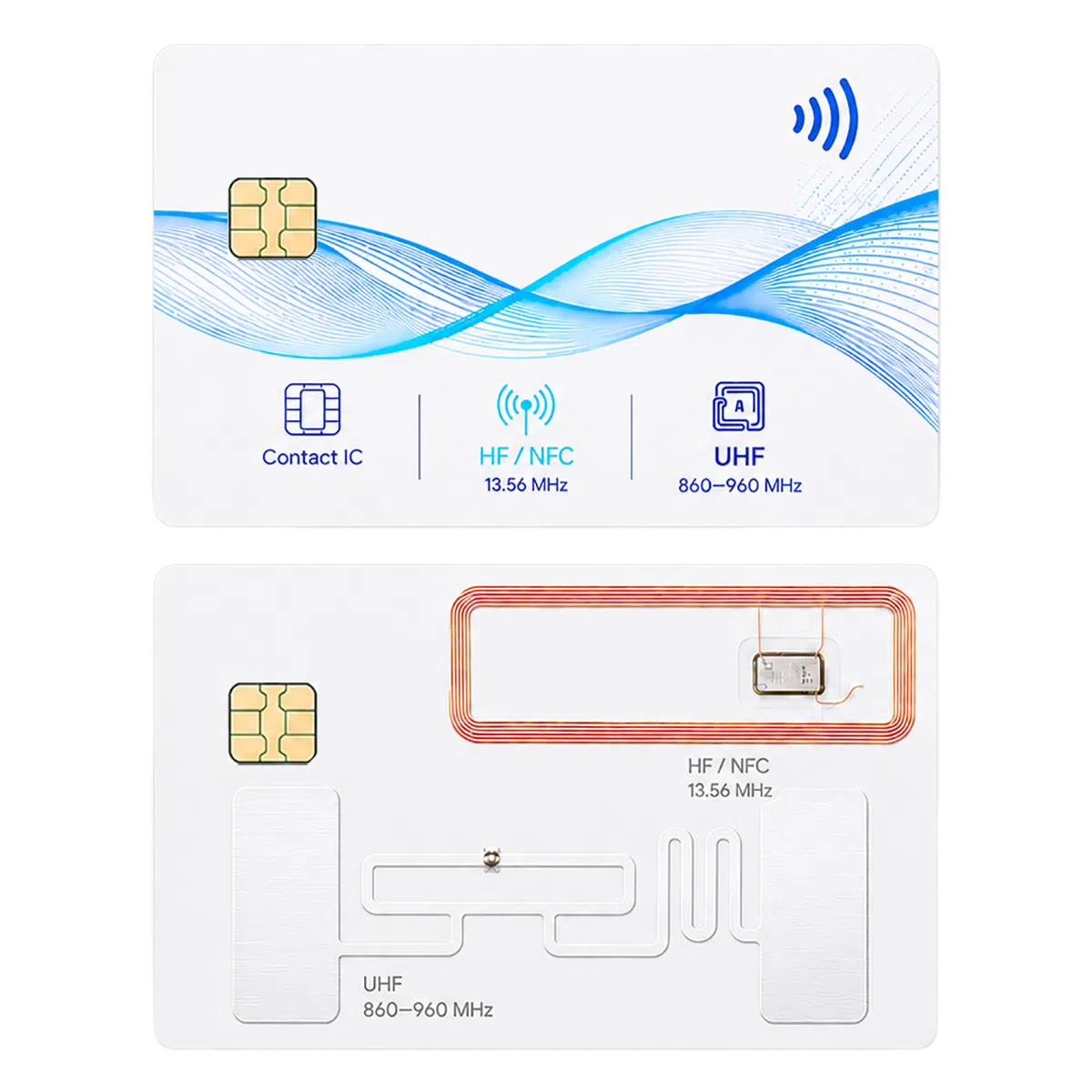
A hybrid RFID card combines a contact IC chip with an HF / NFC (13.56 MHz) chip and a UHF (860–960 MHz) chip inside one card body. The three chips are independent and not interconnected — each has its own contact pads or antenna and follows its own standard (ISO/IEC 7816 for the contact IC, ISO/IEC 14443 / 15693 for HF/NFC, EPC Gen2v2 for UHF) — so a single card serves secure contact transactions, short-range contactless interaction and long-range identification at the same time.
Because the three interfaces work on very different frequencies, a contact reader, an HF door reader and a UHF gate each communicate only with their matching chip, without interference. These cards suit organizations that need one credential to work across several existing systems — social-security and citizen cards, campus one-card programs, stored-value and access control. Contact IC selection, memory, security level, printing and encoding are all customizable per project.
Industry Application Needs
- One card for secure contact transactions plus contactless access
- Compatibility with existing contact, HF/NFC and UHF reader systems
- Bank-grade or Chinese SM cryptographic security for identity and payment
- Stable daily use for issuance, top-up and repeated access
- Consistent printing, numbering and encoding across a deployment
- Bridge legacy contact systems to newer contactless readers
Our Advantages
Contact + Contactless in One
A contact IC chip plus HF/NFC and UHF chips, three independent interfaces in one card body.
Bank-Grade & SM Security
Contact CPU chips supporting DES/3DES/RSA/ECC/AES and Chinese SM algorithms (SM2/SM3/SM4).
Broad Chip Platform Choice
Contact IC, HF/NFC and UHF families from NXP, Infineon, Fudan, Unigroup, Impinj and more.
OEM / ODM Support
Government, campus, enterprise and stored-value projects supported from sample to volume.
Key Technical Highlights
Key Features
- Contact IC for secure insert-and-read transactions
- HF/NFC for door access and smartphone tap
- UHF for long-range gate and asset reading
- Three independent chips, no cross-interference
- CPU chips with Chinese SM and PBOC support
- Logic-encryption chips for stored-value and membership
- Bank-grade CC EAL / EMVCo options available
- Security level chosen per project budget
- Offset, silk-screen or digital full-colour printing
- UID, serial number, barcode and QR code
- Signature panel and magnetic stripe optional
- Pre-encoding and pre-personalization available
Technical Specifications
| Card Type | Hybrid RFID Card / Composite Smart Card (contact + contactless) |
| Card Structure | Contact IC + HF/NFC + UHF, three independent chips in one card body |
| Frequency Combination | Contact interface + HF/NFC 13.56 MHz + UHF 860–960 MHz |
| Protocols / Standards | Contact: ISO/IEC 7816; HF/NFC: ISO/IEC 14443A/B, ISO/IEC 15693, NFC Forum; UHF: EPC Class 1 Gen 2 / ISO/IEC 18000-63 |
| Chip Options | Contact IC: Fudan FM1280 / FM1216 / FM1232 (SM & PBOC), Infineon SLE4442 / SLE4428, Fudan FM4442 / FM4428; bank-grade NXP SmartMX3, Unigroup THD89 optional. HF/NFC: MIFARE / DESFire / NTAG / ICODE. UHF: NXP UCODE, Impinj M700/M800, Alien Higgs |
| Memory Capacity | Varies by selected contact IC, HF/NFC and UHF chip |
| Read / Write Type | Read-only or read/write, depending on selected chips |
| Security / Encryption | Logic-encryption (password) to CPU-grade DES/3DES/RSA/ECC/AES and Chinese SM (SM2/SM3/SM4); UHF access & kill password |
| Data Retention | Typically 10 years or longer, chip-dependent |
| Operating Temperature | Typically -25°C to +70°C, varies by material and chip |
| Card Size | CR80, 85.60 × 53.98 mm standard; custom structures on request |
| Thickness | 0.76 mm standard; may vary with structure and chip stack-up |
| Material | PVC / PET / PETG / ABS optional |
| Finish | Glossy / Matte / Frosted |
| Personalization | Offset / silk-screen / digital printing, UID / serial number, barcode, QR code, signature panel, magnetic stripe optional, encoding services |
Volume Pricing
| Quantity | Unit Price (USD / pc) |
|---|---|
| 100 – 199 pcs | From US$0.32 |
| 200 – 299 pcs | From US$0.30 |
| 300+ pcs | Contact Sales |
Final unit price depends on the contact IC, HF/NFC and UHF chips selected, card configuration, printing and order quantity — contact us for an exact quote.
Supported Chip Platforms
A hybrid card carries three independent chips — one contact IC plus an HF/NFC chip and a UHF chip — each chosen per project. The contact IC drives security level and cost: Chinese SM / PBOC CPU chips for citizen, social-security and campus cards; logic-encryption chips for stored-value and membership; bank-grade CPU platforms where the highest certification is needed. Exact ordering codes are confirmed per project.
- Fudan / FMSH
- NXP
- Infineon
- Unigroup Tongxin
- STMicroelectronics
- Impinj
- Alien
- EM Microelectronic
| Chip | Brand | Security | Best For |
|---|---|---|---|
| Contact IC · ISO/IEC 7816 | |||
| FM1280 | Fudan | SM Bank-grade | Social-security, health, transit, citizen card (SM2/3/4 + PBOC) |
| FM1216 / FM1232 | Fudan | SM EAL4+ | Social-security, ESAM/PSAM, citizen and campus cards |
| SLE4442 / SLE4428 | Infineon | Password logic | Stored-value, membership, parking (cost-optimized security) |
| FM4442 / FM4428 | Fudan | Password logic | Stored-value, membership (domestic, cost-driven) |
| SmartMX3 P71D321 | NXP | CC EAL6+, EMVCo | Bank / eID grade (optional); dual-interface upgrade path |
| THD89 | Unigroup | EAL6+, EMVCo SM L2 | Bank / eID / social-security (optional highest security) |
| HF / NFC · 13.56 MHz | |||
| MIFARE DESFire EV3 | NXP | AES-128, EAL5+ | Secure access, payment, multi-application ID |
| MIFARE Classic EV1 | NXP | Crypto-1 (legacy) | Access, campus, closed-loop ticketing (existing systems) |
| NTAG 213 / 215 / 216 | NXP | Password | NFC tap, smartphone interaction, engagement |
| ICODE SLIX2 | NXP | Password, EAS | Library, item-level retail, longer HF range |
| UHF / RAIN · 860–960 MHz | |||
| UCODE 9 | NXP | Access & kill password | Retail, logistics, self-adjusting mainstream UHF |
| Impinj M730 / M750 | Impinj | Access & kill password | High-sensitivity inventory and gate reading |
| Higgs-3 / Higgs-4 | Alien | Access & kill password | Asset tracking, logistics, large user memory |
Chips are listed at family / ordering level; exact part suffixes (memory, package, certification) are confirmed per project. China CPU chips (Fudan, Unigroup) are functional equivalents to NXP / Infineon / ST and support Chinese SM (SM2/SM3/SM4) plus DES/3DES/RSA/ECC/AES. Crypto-1 (MIFARE Classic) is legacy — use DESFire or MIFARE Plus for new secure deployments.
Application Scenarios
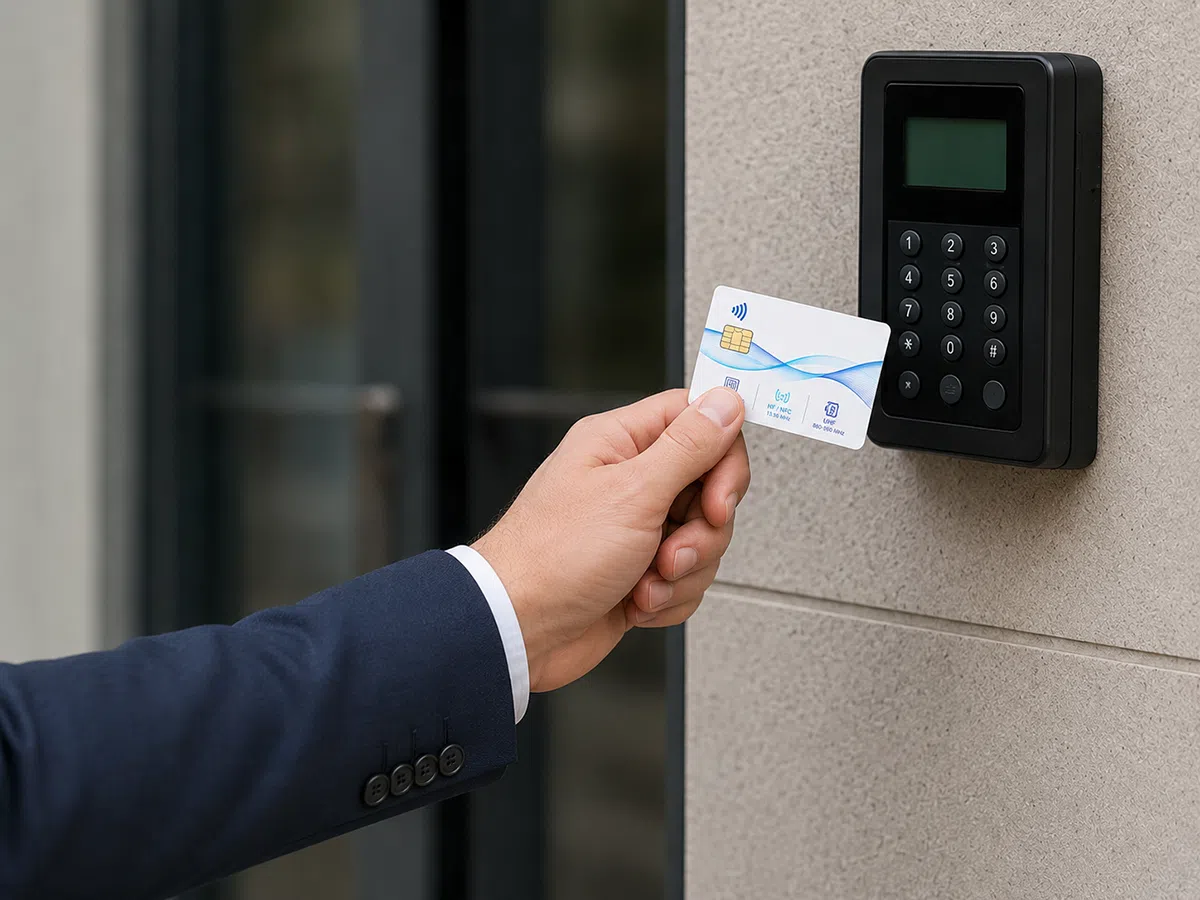
- Contact or HF badge for secure access
- One credential for staff identification
- Works with installed contact and door readers
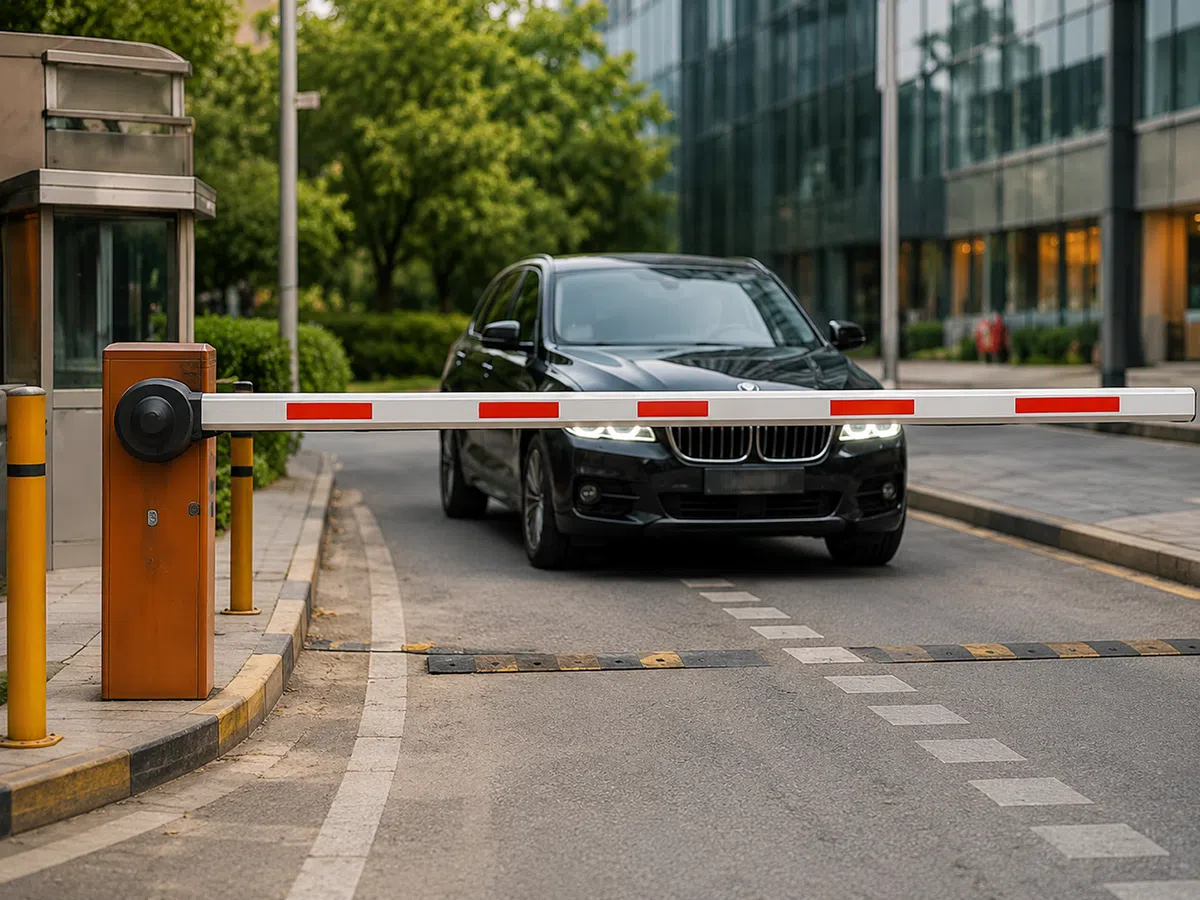
- UHF long-range read at barrier gates
- Same card handles staff door access
- Hands-free vehicle entry

- Contact CPU for secure stored-value
- HF tap for library, canteen and access
- Campus or membership one-card program
- UHF long-range asset and inventory read
- Secure card functions alongside tracking
- Multi-system logistics deployments
Frequently Asked Questions
What is a hybrid RFID card and which chips does it combine?
A hybrid RFID card combines a contact IC chip with an HF / NFC (13.56 MHz) chip and a UHF (860–960 MHz) chip in one card body. The three chips are independent and not interconnected — the contact IC follows ISO/IEC 7816, HF/NFC follows ISO/IEC 14443 / 15693, and UHF follows EPC Gen2v2 / ISO 18000-63. Because the frequencies are far apart, each reader communicates only with its matching chip, so one card can serve secure contact transactions, contactless access and long-range identification without interference.
What is the difference between a hybrid card and a dual-interface card?
A hybrid (combi) card holds two or more separate chips laminated in one body, each with its own memory and data — ideal when one card must work across several independent systems. A dual-interface card uses a single chip that exposes both a contact and a contactless interface sharing the same memory, keys and data — the right choice when contact and contactless must be the same identity or wallet, such as a banking card. If you need shared data across both interfaces, see our dual-interface CPU card; a hybrid can also pair a dual-interface chip with a separate UHF chip on request.
Which projects benefit most from a contact + contactless hybrid card?
They suit organizations running several credential systems at once — social-security and citizen cards, campus one-card programs, stored-value and membership, access control plus parking and asset tracking. The contact IC handles secure transactions and identity (with Chinese SM or PBOC where required), while HF/NFC covers day-to-day access and UHF covers long-range gate or asset reading. Hybrids are also useful when migrating from legacy contact systems to newer contactless readers.
What are the MOQ, customization options and lead time for hybrid cards?
MOQ depends on the chip combination, typically from a few hundred up to around 1,000 pcs. Customization covers the contact IC, HF/NFC and UHF chips, printing (offset, silk-screen or digital), UID / serial numbering, barcode and QR code, plus optional signature panel, magnetic stripe and pre-encoding. Lead time varies with the selected chips and personalization — contact us with your configuration for exact MOQ, pricing and schedule.
Related Products
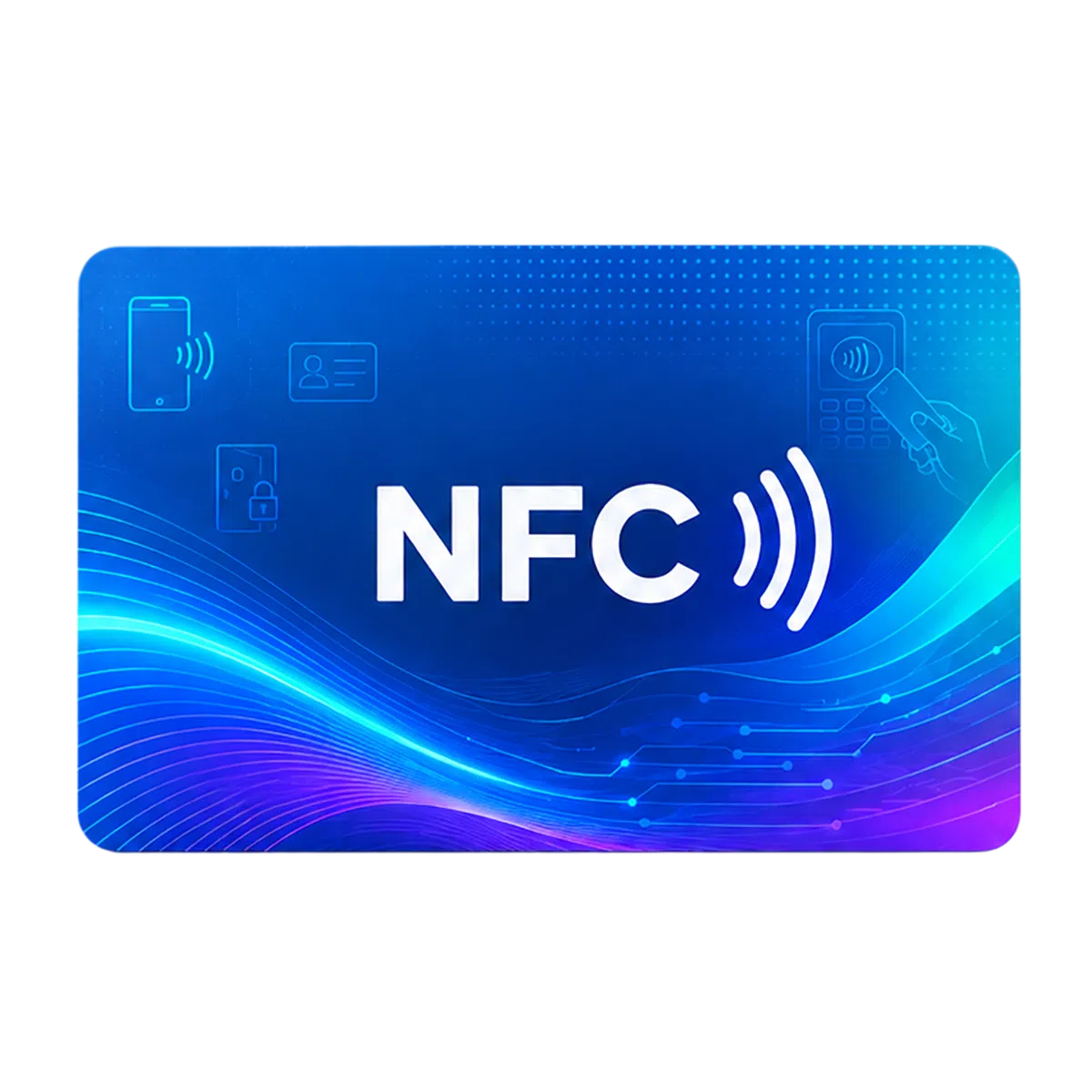
NFC Card | Smartphone-Interactive Contactless Card
Custom 13.56 MHz NFC cards with NTAG, MIFARE Ultralight, DESFire chip options. Ideal for digital business cards, marketing, events & loyalty.
View Details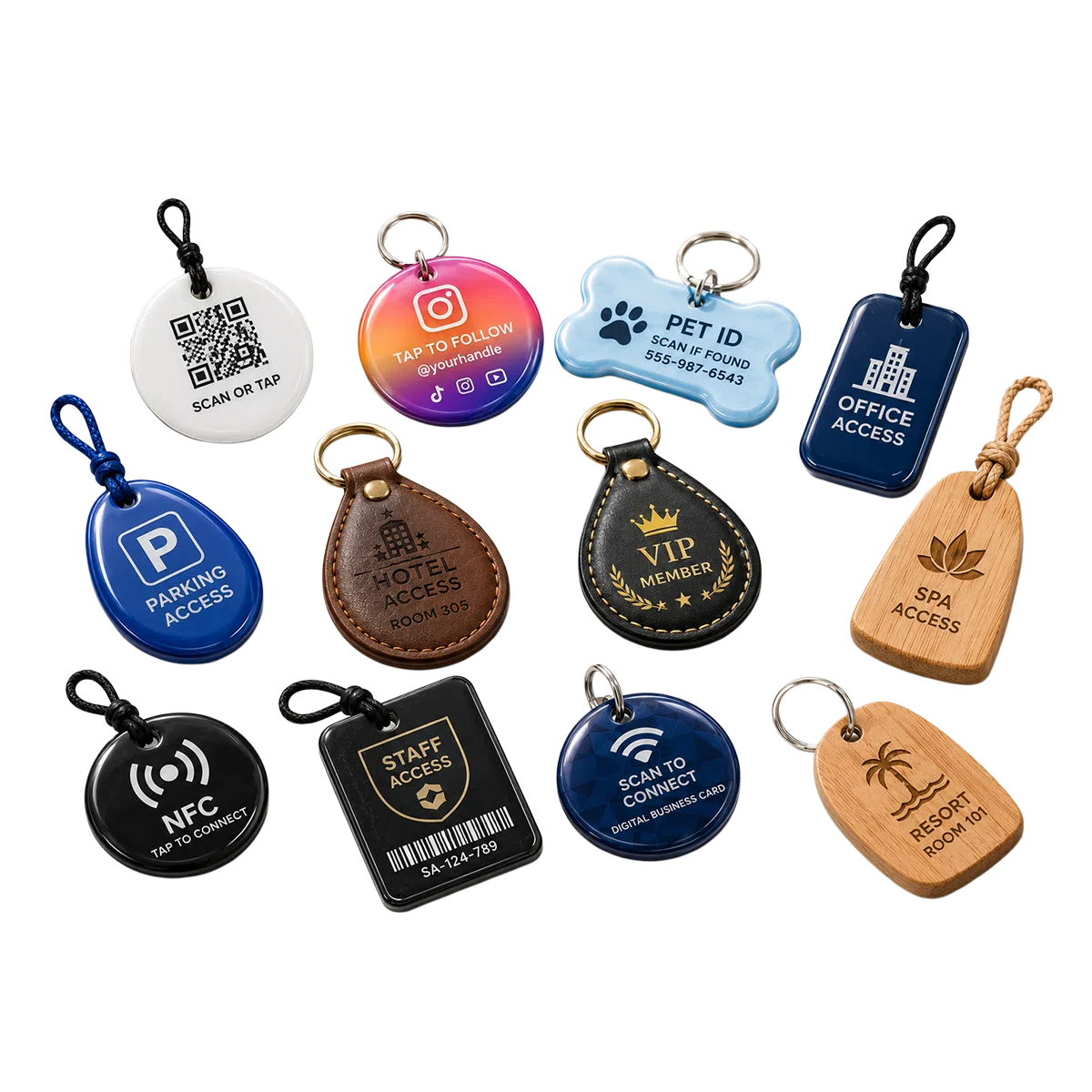
Custom RFID Keyfob │ ABS, Epoxy, Leather & Wood
Order custom RFID keyfobs in ABS, epoxy, leather or wood with LF, HF and NFC chips, logo printing, UID encoding and volume pricing support.
View Details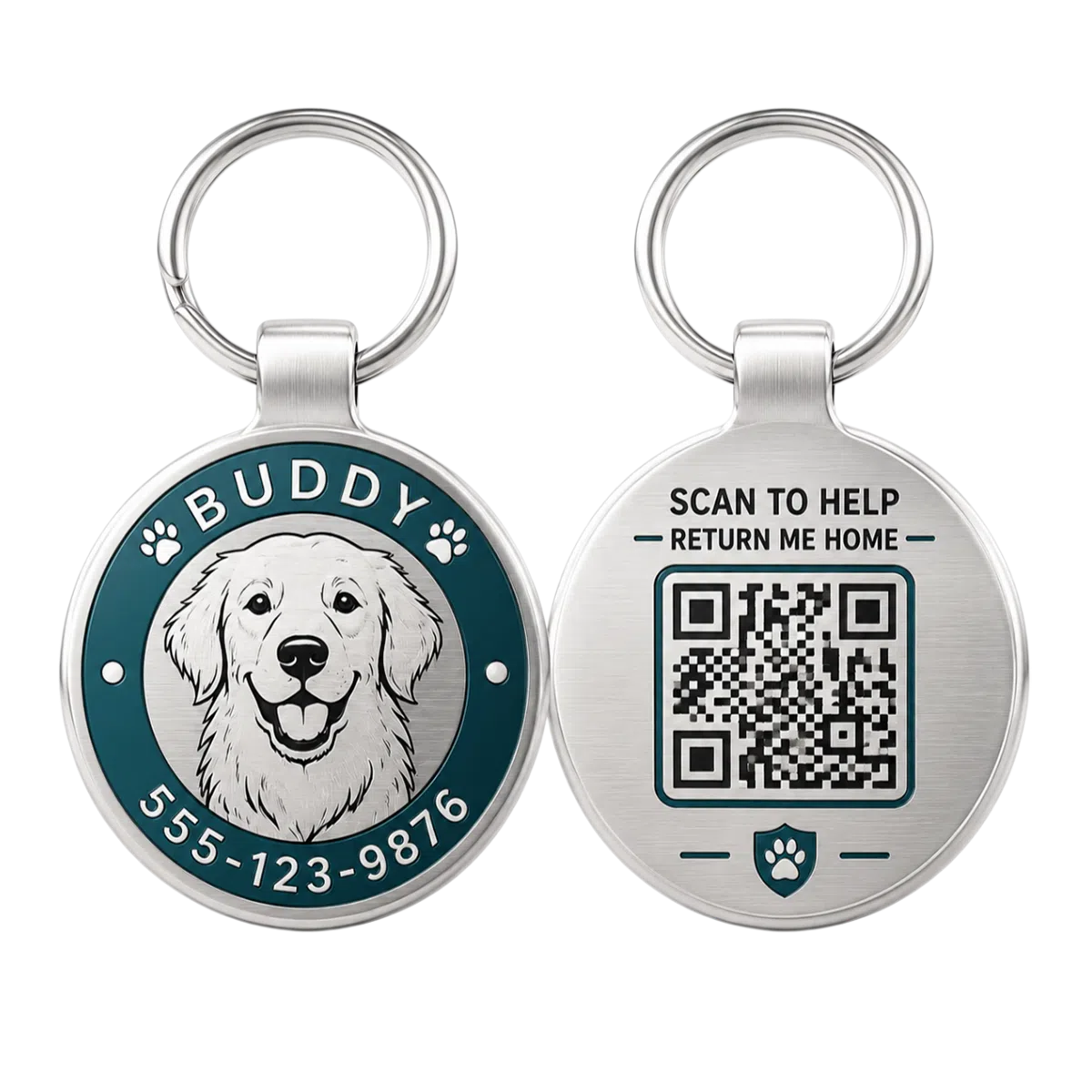
CedaGlo Custom NFC & QR Code Pet ID Tags
Custom NFC QR code pet tags with chip selection, URL encoding, private-label artwork and OEM packaging. Programmable smart tags for online profiles.
View Details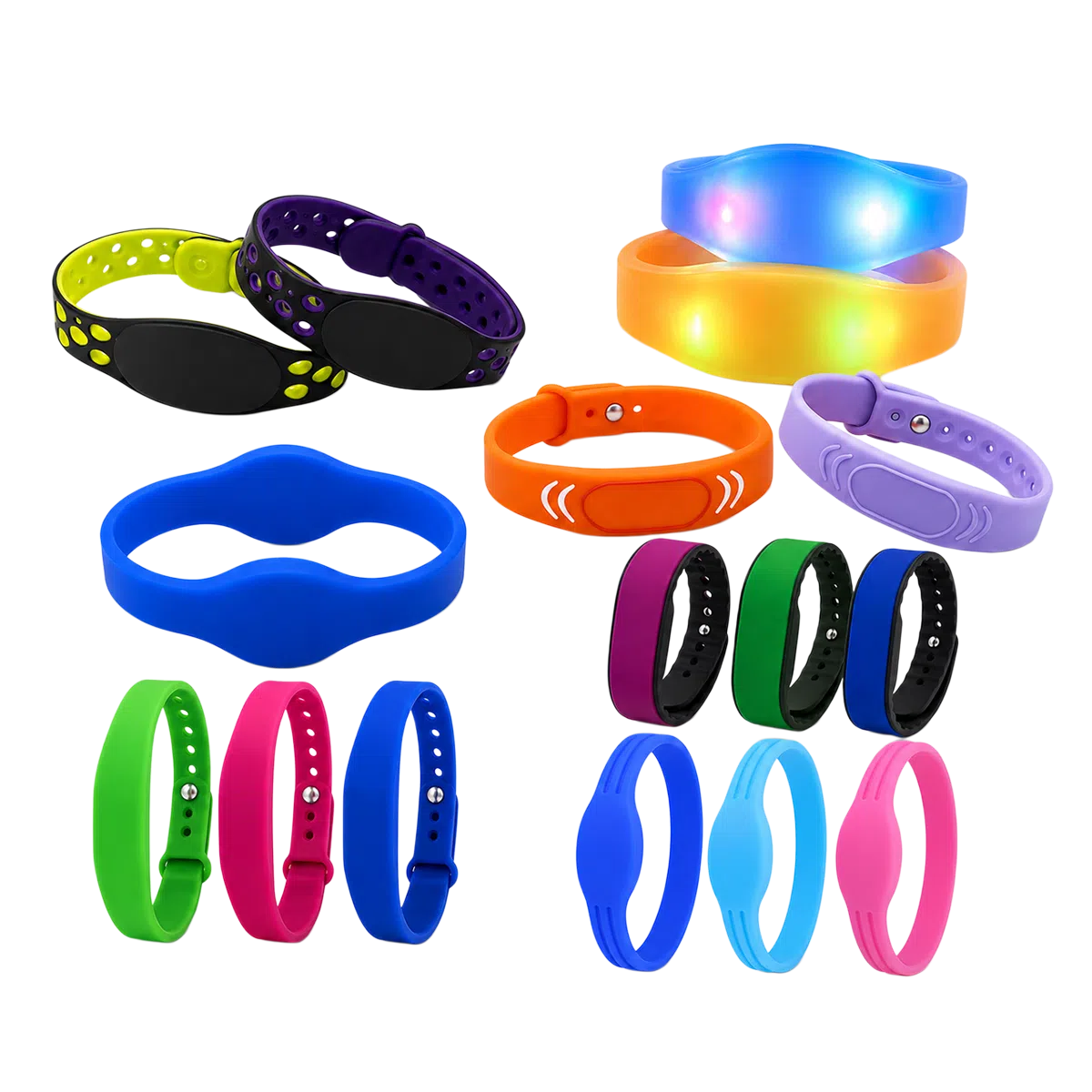
CedaGlo Custom RFID Silicone Wristbands
Reusable custom silicone RFID wristbands with LF, HF and NFC chip options for events, access control, cashless payment and brand promotion.
View DetailsOne Card, Contact + Contactless — Request Your Hybrid Card Quote
Tell us which contact, HF/NFC and UHF systems you run, and we will recommend the right contact IC and chip combination, then quote your exact configuration and volume.