
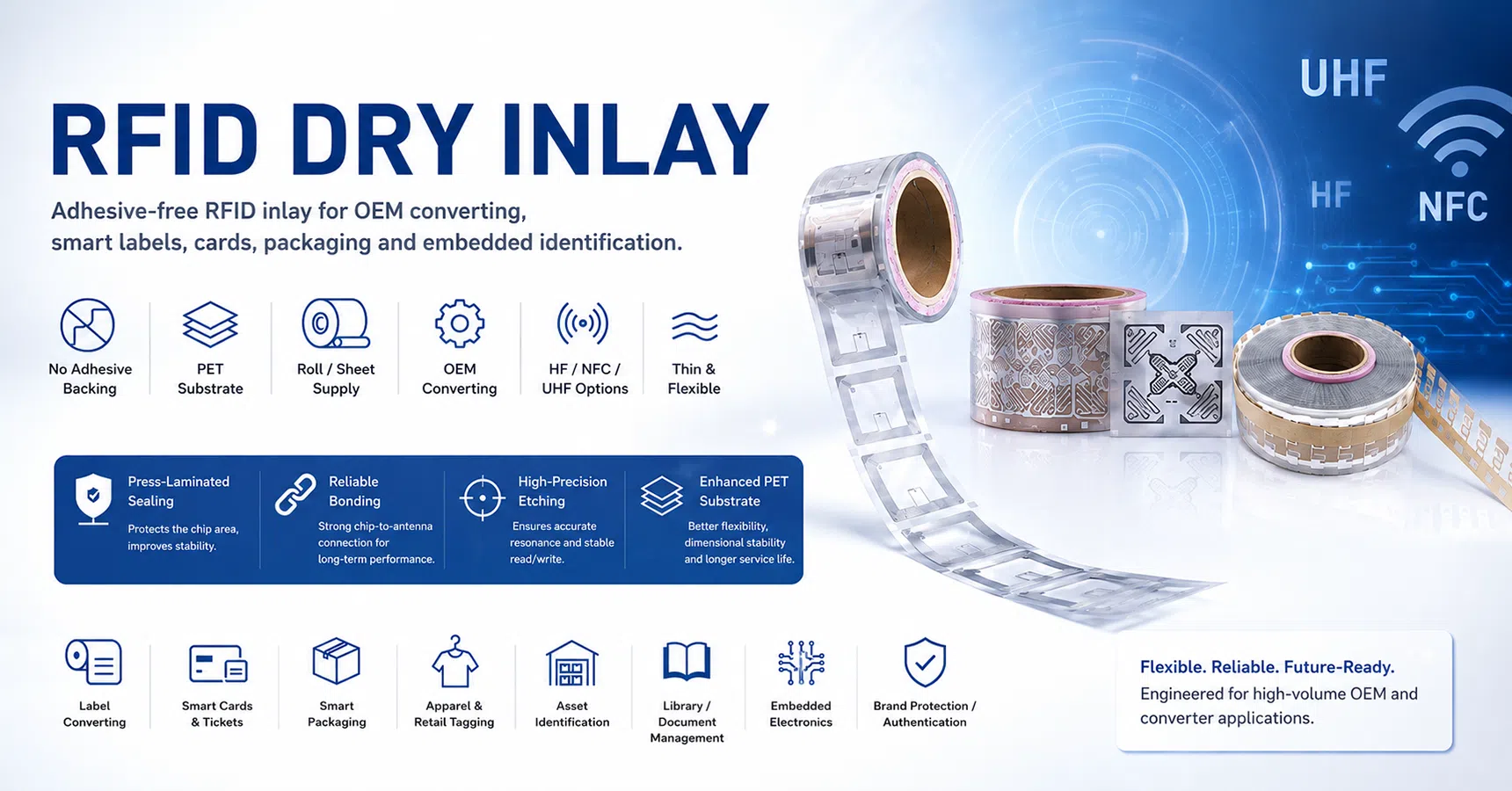
RFID Dry Inlay | UHF, HF/NFC & Dual-Frequency Options
Adhesive-Free Inlay on PET Substrate for OEM Converting & Smart Label Production
CedaGlo RFID dry inlays consist of a precision-etched antenna and chip bonded to a PET substrate — with no adhesive, release liner or printable face stock. Available in UHF, HF/NFC and dual-frequency variants, supplied in roll or sheet format for high-volume OEM label converting, smart packaging, card lamination and embedded identification applications worldwide.
- 🚫No Adhesive
Backing - 📦PET
Substrate - 🔄Roll & Sheet
Supply - ⚙️OEM
Converting - 📡HF / NFC /
UHF Options - 🛠️Custom Antenna
Support
What Is an RFID Dry Inlay?
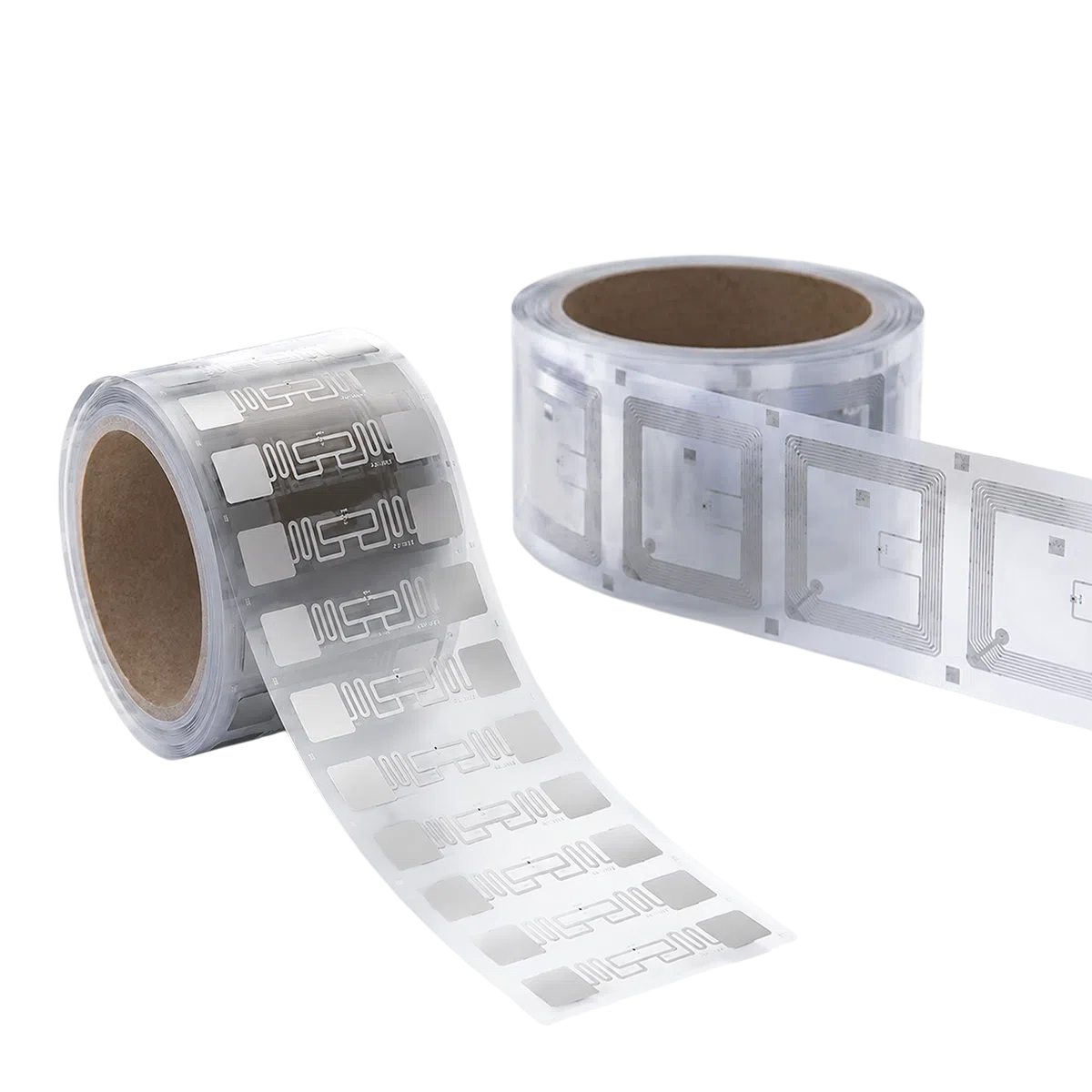
An RFID dry inlay is the foundational component of virtually every RFID smart label, card and tag. It comprises a microchip and a precision-etched antenna — typically copper or aluminium — bonded to a thin PET substrate, supplied without any adhesive, release liner or printable face stock. This "dry" construction gives converters complete control: they select and apply their own laminate, adhesive and face material to suit each end application.
CedaGlo dry inlays are manufactured on an enhanced PET substrate using high-precision optical etching for consistent antenna geometry and stable read/write performance across production runs. Three frequency platforms are available — UHF (860–960 MHz, EPC Class 1 Gen 2 / ISO 18000-6C), HF/NFC (13.56 MHz, ISO 14443A / ISO 15693 / NFC Forum) and dual-frequency UHF+HF — covering the full spectrum of OEM RFID inlay requirements. Roll and sheet formats are both supported, with chip selection, antenna size, pitch and encoding available as custom options for large-volume programmes.
Who Uses RFID Dry Inlays — and Why
- Label converters & printers — Require a clean inlay substrate they can laminate, die-cut and overprint to produce finished RFID smart labels at scale without adhesive interference.
- Card & ticket manufacturers — Need a thin, flexible inlay for lamination into PVC, PET or paper card bodies for access control, transit ticketing, loyalty and event applications.
- Smart packaging producers — Embed dry inlays into corrugated inserts, hang tags or packaging liners for item-level tracking in retail and pharmaceutical supply chains.
- Apparel & retail tagging — Use UHF dry inlays as the core of woven labels and hang tags for inventory accuracy and loss prevention at point of sale.
- Industrial & asset identification — Require durable, substrate-level inlays for embedding into tooling, equipment panels and pallets where standard labels would fail.
- Library & document management — HF/NFC dry inlays are laminated into book spine labels, archival sleeves and ID documents for contactless borrowing and authentication workflows.
- Electronics & IoT manufacturers — Embed dual-frequency or UHF inlays directly into PCB assemblies and product housings during manufacturing for lifecycle traceability.
Construction, Supply & Customization
- Chip + precision-etched antenna on enhanced PET substrate — no adhesive, liner or face stock
- ⚙️ Optical Etching High-precision antenna patterning for tight pitch tolerance and consistent read/write performance
- 🔗 ACA Bonding Anisotropic conductive adhesive for robust chip-to-antenna connection and long-term bond strength
- 🛡️ Press-Laminated Optional protective PET cover layer reduces chip exposure during converting
- Continuous roll format for rotary label and card converting lines
- Pre-cut sheet format for flat-bed lamination and small-run programmes
- Standard and custom pitch, width and sheet dimensions available
- Serialised encoding (EPC, UID) and blank options; custom encoding on request
- Chip selection across NXP, Impinj, Alien, ST, EM and Fudan families
- Custom antenna geometry and physical dimensions to application spec
- Dual-frequency UHF+HF on a single inlay for multi-protocol applications
- OEM/ODM programme support from antenna prototype to mass production
Chip & Frequency Configuration Options
EPC Class 1 Gen 2 / ISO 18000-6C · 860–960 MHz
- NXP UCODE 7 / UCODE 8 / UCODE 9
- Impinj Monza 4E / 4D / 4QT / R6 / R6-P / M730 / M750
- Alien Higgs 3 / 4 / 9 / 10
Logistics, apparel tagging, retail inventory, asset tracking, supply chain serialisation.
ISO 14443A / ISO 15693 / NFC Forum · 13.56 MHz
- NXP ICODE SLIX / SLIX2 / NTAG213 / 215 / 216 / Ultralight EV1
- ST ST series EM EM4237
- Fudan F08
Access control, library management, NFC interaction, smart packaging authentication, ticketing.
UHF + HF on a single inlay · project-dependent
- EM EM4423 or equivalent depending on project
Applications requiring simultaneous long-range UHF identification and short-range NFC consumer interaction — e.g. brand protection with consumer engagement.
Available chip options may vary by antenna design, memory requirement and project application. Contact us for configuration feasibility.
Typical Specifications
| Parameter | Specification |
|---|---|
| Product Type | RFID Dry Inlay |
| Construction | Chip + etched antenna on PET substrate |
| Adhesive | None |
| Release Liner | None |
| Printable Face Stock | None |
| Frequency Options | UHF 860–960 MHz; HF/NFC 13.56 MHz; dual-frequency optional |
| Protocol Options | UHF: EPC Class 1 Gen 2 / ISO 18000-6C HF: ISO 14443A / ISO 15693 / NFC Forum Type 2 & 5 |
| Chip Options | NXP, Impinj, Alien (UHF); NXP, ST, EM, Fudan (HF/NFC); EM4423 (Dual) |
| Substrate | Enhanced PET |
| Optional Version | Sealed dry inlay with protective PET cover layer (press-laminated) |
| Delivery Format | Roll or sheet |
| Customization | Chip selection, antenna size, pitch, encoding, roll/sheet format |
| Operating Temperature | –20°C to +70°C (standard); extended range available on request |
| Applications | Smart labels, RFID cards & tickets, smart packaging, apparel tags, embedded electronics, library management, brand protection |
Volume Pricing
| Order Quantity | Unit Price (USD / pc) |
|---|---|
| 100 – 999 pcs | From US$0.12 |
| 1,000 – 5,000 pcs | From US$0.08 |
| Above 5,000 pcs | Contact Sales |
Final pricing depends on chip type, antenna design, encoding requirements and order quantity. Prices shown are indicative starting points for standard configurations — contact our sales team for a project-specific quotation.
Typical Application Scenarios
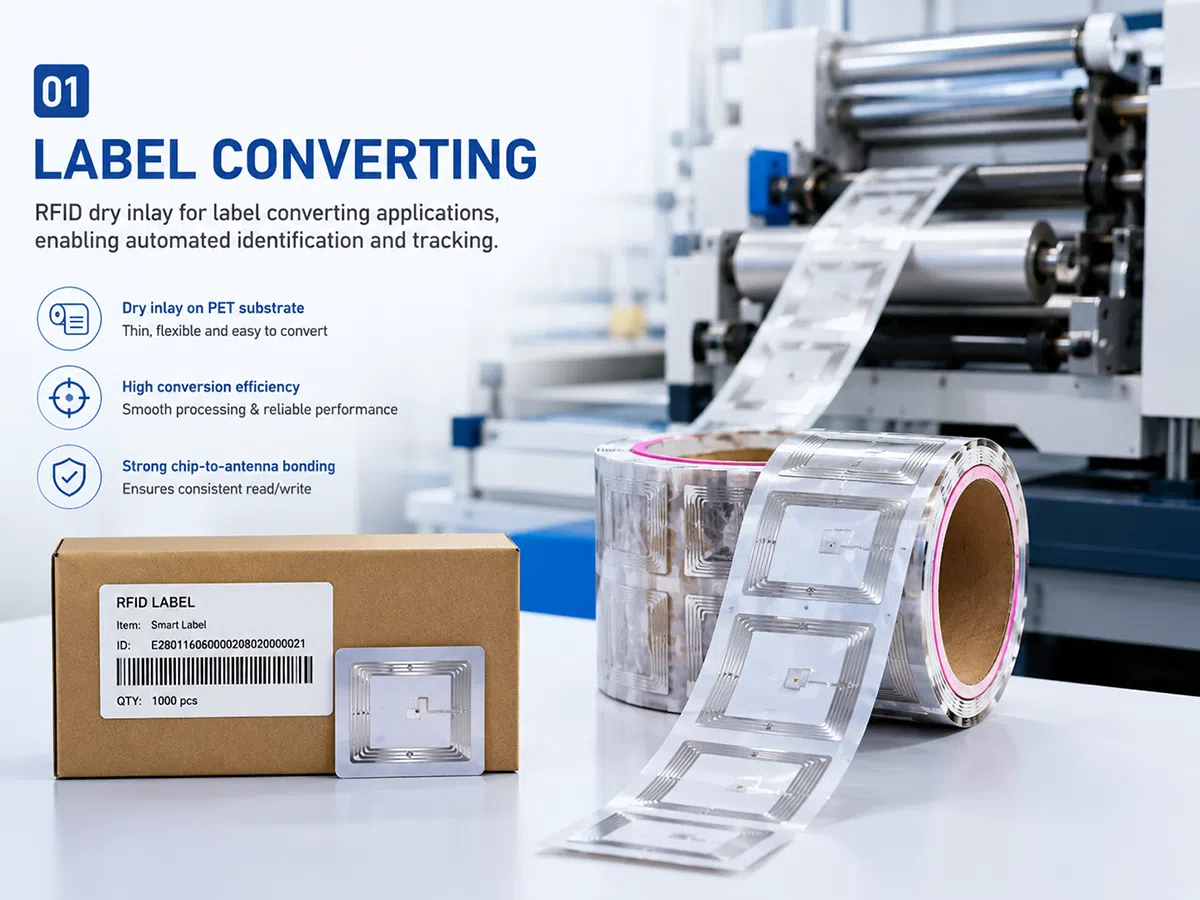
Smart Label Converting
Converters laminate dry inlays with face stock and adhesive to produce finished RFID smart labels for retail, logistics and pharmaceutical supply chains.
- Compatible with rotary and flat-bed converting equipment
- Roll format enables high-speed, continuous lamination runs
- UHF chip options cover EPC Gen 2 retail and logistics standards
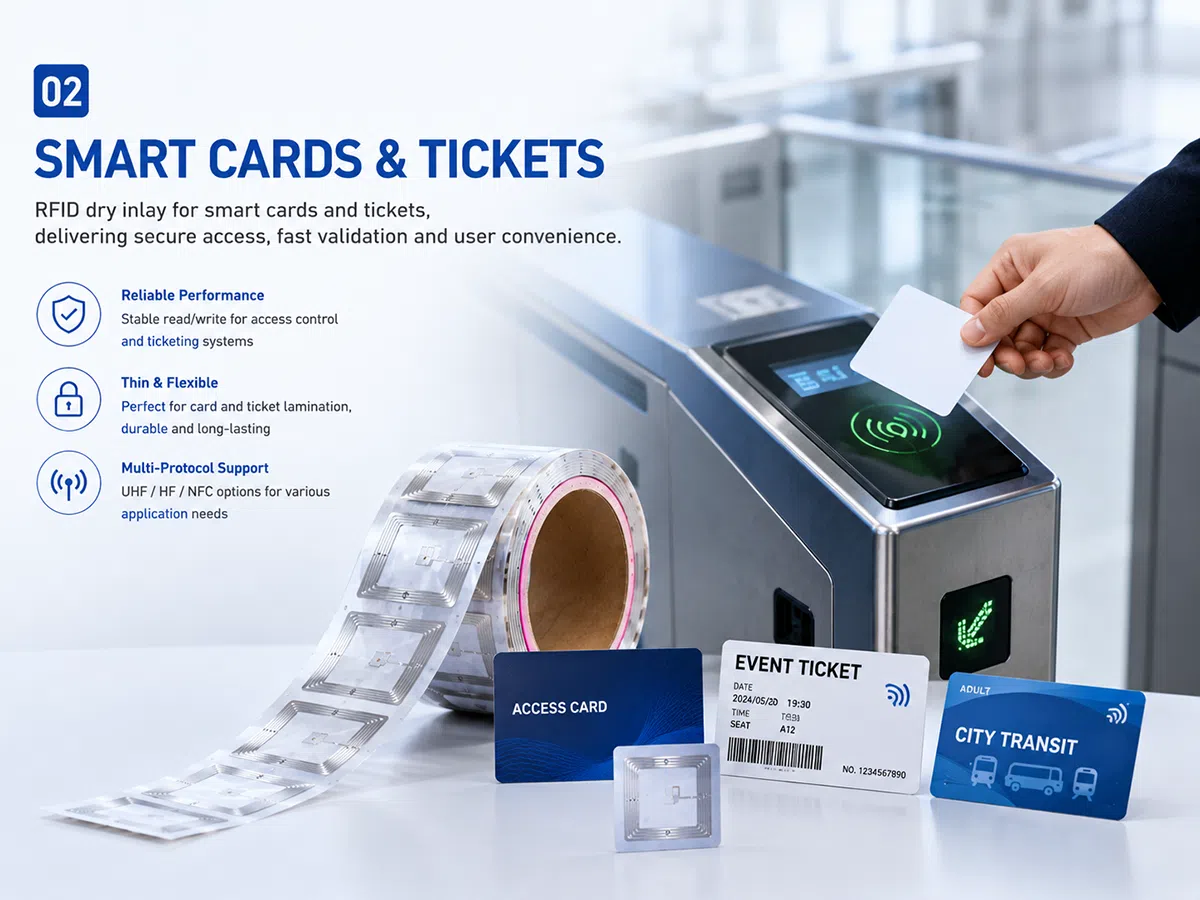
Card & Ticket Lamination
Thin, flexible HF/NFC dry inlays are laminated into PVC or PET card bodies for access control, transit ticketing and loyalty programme cards.
- ISO 14443A / ISO 15693 compliant chip options available
- Uniform inlay thickness supports consistent card lamination quality
- NTAG and ICODE families for broad reader ecosystem compatibility
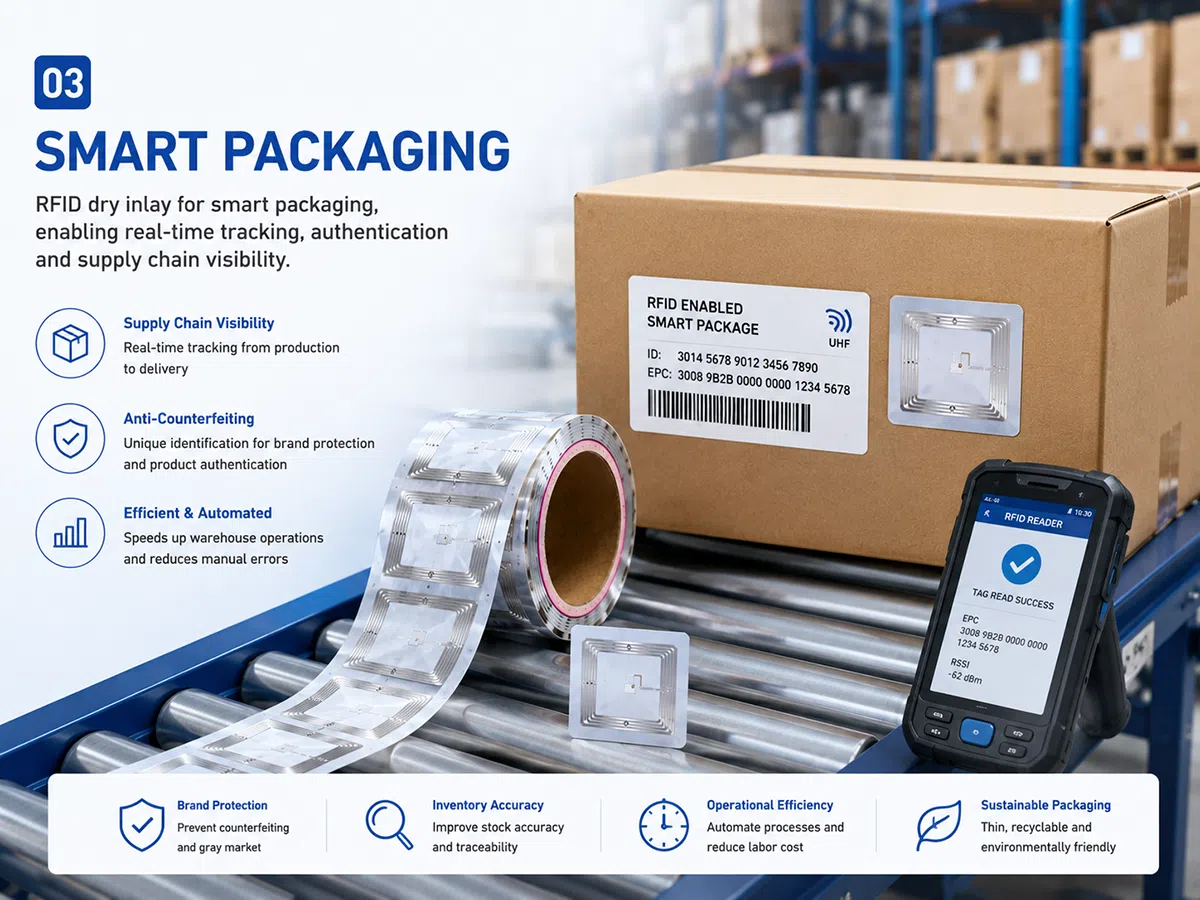
Smart Packaging & Brand Protection
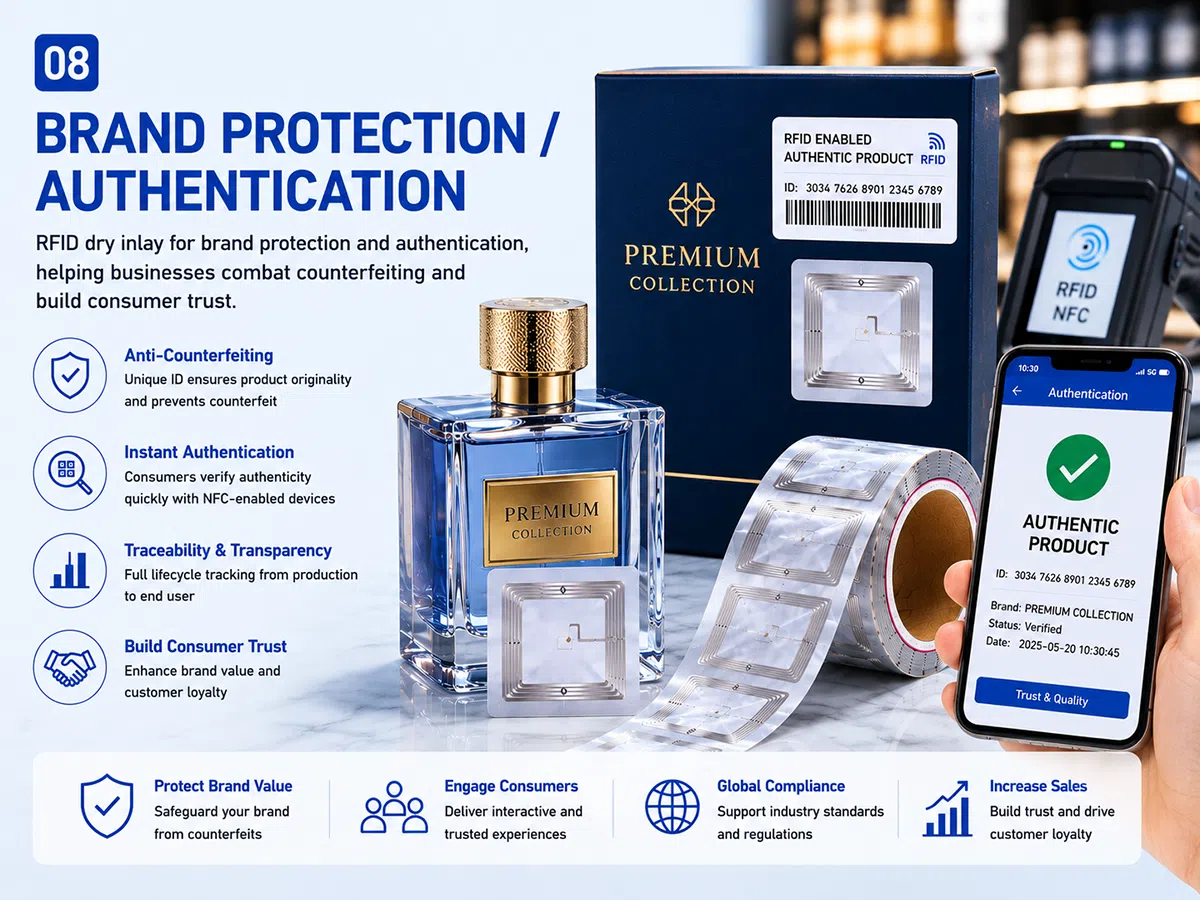
Dual-frequency or HF inlays embedded in packaging inserts or hang tags enable item-level authentication and consumer NFC interaction simultaneously.
- EM4423 dual-frequency inlay for UHF logistics + NFC engagement
- Supports brand protection workflows at retail and in the supply chain
- Compact custom antenna designs fit within packaging artwork zones
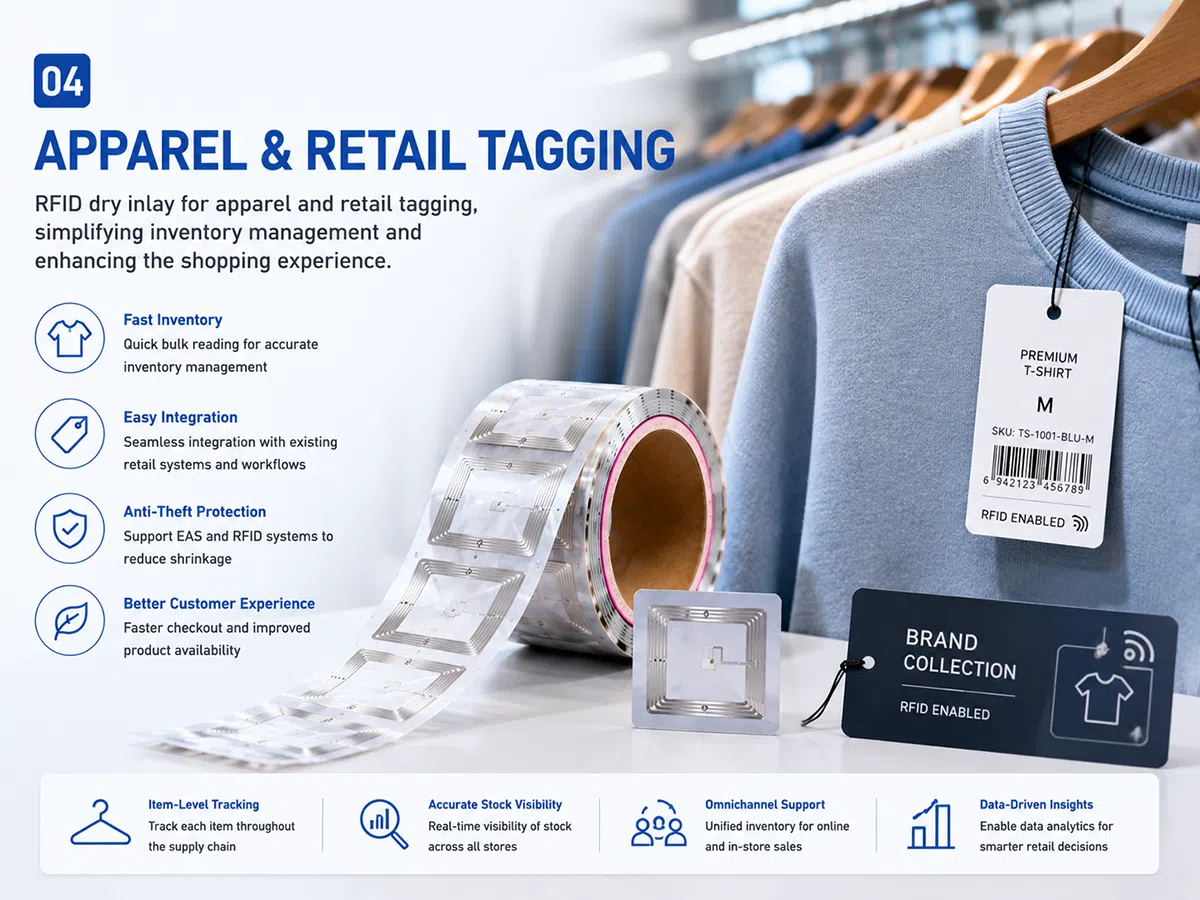
Apparel & Retail Tagging
UHF dry inlays form the core of woven fabric labels and hang tags used for inventory management, loss prevention and omnichannel fulfilment in fashion retail.
- Impinj Monza and Alien Higgs chip options for global retail UHF standards
- Custom pitch and antenna size for woven label integration
- High read-rate performance in dense tag environments
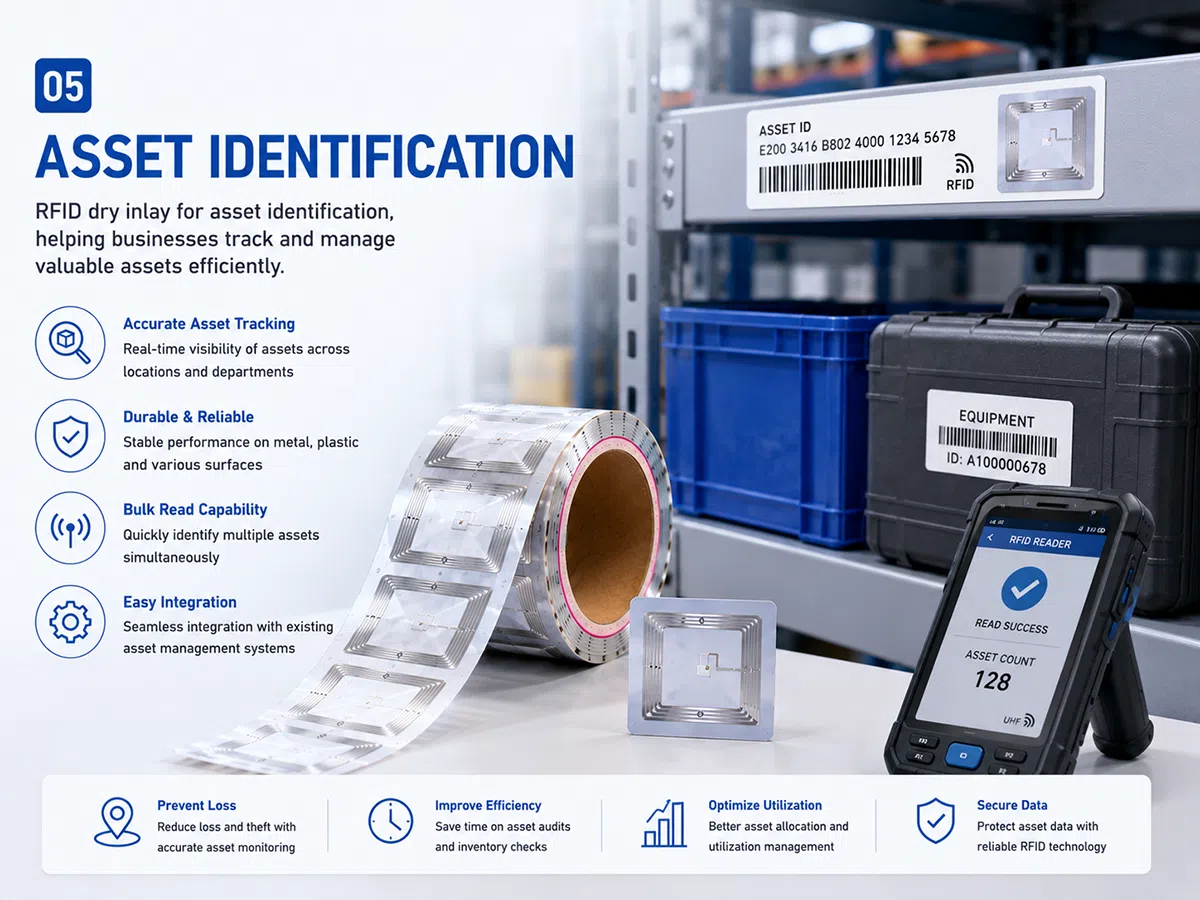
Asset Identification
Dry inlays embedded within equipment labels, tooling markers and pallet tags provide durable, substrate-level RFID identification across industrial environments.
- PET substrate withstands converting and embedding processes
- UHF EPC Gen 2 for long-range bulk scanning of assets and pallets
- Custom antenna designs for metal-proximate or embedded installations
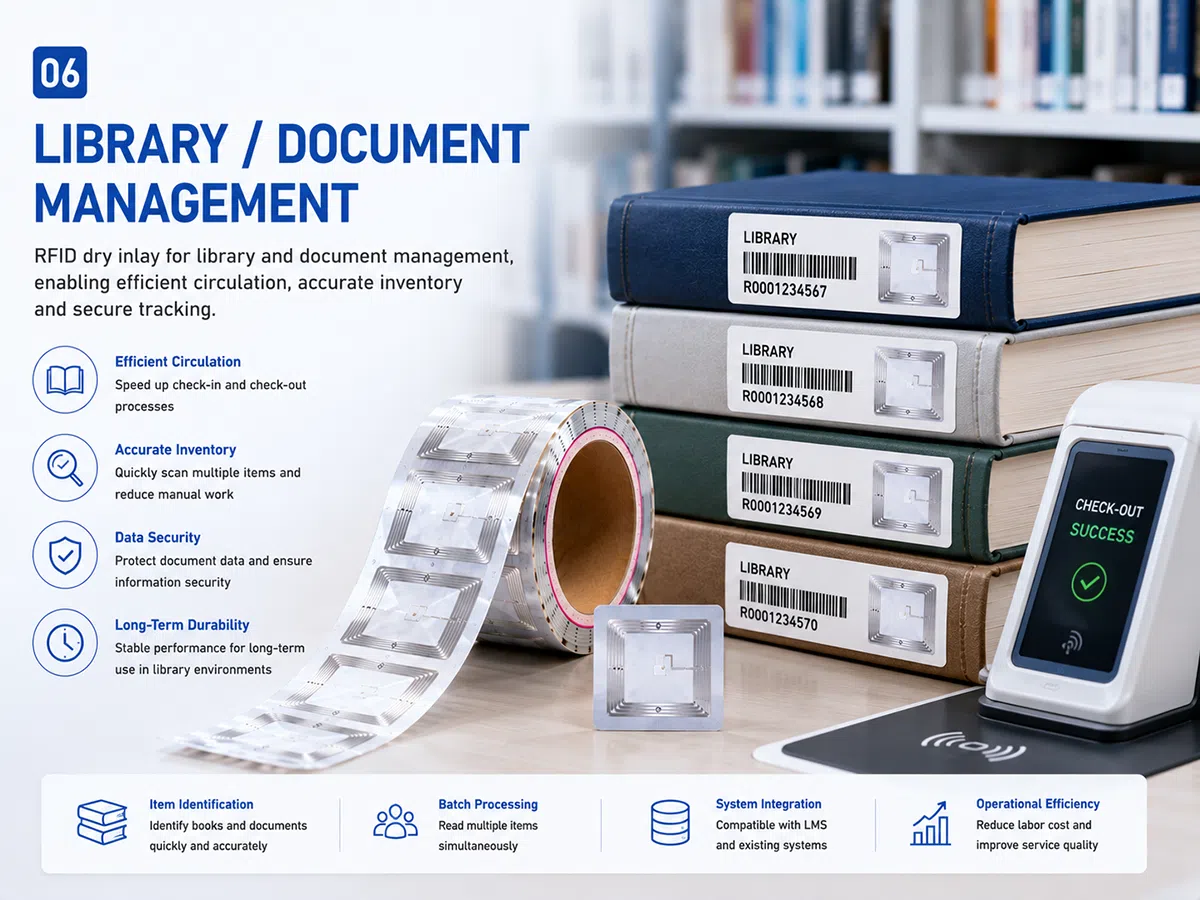
Library & Document Management
HF/NFC dry inlays laminated into book spine labels and archival sleeves enable contactless item borrowing, self-checkout and collection inventory workflows.
- ICODE SLIX/SLIX2 and ISO 15693 for standard library system compatibility
- Thin inlay profile suitable for flush label integration
- Sheet format option for small-run label lamination programmes
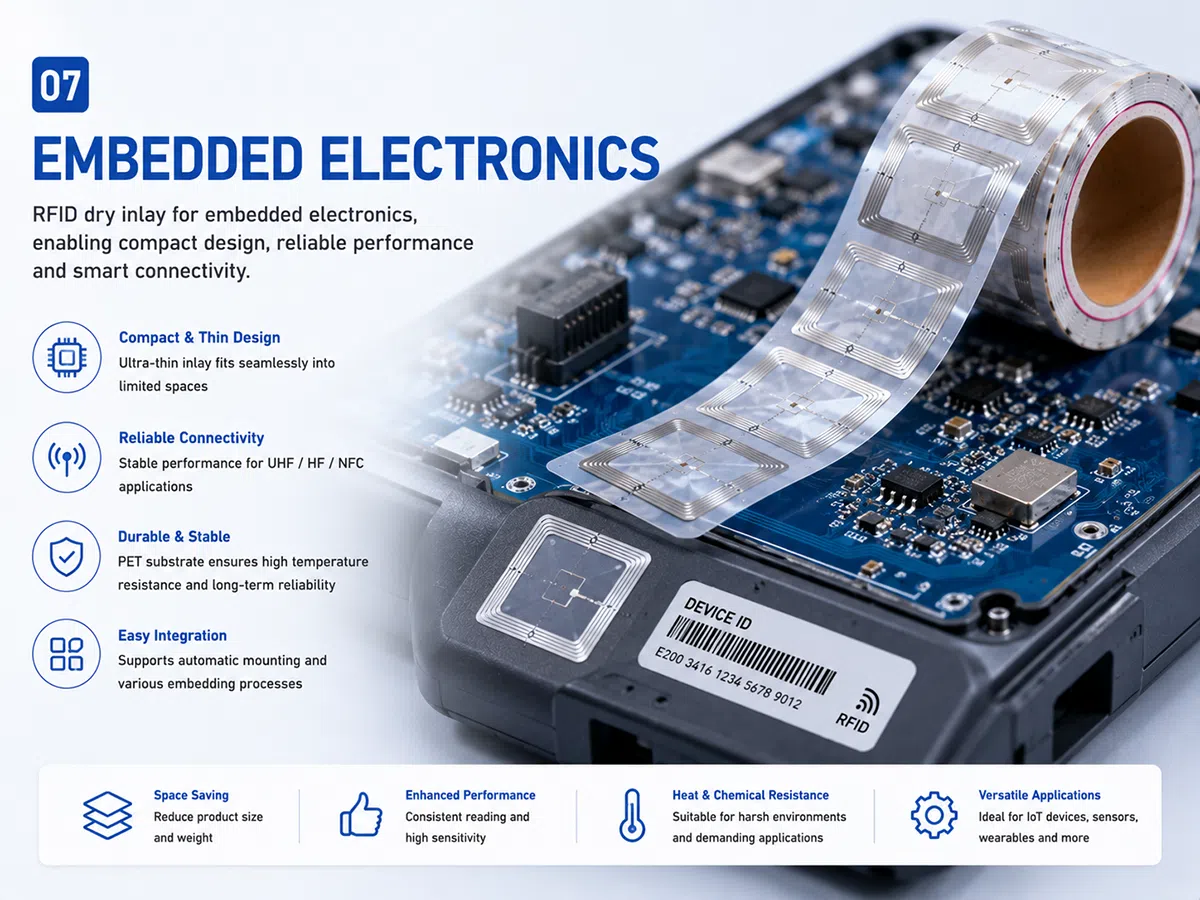
Embedded Electronics & IoT
Dry inlays integrated directly into PCB assemblies and product housings during manufacture provide lifecycle traceability and maintenance authentication.
- Compact custom antenna footprints for PCB and housing integration
- UHF and dual-frequency options for multi-stage supply chain visibility
- OEM/ODM programme support from prototype to production volumes
Pharmaceutical & Medical Packaging
UHF or HF dry inlays integrated into medication labels and medical device packaging support serialisation, anti-counterfeiting and cold-chain compliance.
- NXP UCODE and ICODE chip families for GS1 serialisation standards
- Clean, adhesive-free substrate avoids contamination in lamination
- Custom encoding for item-level serialisation at the inlay stage
Application suitability depends on frequency platform, chip selection and antenna design. Contact CedaGlo to confirm the right configuration for your converting process and end application.
Why Source Dry Inlays from CedaGlo
Stable, Verified Supply
Direct partnerships with NXP, Impinj, Alien, ST and EM Microelectronic chip distributors ensure consistent chip availability across production runs, reducing lead-time risk for converter programmes.
Converter-Friendly Format
Roll pitch, sheet dimensions and inlay orientation are configured to your converting equipment specification. Consistent inter-reel electrical performance minimises waste and line stoppages during high-speed lamination.
Broad Chip Selection
Single-source access to UHF, HF/NFC and dual-frequency chip families from multiple tier-1 IC vendors. Chip substitution support available when a preferred part faces supply constraints.
OEM / ODM Capability
Custom antenna design, prototype validation and mass-production ramp handled within a single programme. Dedicated project management from specification sign-off through to first-article approval and ongoing production.
Frequently Asked Questions
What substrate and construction does a CedaGlo RFID dry inlay use?
CedaGlo dry inlays consist of a chip and precision-etched copper or aluminium antenna mounted on an enhanced PET substrate, with no adhesive, release liner or printable face stock — the defining "dry" characteristic. An optional sealed version is available, with a protective PET cover layer applied via press lamination to reduce chip-area exposure during converting and improve long-term inlay stability.
Which chip families and protocols are supported?
UHF options include NXP UCODE 7, 8 and 9; Impinj Monza 4E, 4D, 4QT, R6, R6-P, M730 and M750; and Alien Higgs 3, 4, 9 and 10 — all compliant with EPC Class 1 Gen 2 / ISO 18000-6C at 860–960 MHz. HF/NFC options include NXP ICODE SLIX/SLIX2, NTAG213/215/216 and Ultralight EV1; ST series; EM4237; and Fudan F08 — compliant with ISO 14443A, ISO 15693 and NFC Forum Type 2 and 5 at 13.56 MHz. Dual-frequency UHF+HF is available via EM4423, subject to project feasibility.
What end products are RFID dry inlays typically converted into?
Dry inlays serve as the core component for smart labels, RFID card and ticket bodies, smart packaging inserts, apparel hang tags, woven fabric labels, library book labels and embedded electronics assemblies. Because they carry no adhesive or face material, converters apply their own laminate, adhesive and substrate to match the exact performance and appearance requirements of each application.
What customization and order options are available?
CedaGlo supports custom antenna geometry, physical size, pitch, substrate width and chip selection across all frequency platforms. Inlays are supplied in roll or sheet format to suit rotary and flat-bed converting equipment. Encoding — including EPC serialisation and UID programming — is available at the inlay stage. MOQ and lead time vary by chip availability, antenna tooling and order configuration; contact our sales team for a project-specific quotation.
Related Products
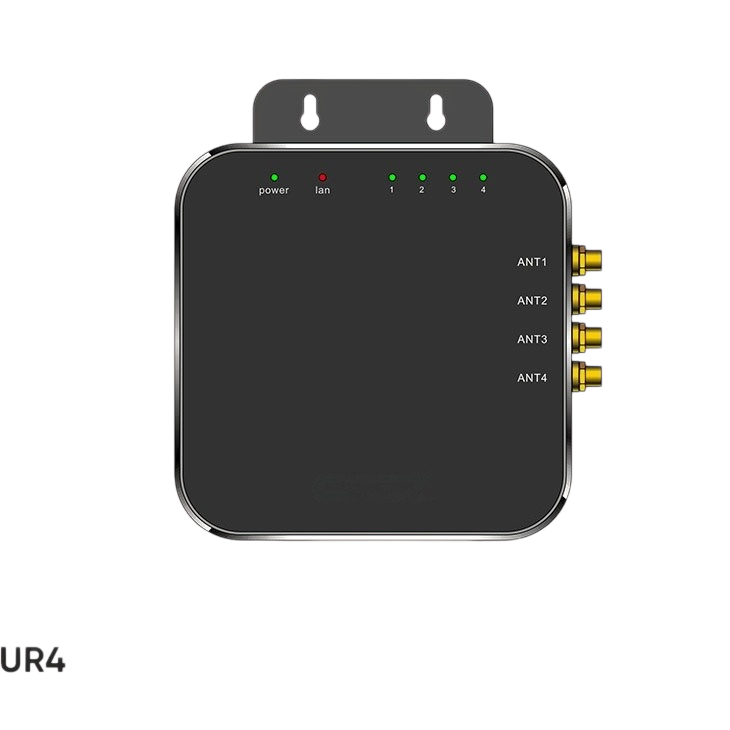
UR4 Fixed RFID Reader
Four-port fixed UHF RFID reader. 4 channel 50 ohm SMA port, 1300+ tags/sec fastest read rate, engine based on Impinj E Series chips. RS-232 and RJ45.
View Details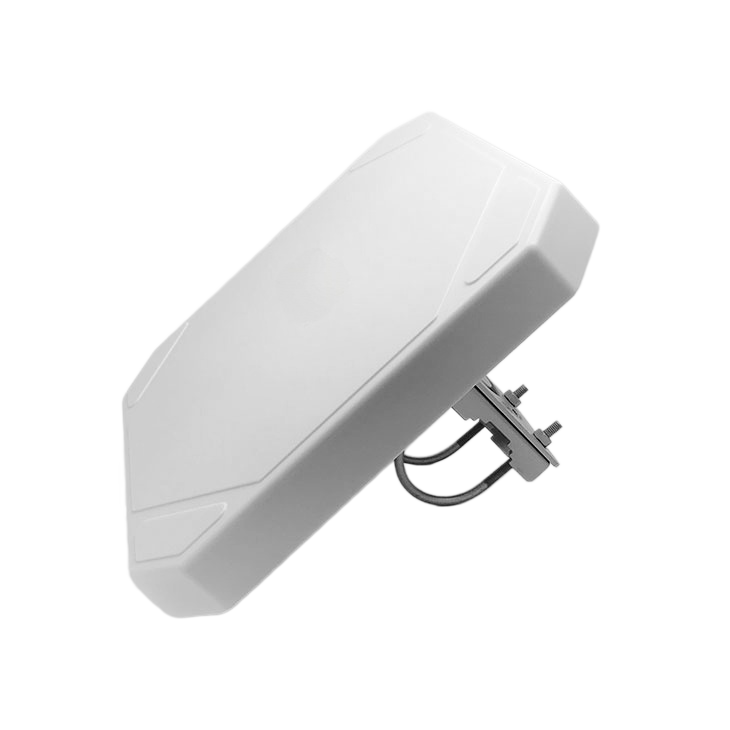
9dBi UHF RFID Panel Antenna
9dBi RHCP panel antenna, 60 by 55 degree 3dB beam-width, N-Type Female at 50 ohms, IP67 sealed, 255 by 255 by 30 mm.
View Details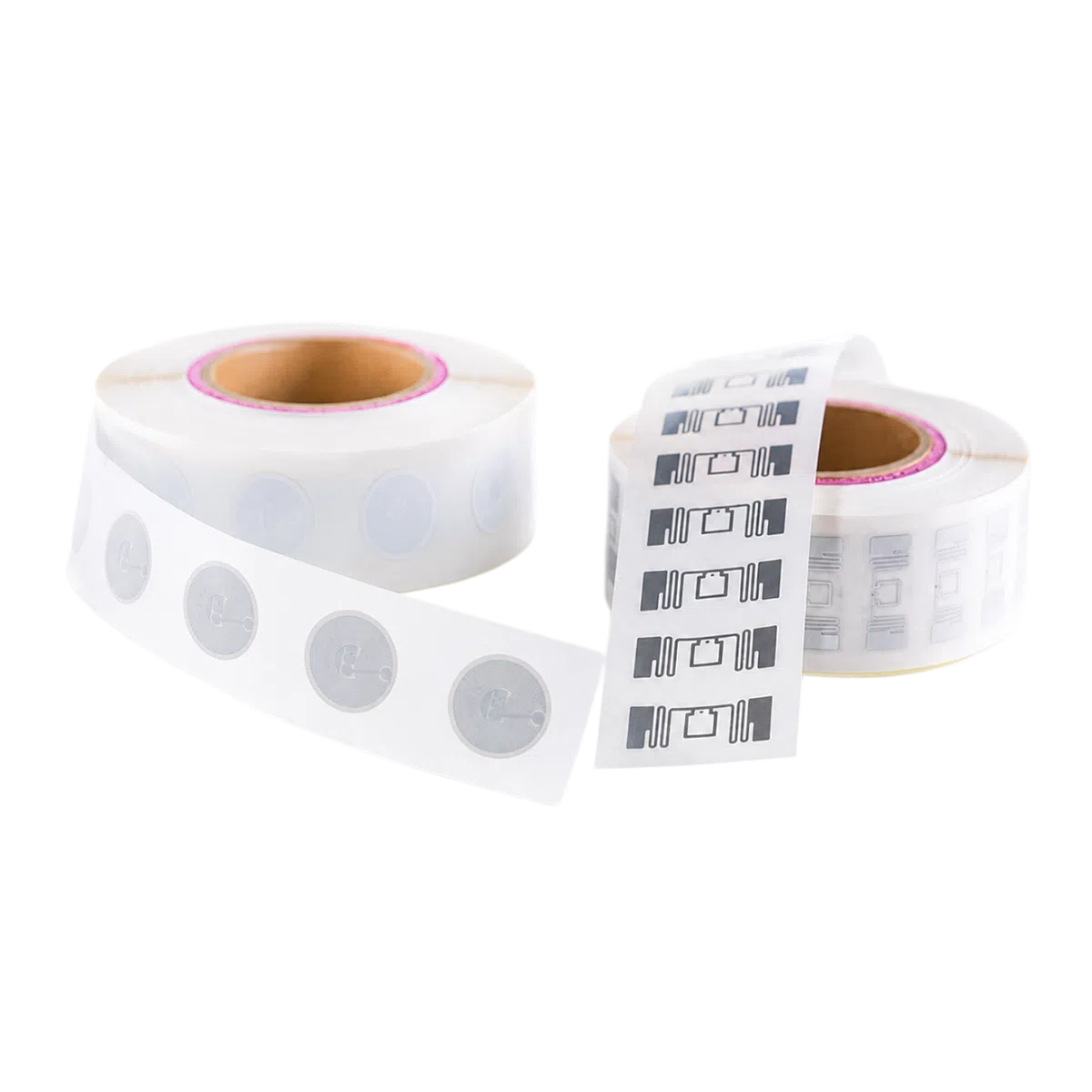
RFID Wet Inlay | NFC & UHF Inlay Roll Supplier
Custom RFID/NFC wet inlays from CedaGlo, available in UHF, HF/NFC and dual-frequency options for roll or sheet supply.
View Details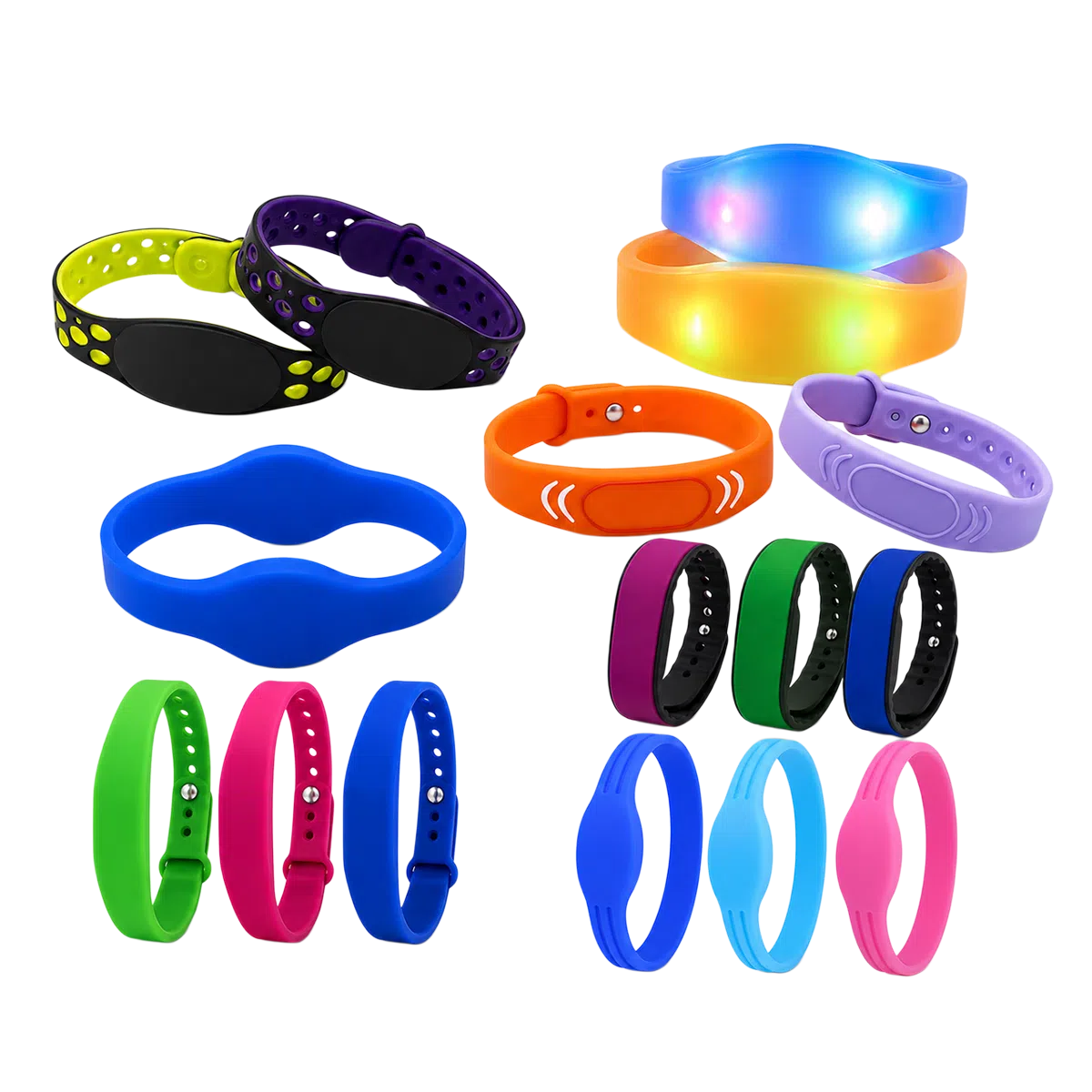
CedaGlo Custom RFID Silicone Wristbands
Reusable custom silicone RFID wristbands with LF, HF and NFC chip options for events, access control, cashless payment and brand promotion.
View DetailsReady to Spec Your RFID Inlay Programme?
Share your frequency platform, target chip, converting format, annual volume and any encoding or certification requirements — our technical team will respond with a configuration recommendation and project quotation within one business day.