An 8'' Tablet That Scans Barcodes, Reads UHF Tags, and Checks IDs
An 8'' 1920 x 1200 display, an 8700 mAh battery, and a body rated for 1.5 m / 4.92 ft. drops to concrete.
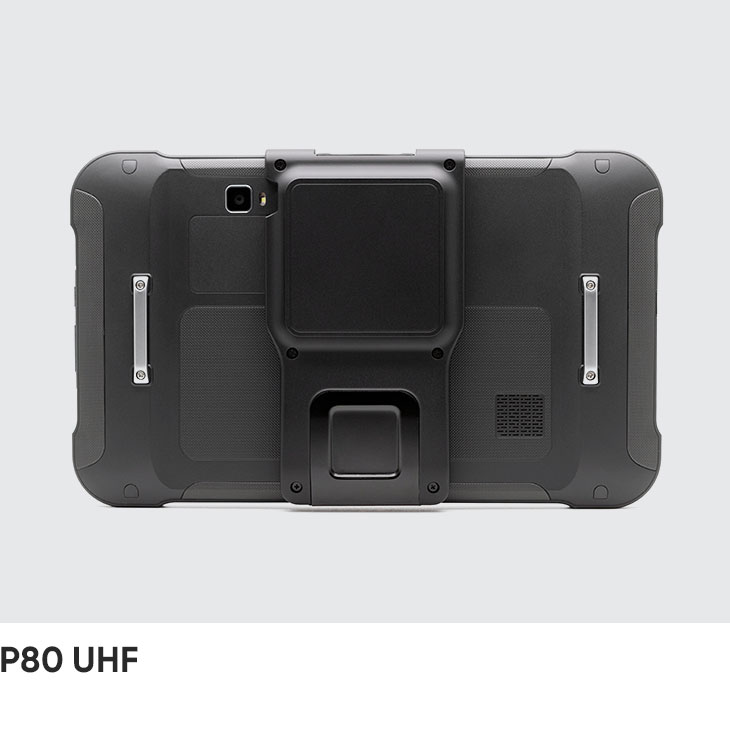
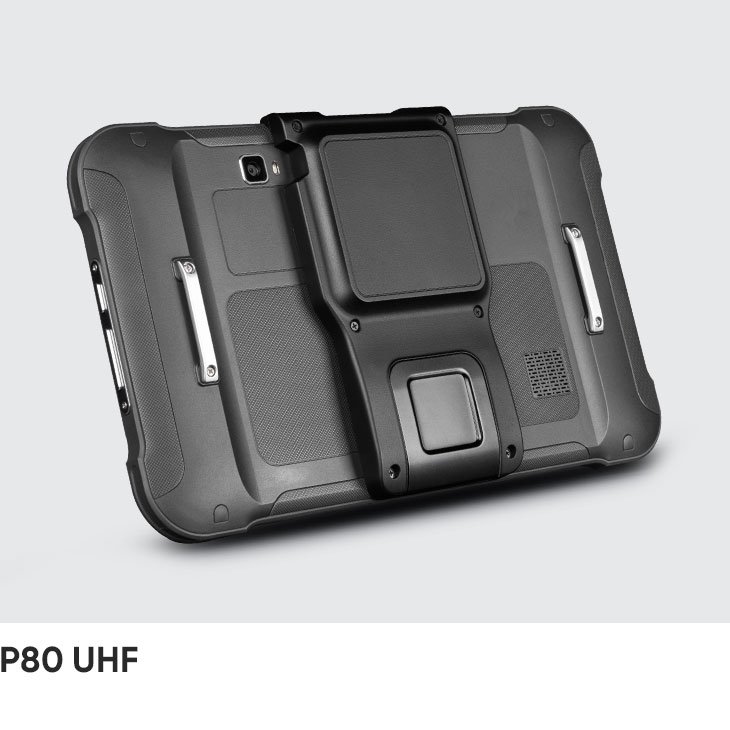
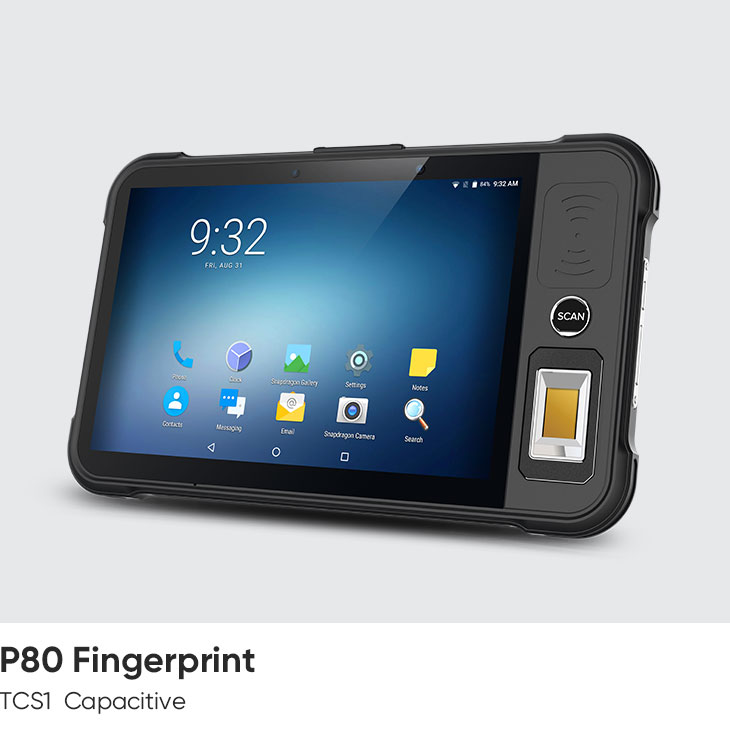
The UHF configuration reaches 900+ tags/sec at its fastest read rate and reads out to 10 m in the open outdoors, so a loaded pallet or a shelf of stock counts in one sweep. Two configurations share one body: the P80 pairs a scan engine with optional fingerprint capture, and the P80 UHF fits the RFID module to the back of that same body. The scan engine is a Zebra SE4710 or a Honeywell HS7, and the RFID module is built on Impinj E Series chips with Impinj Gen2X supported. Both run Android 13 with GMS&AER, 90-day security updates, and FOTA.
- Impinj E SeriesUHF module chip base
- Impinj Gen2XSupported by the module
- EPC C1 GEN2ISO18000-6C air protocol
- Zebra SE4710Scan engine option
- Vo-LTEHD video voice call
- Corning Gorilla GlassTouch panel cover
- Soti MobiControlSupported MDM platform
- Bluetooth 5.1Short-range radio
- 802.11 a/b/g/n/ac2.4G and 5G dual-band
- GPS, GLONASS, BeiDouGalileo, internal antenna
- ISO14443A/B, ISO15693NFC at 13.56 MHz
- FIPS 201TCS1 and TLK1NC02
Overview
The P80 is an 8-inch rugged Android tablet for crews who fill in a form and capture data on the same screen. An octa-core 2.0 GHz processor with 4 GB of RAM and 64 GB of storage runs the line-of-business application, and the 8'' IPS LTPS panel at 1920 x 1200 stays readable at arm's length. A rechargeable 8700 mAh battery carries over 10 hours of continuous use and over 500 hours of standby.
What sets it apart from a consumer tablet in a rugged case is how much capture hardware fits behind one screen. Order it with a scan engine, a UHF RFID module, NFC, and one of three fingerprint sensors, and every one of them feeds the same application through a single Software Development Kit. Warehousing crews get bulk tag counts, front-counter staff get identity verification, and both work from one device image.
The parts are named so you can check them yourself: Zebra SE4710 and Honeywell HS7 scan engines, a UHF module based on Impinj E Series chips with Impinj Gen2X supported, Corning Gorilla Glass over the touch panel, and Android 13 with FOTA, Soti MobiControl, and SafeUEM support. Explore the full range of CedaGlo rugged tablets.
Key Features
Platform and Display
- Octa-core 2.0 GHz, 4 GB + 64 GB
- Android 13 with GMS&AER
- 8'' IPS LTPS, 1920 x 1200
- Corning Gorilla Glass touch panel
- 680 g / 23.99 oz., 15.0 mm thin
Endurance in the Field
- 8700 mAh, over 10 hours of use
- IP65 sealing per IEC
- 1.5 m / 4.92 ft. drops to concrete
- 500 tumbles from 0.5 m / 1.64 ft
- -4 °F to 122 °F operating range
Data Capture Options
- UHF built on Impinj E Series chips
- Up to 10 m in the open outdoors
- 900+ tags/sec fastest read rate
- Zebra SE4710 or Honeywell HS7
- NFC at 13.56 MHz, 0-4 cm
Read ranges and read rates depend on the tags you use and the environment you work in. Barcode scanning, UHF RFID, and fingerprint capture are optional functions.
Features & Functions at a Glance
Choose Your Configuration
| Feature | P80 | P80 UHF |
|---|---|---|
| Best for | One label at a time: picking, packing, receiving, and identity verification | A whole shelf at once: inventory management and asset management counts |
| Shared hardware | Identical in both configurations | |
| Display | 8'' IPS LTPS 1920 x 1200 | |
| Battery | Li-ion, rechargeable, 8700 mAh; continuous use over 10 hours | |
| Barcode scanning | Zebra SE4710; Honeywell HS7 (optional) | |
| Fingerprint | TCS1 Capacitive, TLK1NC02, or Optical Morpho CBM-E3 (optional) | |
| NFC | 13.56 MHz; range 0-4 cm | |
| Camera | Front 5 MP; rear 13 MP Autofocus with flash | |
| Sealing and drop | IP65 per IEC sealing specifications; multiple 1.5 m / 4.92 ft. drops to concrete | |
| UHF RFID | The rows below are the only differences | |
| Engine | — | Based on Impinj E Series chips |
| Impinj Gen2X | — | Supported |
| Protocol | — | EPC C1 GEN2 / ISO18000-6C |
| Frequency | — | 865-868 MHz / 920-925 MHz / 902-928 MHz |
| Antenna | — | Circular polarization |
| Power | — | 1W (30 dBm, +5 dBm to +30 dBm adjustable); 2W Optional (33dBm, for Latin America, etc.) R/W |
| Fastest read rate | — | 900+ tags/sec (circular polarization) |
| Max read range | — | Up to 10 m (open outdoors, Impinj MR6 tag) |
| Platform | Common to both configurations | |
| Operating system | Android 13; GMS&AER, 90-day security updates, FOTA, Soti MobiControl, SafeUEM supported | |
| Processor and memory | Octa-core 2.0 GHz; 4 GB + 64 GB; supports up to 256 GB Micro SD card | |
| WLAN | 802.11 a/b/g/n/ac/d/e/h/i/k/r/v, 2.4G/5G dual-band | |
| WWAN | TDD-LTE, FDD-LTE, WCDMA, CDMA EVDO, GPRS, EDGE | |
| Bluetooth and GNSS | Bluetooth 5.1; GPS/AGPS, GLONASS, BeiDou, Galileo, internal antenna | |
| Interfaces | USB 2.0 Type-C, OTG | |
How to order — barcode scanning, UHF RFID, and fingerprint capture are marked optional on the configuration sheet, so the engine, the module, and the sensor are chosen at order time and fitted in the factory.
Every value in this table matches the full Specifications section below.
A Closer Look at the Hardware
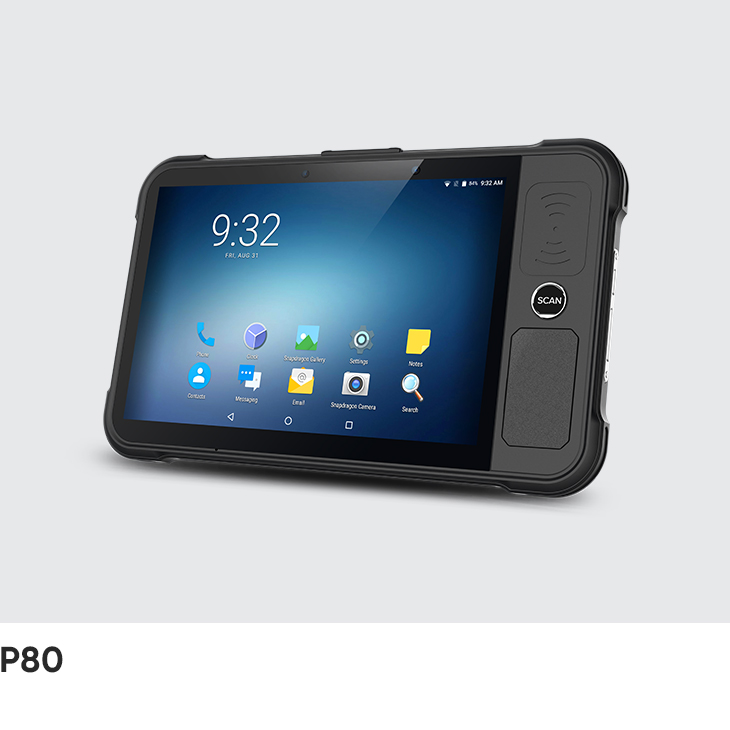
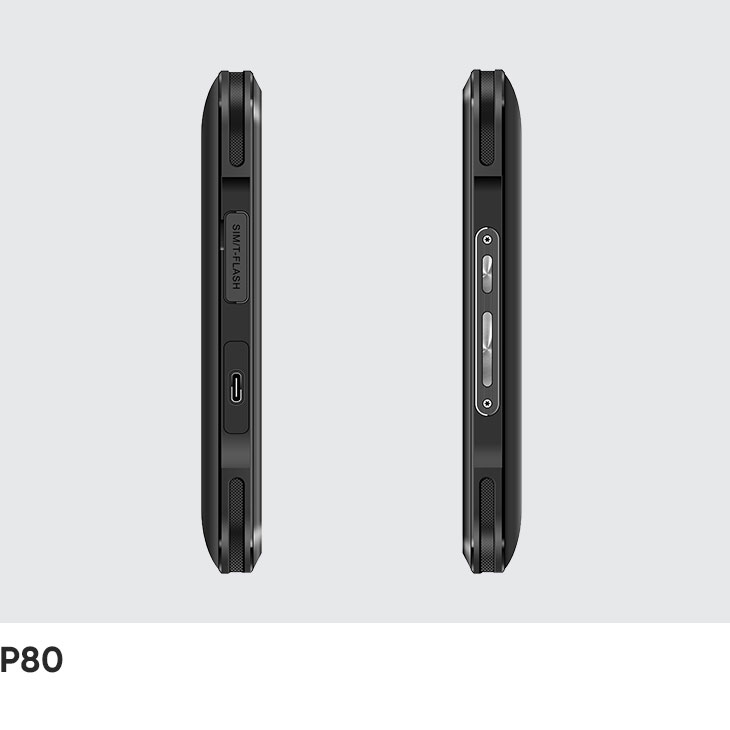
Ports and Keys on the Long EdgesOne edge carries the covered card slot and the USB 2.0 Type-C port. The opposite edge carries the volume key and the power key, each raised clear of the frame so a gloved thumb can find it without looking.
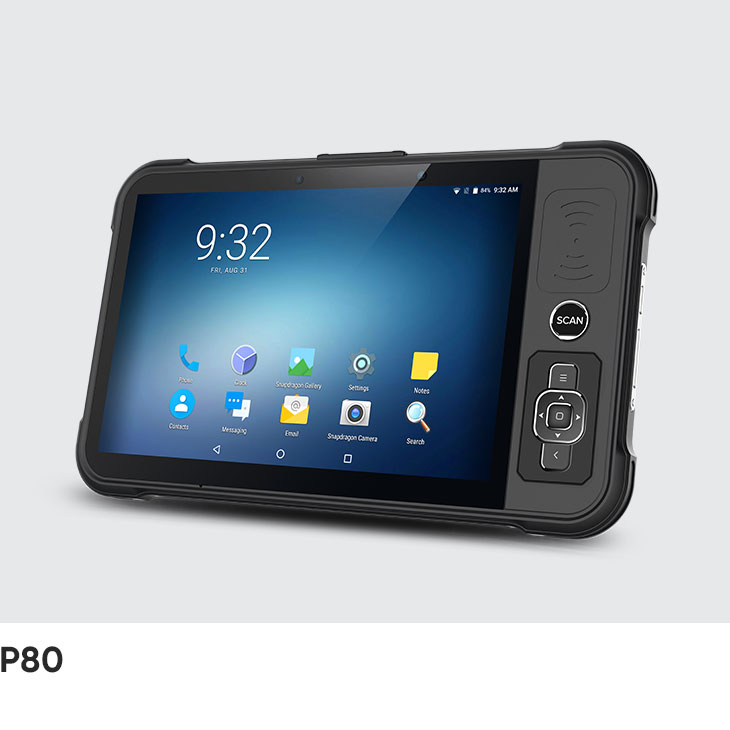
Front Key and Optional Direction KeyThe front key sits on the panel to the right of the display, with the direction key below it on units ordered with that option. The NFC read area is marked above both, so a card is presented to the panel and not to the screen.
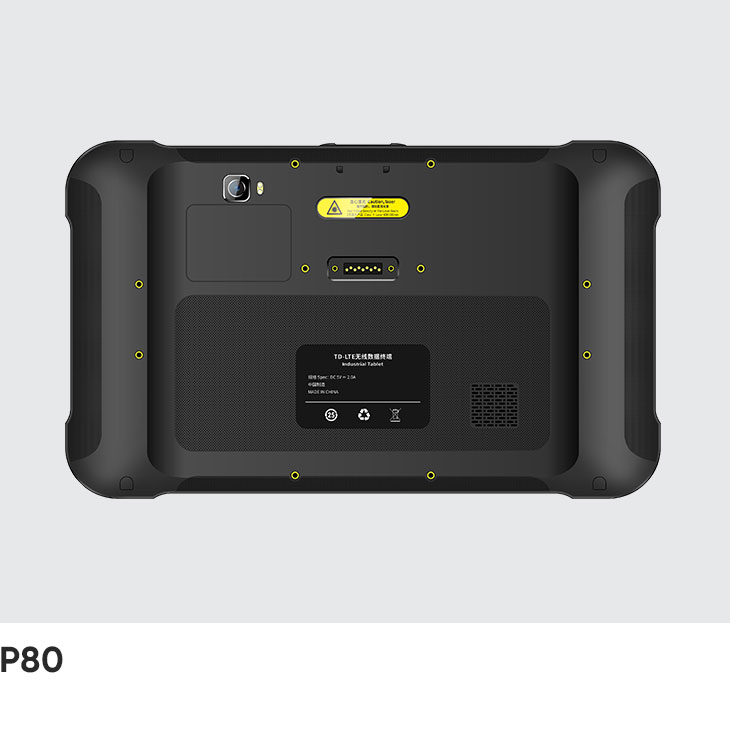
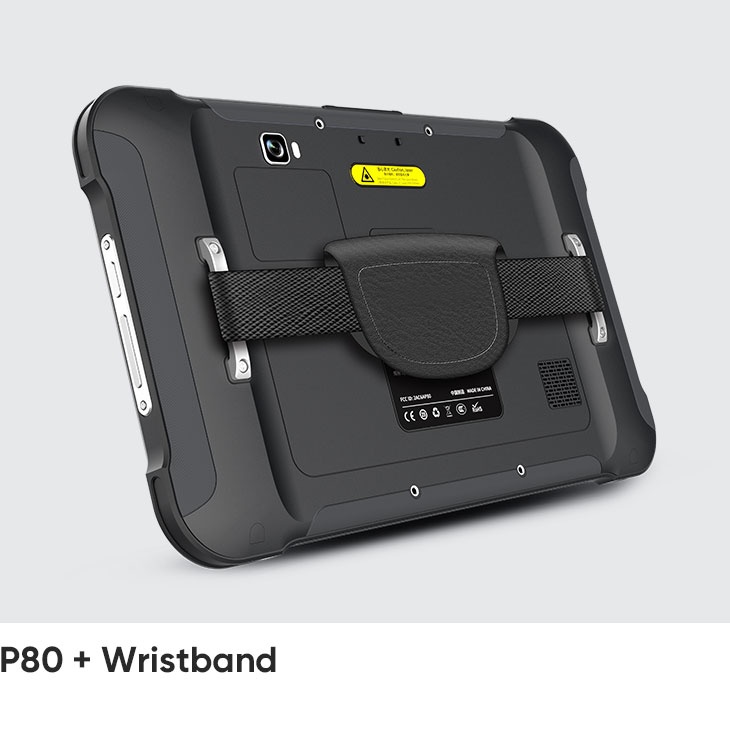
The UHF Module Sits on the BackOn the P80 UHF the RFID module is a raised housing across the upper back, set between the two metal bars that take a hand strap. The rear camera sits to one side of it and the speaker grille to the other.
Specifications
Physical Characteristics
- Dimensions
- 250.8 x 152.0 x 15.0 mm / 9.87 x 5.98 x 0.59 in. ( for standard version )
- Weight
- 680 g / 23.99 oz. ( for standard version )
- Display
- 8'' IPS LTPS 1920 x 1200
- Touch Panel
- Corning Gorilla Glass, multi-touch panel, gloves and wet hands supported
- Power
- Main battery: Li-ion, rechargeable, 8700 mAh
Standby: over 500 hours
Continuous use: over 10 hours (depending on user environment)
Charging time: 5-7 hours (with standard AC adaptor and USB cable) - Notification
- Sound, LED indicator
- Expansion Slot
- 1 slot for Micro SIM card, 1 slot for Micro SIM / TF card, Optional dual PSAM card slots
- Interfaces
- USB 2.0 Type-C, OTG
- Audio
- 1 microphone; 1 speaker
- Keypad
- 1 front key, 1 volume key, 1 power key, direction key (Optional)
- Sensors
- Gravity sensor; gyroscope; geomagnetic sensor; light / proximity sensor
Communication
- WLAN
- Support 802.11 a/b/g/n/ac/d/e/h/i/k/r/v, 2.4G/5G dual-band, IPV4, IPV6;
Fast roaming: PMKID caching, 802.11r, OKC;
Operating Channels: 2.4G(channel 1~13), 5G(channel 36,40,44,48,52,56,60,64,100,104,108,112,116,120,124,128, 132,136,140,144,149,153,157,161,165),Depends on local regulations;
Security and Encryption: WEP,WPA/WPA2-PSK(TKIP and AES),WAPIPSK—EAP-TTLS,EAP-TLS, PEAP-MSCHAPv2, PEAP-LTS,PEAPGTC,etc. - WWAN
- 2G: 850/900/1800/1900MHz, GPRS, EDGE
3G: CDMA EVDO: BC0 WCDMA: B1/B2/B5/B8
4G: TDD-LTE: B34/B38/B39/B40/B41 FDD-LTE: B1/B2/B3/B4/B5/B7/B8/B12/B13/B17/B20/B28 - Bluetooth
- Bluetooth 5.1
- Vo-LTE
- Support Vo-LTE HD video voice call
- GNSS
- GPS/AGPS, GLONASS, BeiDou, Galileo, internal antenna
Developing Environment
- Operating System
- Android 13; GMS&AER, 90-day security updates, FOTA, Soti MobiControl, SafeUEM supported
- SDK
- CedaGlo Software Development Kit
- Language
- Java
- Tool
- Eclipse / Android Studio
Performance
- CPU
- Octa-core 2.0 GHz; GMS&AER
- RAM+ROM
- 4 GB + 64 GB
- Expansion
- Supports up to 256 GB Micro SD card
User Environment
- Operating Temp.
- -4 °F to 122 °F / -20 °C to 50 °C
- Storage Temp.
- -40 °F to 158 °F / -40 °C to 70 °C
- Humidity
- 5% RH - 95% RH non condensing
- Drop Specification
- Multiple 1.5 m / 4.92 ft. drops to concrete across the operating temperature range
- Tumble Specification
- 500 x 0.5 m / 1.64 ft falls at room temperature
- Sealing
- IP65 per IEC sealing specifications
- ESD
- ±15 KV air discharge, ±8 KV conductive discharge
Barcode Scanning
- Scan engine
- Zebra SE4710; Honeywell HS7
- 1D Symbologies
- UPC/EAN, Code128, Code39, Code93, Code11, Interleaved 2 of 5, Discrete 2 of 5, Chinese 2 of 5, Codabar, MSI, RSS, etc.
- 2D Symbologies
- PDF417, MicroPDF417, Composite, RSS, TLC-39, Datamatrix, QR code, Micro QR code, Aztec, MaxiCode; Postal Codes: US PostNet, US Planet, UK Postal, Australian Postal, Japan Postal, Dutch, Postal (KIX), etc.
* This function is optional
UHF RFID
- Engine
- Based on Impinj E Series chips
- Frequency
- 865-868 MHz / 920-925 MHz / 902-928 MHz
- Impinj Gen2X
- Supported
- Protocol
- EPC C1 GEN2 / ISO18000-6C
- Antenna
- Circular polarization
- Power
- 1W (30 dBm, +5 dBm to +30 dBm adjustable)
2W Optional (33dBm, for Latin America, etc.) R/W - Fastest Read Rate (circular polarization)
- 900+ tags/sec
- Max Read Range
- Up to 10 m (open outdoors, Impinj MR6 tag);
* Ranges and rates depend on tags and environment. * This function is optional
Fingerprint 1
- Sensor
- TCS1 Capacitive
- Sensing Area (mm)
- 12.8 × 18.0
- Resolution (dpi)
- 508 dpi, 8-bit greylevel
- Certifications
- FIPS 201, STQC
- Format Extraction
- ISO 19794, WSQ, ANSI 378, JPEG2000
- Fake Finger Detection
- Support by SDK
- Security
- AES, DES key encryption of the host communication channel
* This function is optional
Fingerprint 2
- Sensor
- TLK1NC02
- Sensing Area (mm)
- 14.0 X 22.0
- Resolution (dpi)
- 508dpi, 256-bit greylevel
- Certifications
- FIPS 201, FBI
- Format Extraction
- ISO19794, WSQ, ANSI 378, JPEG2000
- Fake Finger Detection
- Support by SDK
- Security
- AES, DES key encryption of the host communication channel
* This function is optional
Fingerprint 3
- Sensor
- Optical Morpho CBM-E3
- Sensing Area (mm)
- 14.0 X 22.0
- Resolution (dpi)
- 500 dpi, 256 greylevel
- Certifications
- FIPS PIV IQS / ISO 19794-4, MINEX & FIPS 201 compliant, STQC
- Format Extraction
- ISO 19794-2/4, WSQ, ANSI 378, etc
- Fake Finger Detection
- Latex, GeLatin, Plasticine, Kapton, Transparent Film, Silicone, Rubber, Play-doh, Graphite Or Paper
- Security
- FIPS 140-2 level 2, multiple security methods available, including image and templates encryption, template signature, secure tunneling, etc.
* This function is optional
Camera
- Front Camera
- 5 MP
- Rear Camera
- 13 MP Autofocus with flash
NFC
- Frequency
- 13.56 MHz
- Protocol
- ISO14443A/B, ISO15693, NFC-IP1, NFC-IP2, etc
- Chips
- M1 card (S50, S70), CPU card, NFC tags, etc.
- Range
- 0-4 cm
Every row above is transcribed from the P80 configuration sheet. Items not listed there are not offered on this page.
Two Ways Crews Put It to Work
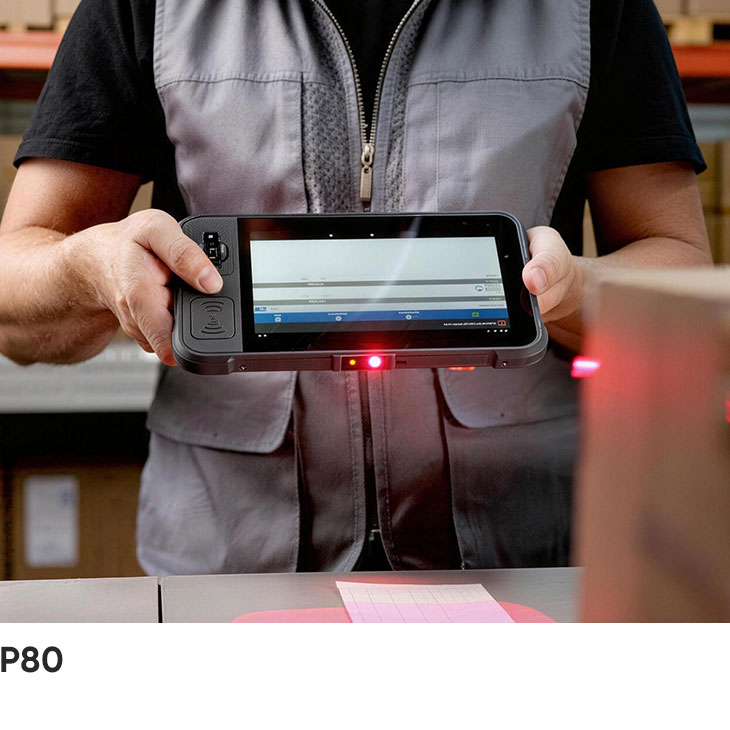
Warehousing and Logistics
- 1920 x 1200 on an 8-inch panel fits a long pick list, so there is less scrolling between lines
- Over 10 hours of continuous use covers a shift without swapping to a spare device
- The touch panel takes gloves and wet hands, so nobody stops to strip a glove at the dock door
The result: fewer interruptions between the aisle and the loading bay.
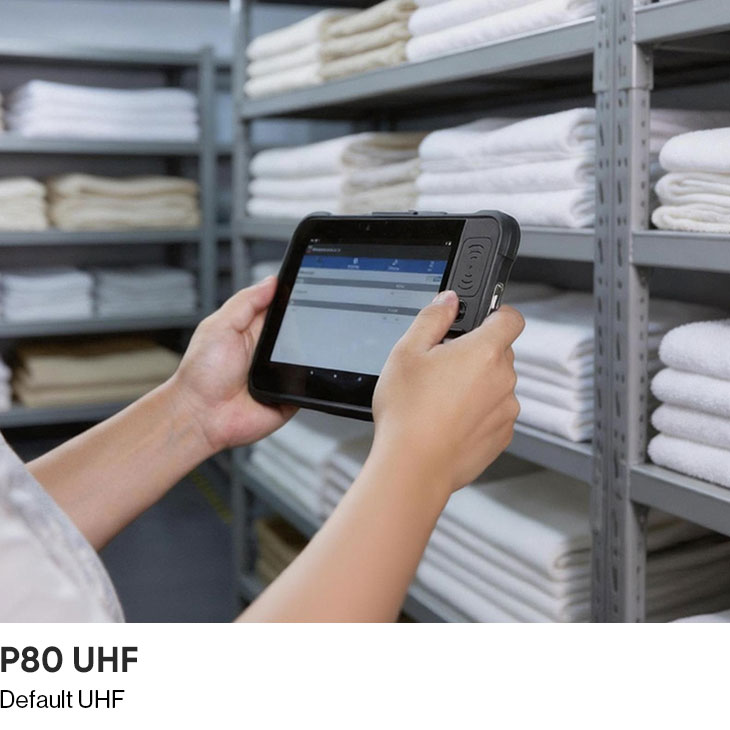
Inventory and Asset Management
- 900+ tags/sec through the circular polarization antenna turns a bay of stock into one pass
- Read power adjusts from +5 dBm to +30 dBm, so a count can be narrowed to one shelf
- EPC C1 GEN2 / ISO18000-6C means the tags already on your stock are read as they are
The result: a cycle count that finishes inside the working day.
Why Buy the P80 From CedaGlo
Every Component Is Named
We publish the scan engine, the RFID module, the fingerprint sensor, and the cover glass by name, so your engineers can pull each datasheet from the component maker and check what they are buying before an order goes in.
Built to Your Order
The scan engine, the UHF module, and the fingerprint sensor are chosen at order time and fitted in the factory, so a unit arrives set up for the job instead of arriving generic and waiting on a retrofit.
Test It Before You Commit
Ask for an evaluation unit and run it against your own tags and your own labels. Read range and read rate move with the environment, and a few weeks on site is the only way to see yours.
Serviceable for Years
Spare parts, warranty length, and return handling are written into your order rather than assumed from a web page, and one P80 body carries both configurations, so a single set of spares covers the whole fleet.
Frequently Asked Questions
How far and how fast does the P80 UHF read tags?
The P80 UHF reads out to 10 m with an Impinj MR6 tag in the open outdoors, and its fastest read rate is 900+ tags/sec through the circular polarization antenna. Both figures move with the tags you use and the environment you work in, so send us a sample tag and we will confirm the range you can plan on.
Which of the two configurations should I order?
Order the P80 when the work is barcode-driven: picking, packing, receiving, and identity verification with an optional fingerprint sensor. Order the P80 UHF when you count tagged stock in bulk, because the UHF module reads a bay in one pass instead of one label at a time. Both share the same body and the same Android 13 build, so one software image covers a mixed fleet.
Which components are inside the P80?
The scan engine is a Zebra SE4710 or a Honeywell HS7. The UHF module is built on Impinj E Series chips and supports Impinj Gen2X. Fingerprint capture uses a TCS1 Capacitive, a TLK1NC02, or an Optical Morpho CBM-E3 sensor. Corning Gorilla Glass covers the touch panel, and the processor is an octa-core running at 2.0 GHz.
How long does a charge last, and how is the software kept current?
The rechargeable 8700 mAh Li-ion battery gives over 10 hours of continuous use and over 500 hours of standby, and it charges in 5 to 7 hours with the standard AC adaptor and USB cable. Android 13 ships with 90-day security updates and FOTA. Production lifetime and replacement battery supply are set out in writing with your order.
How rugged is the P80?
The body is sealed to IP65 per IEC sealing specifications and rated for multiple 1.5 m / 4.92 ft. drops to concrete across the operating temperature range, plus 500 tumbles from 0.5 m / 1.64 ft at room temperature. It operates from minus 20 to 50 degrees Celsius, or minus 4 to 122 degrees Fahrenheit, and tolerates 5 to 95 percent relative humidity without condensation.
How is the P80 maintained after it is delivered?
Applications run on Android 13 with FOTA, and a fleet can be managed through Soti MobiControl or SafeUEM. Developers build against the CedaGlo Software Development Kit in Java, using Eclipse or Android Studio. Warranty length, spare-part availability, and return handling are confirmed in writing with your order.
Related Products
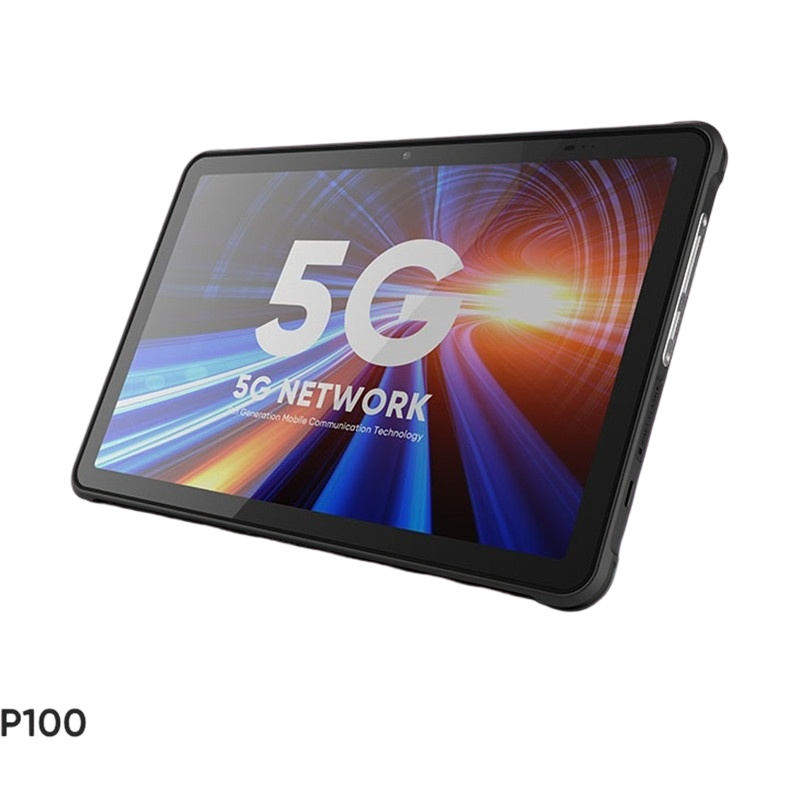
P100 5G Rugged Tablet | Android 14
The P100 is a 10.95-inch Android 14 rugged tablet in two builds: a 13.5mm standard body with NFC, and a Built-in UHF body reading to 3m with an Impinj M750 tag.
View Details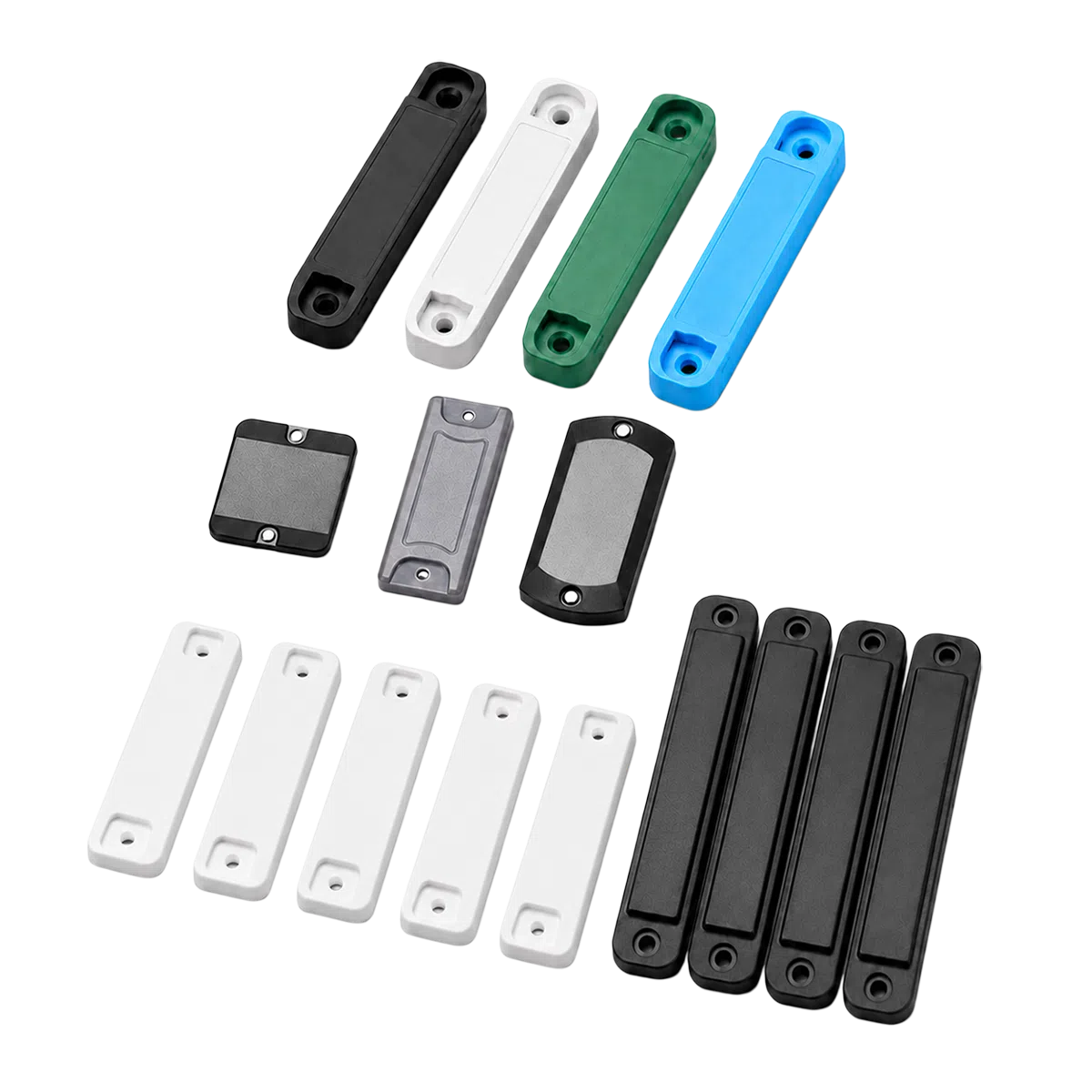
ABS UHF Anti-Metal RFID Tags for Industrial Asset Tracking
Durable on-metal RFID tags from CedaGlo for asset management, warehouse racks, tools, data centers, utilities and equipment tracking.
View Details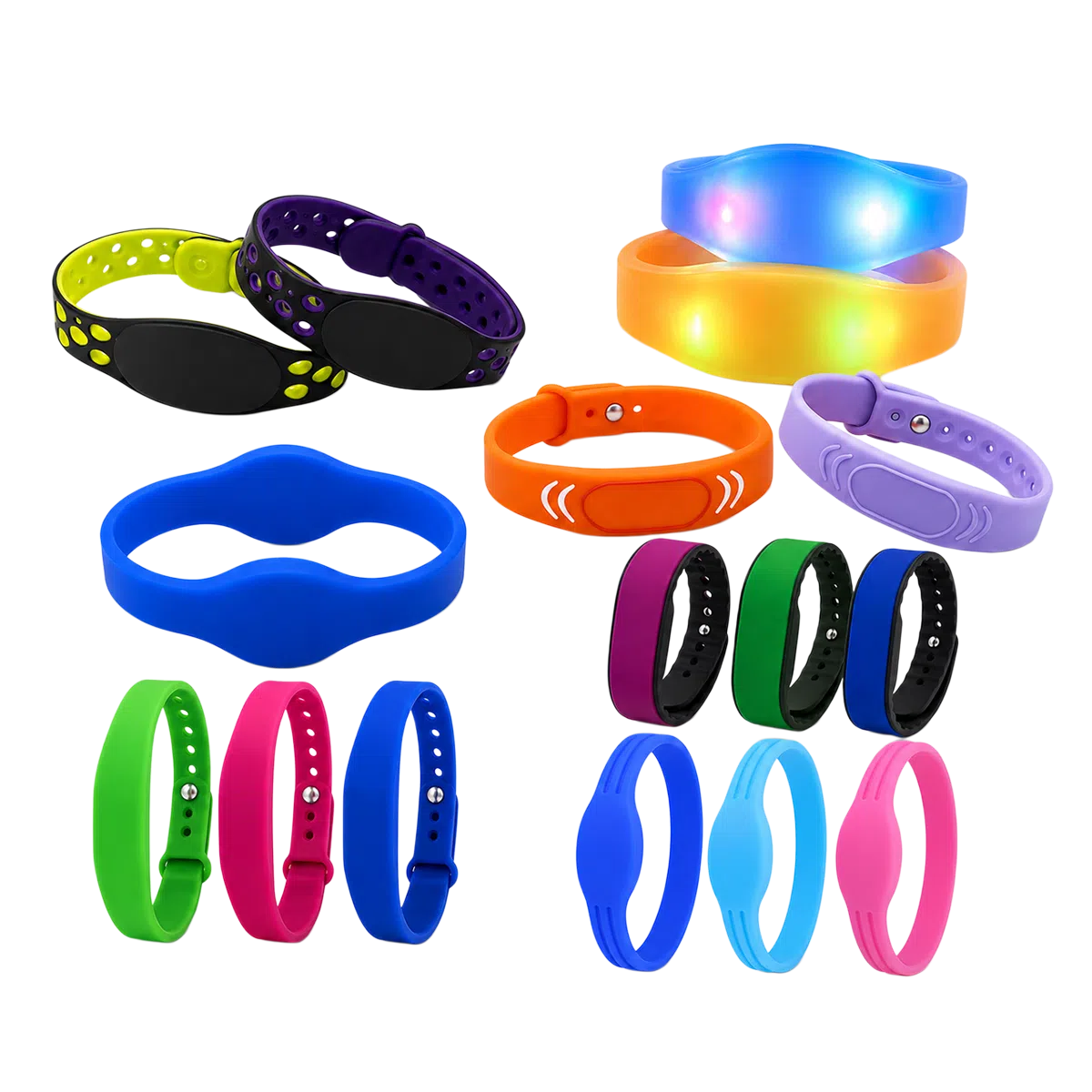
CedaGlo Custom RFID Silicone Wristbands
Reusable custom silicone RFID wristbands with LF, HF and NFC chip options for events, access control, cashless payment and brand promotion.
View Details
Printed RFID Labels | Custom Finished RFID
Custom finished RFID labels from CedaGlo with printable face stock, adhesive backing, barcode, QR code, serial number and UHF/NFC chip.
View DetailsFit the Hardware to the Work
The P80 UHF reads 900+ tags/sec through a circular polarization antenna, on a module built on Impinj E Series chips. Both configurations leave the factory on the same operating system release, so IT certifies one image instead of two. Send us your tag type, your symbologies, and your Wi-Fi security method, and we will match a build.