
One Desktop Reader, Three Ways to Wire It Into the Counter
Reads past 100cm on an Impinj M750 tag, peaks at 250+ tags/sec, and clears 70+ tags in a single 5 second inventory.
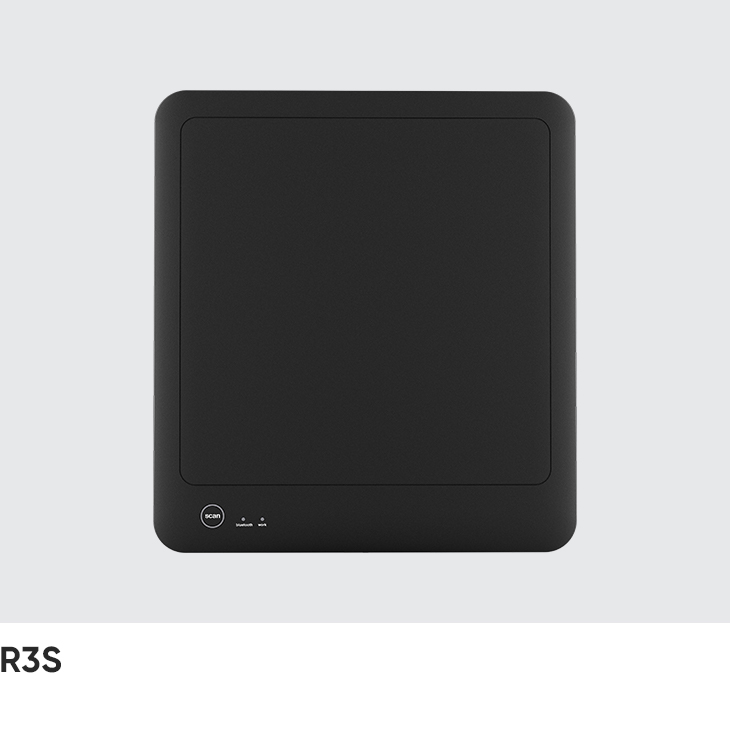
The R3S puts the UHF engine, the near-field antenna, and every host port in one 18mm slab that sits flat on a counter. There is one model, and it takes power from whichever supply the bench can offer: USB through the Type-C port, a DC supply anywhere from +8V to +28V, or a PoE+ switch over the RJ45 port at IEEE 802.3at, 25.5W. The reading side does not change with that choice, since it is an Impinj E Series chip with Gen2X support and output power set anywhere from 1 to 30 in 1dB steps. One SDK covers Windows, Android, and iOS, so the host application does not change either.
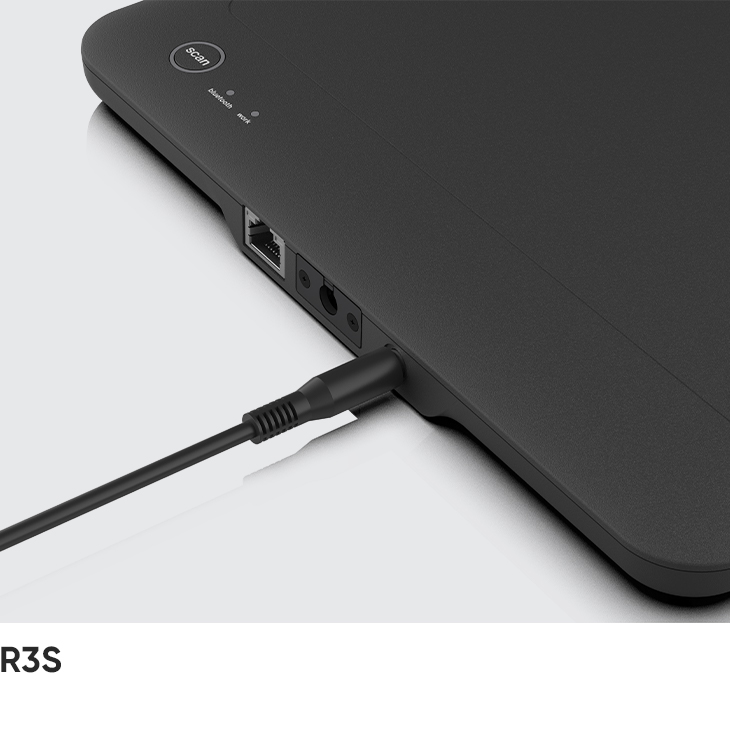
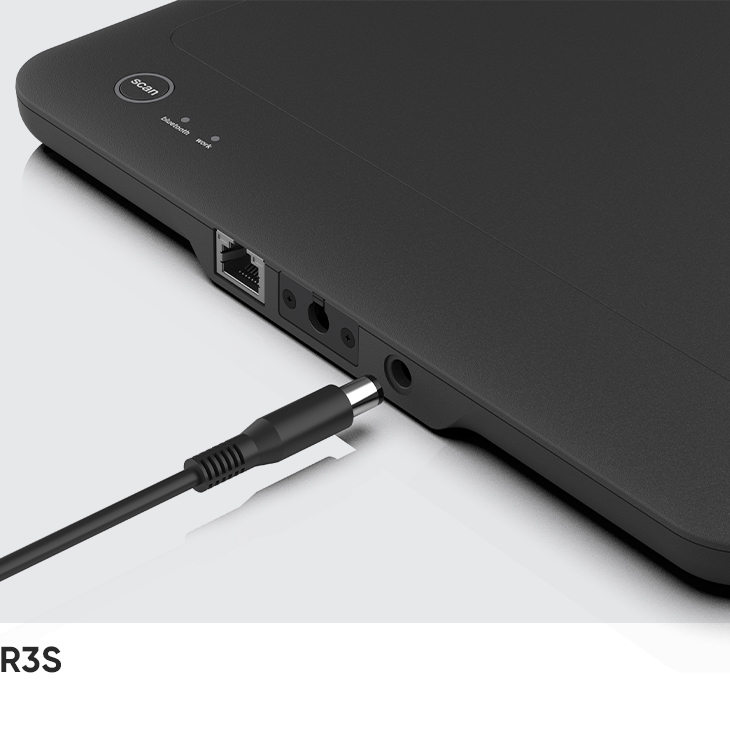
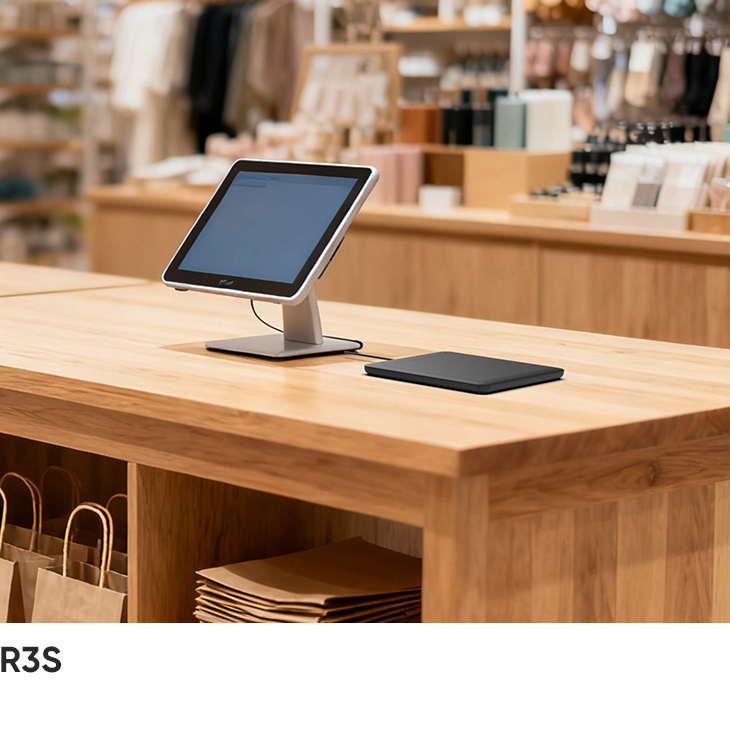
- Impinj E Series ChipUHF RFID engine
- Impinj Gen2XSupported by the engine
- EPC Class 1 Gen 2EPC global air interface
- ISO 18000-63RFID air interface
- Impinj M750Read-range reference tag
- Bluetooth BLE 5.0Low Energy radio link
- USB 2.012Mbit/s transmission
- USB Type-CHost and power connector
- 10 / 100 Base-TEthernet interface
- PoE+ IEEE 802.3at25.5W over Ethernet
- Custom-design BandOne of three UHF bands
- Windows, Android, iOSCovered by the SDK
Overview
The R3S is a desktop UHF reader for the spot where tags come to the device instead of the other way round: a checkout counter, a returns desk, a kiosk that logs high-value items in and out. The housing measures 255mm by 235mm by 18mm and weighs about 650g, so it takes up the footprint of a small mouse pad and stays put once it is placed. A near-field antenna sits under the reading surface and still pulls a tag from more than 100cm away when the tag is an Impinj M750.
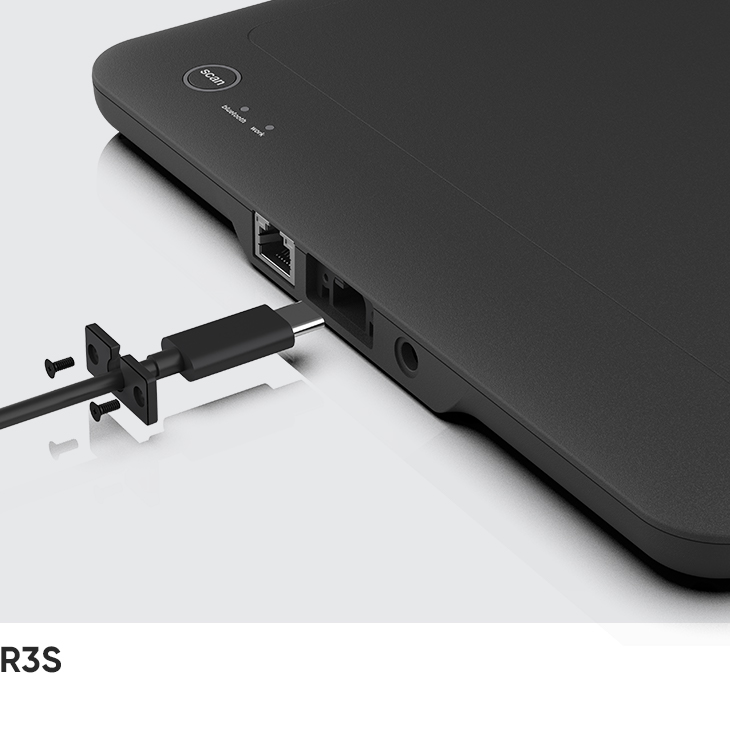
There is one R3S, not a family of them. Every unit carries a USB Type-C port, a DC power port, and an RJ45 port, and the three of them are three ways into the same machine rather than three products. Power arrives from whichever one the site can offer, and the reading side, the housing, and the software are the same in each case. That is what keeps a mixed rollout on one firmware image, one integration, and one spare on the shelf, however each counter happens to be wired.
Reading is handled by an Impinj E Series chip with Gen2X support, working to EPC global Class 1 Gen 2 and ISO 18000-63. Output power is set from 1 to 30 in 1dB steps, so a crowded counter can be turned down until the field stops reaching the next station over. The SDK covers Android, iOS, and Windows. Explore the full range of fixed RFID readers.
Key Features
Ports and Connectivity
- USB Type-C port, 12Mbit/s
- DC power port, +8V to +28V
- RJ45 port, 10 / 100 Base-T
- PoE+, IEEE 802.3at, 25.5W
- Bluetooth BLE 5.0
Build and Environment
- 255mm × 235mm × 18mm, PC
- Approximately 650g / 22.93oz.
- Ingress Protection (IP) 54
- Operating -4°F to 122°F
- ESD ±15kV air, ±8kV contact
UHF Read Performance
- Impinj E Series chip engine
- Output power 1-30, step 1dB
- 250+ tags/sec at the peak
- 70+ tags at once in 5 seconds
- Read range >100cm, M750 tag
Features & Functions at a Glance
Pick a Power Path
| Feature | USB power supply | DC power supply | Power over Ethernet |
|---|---|---|---|
| Best for | A retail checkout counter with a spare USB port on the host | A kiosk with its own DC supply on the bench | A wired station with structured cabling and no outlet |
| How power arrives | The rows below are the only differences between the three | ||
| Power Supply | USB power supply | DC power supply (input voltage DC +8V to +28V) | Power over Ethernet (PoE+, IEEE 802.3at, 25.5W) |
| Port used | 1 × USB Type-C port | 1 × DC power port | 1 × RJ45 port |
| Data on the same cable | USB 2.0 with a transmission rate of 12Mbit/s | — | 10 / 100 Base-T Ethernet / PoE+ support |
| Identical on every unit | One model, one bill of materials, all three ports fitted | ||
| Dimensions | 255mm × 235mm × 18mm / 10.04in × 9.25in × 0.71in | ||
| Weight | Approximately 650g / 22.93oz. | ||
| Material | PC | ||
| Button | 1 × Scan Button | ||
| Buzzer | 1 × Buzzer | ||
| Engine | Based on Impinj E Series chip | ||
| Antenna | Near-Field Antenna | ||
| Max Read Range | >100cm (tag: Impinj M750 tag) | ||
| Bluetooth | BLE 5.0 | ||
| Platform | Common to every unit | ||
| Protocol | EPC global Class 1 Gen 2 / ISO 18000-63 RFID | ||
| Frequency | 865-868MHz / 920-925MHz / 902-928MHz (custom-design for frequency band) | ||
| SDK | Supports Android, iOS, and Windows systems | ||
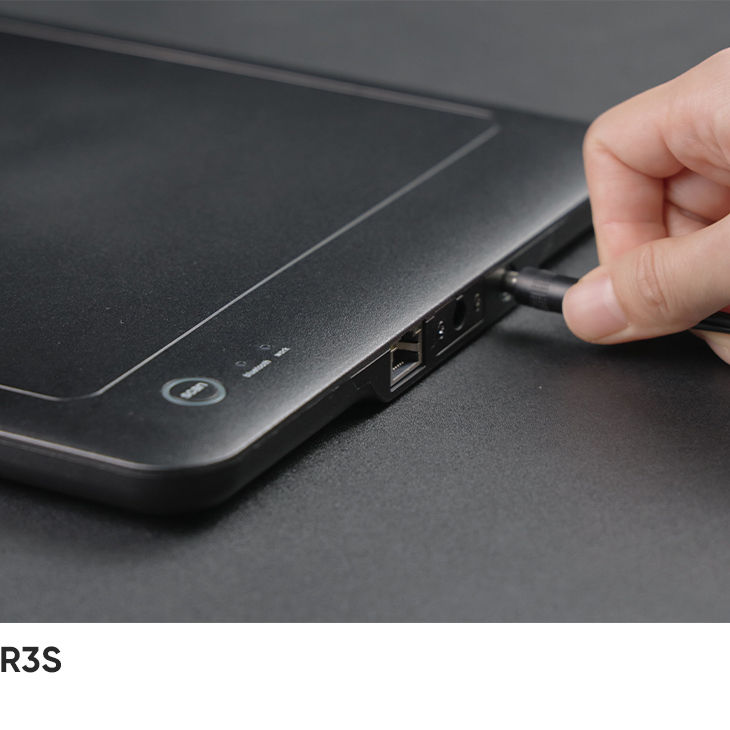
The DC power port carries power only — whichever supply is in use, data still runs over the USB Type-C port or over Bluetooth BLE 5.0, and the RJ45 port carries data whether or not it is also carrying the power.
Every value in this table matches the full Specifications section below.
A Closer Look at the Hardware
One flat reading surfaceThe whole top face is the reading surface, set slightly into a PC housing that measures 255mm × 235mm × 18mm. Nothing stands proud of the top, so a tray or a stack of boxed goods can be set straight down on it.
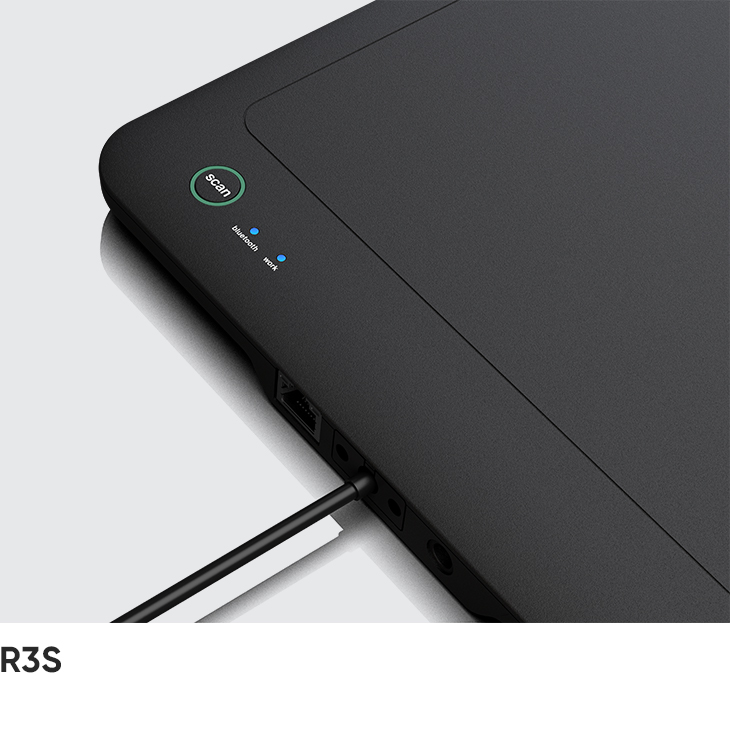
Status you can read standing upThe power indicator is the ring around the inventory button, so the button itself tells you the unit is live. The Bluetooth indicator and the operation indicator sit beside it, and a buzzer covers the moment an operator is looking at the goods instead of the reader.
Every cable leaves from one sideThe RJ45 port, the DC power port, and the USB Type-C port are grouped along a single side of the housing. All three sit below the top face, so cabling runs off the back of the counter rather than across the reading surface.
Specifications
Physical Characteristics
- Dimensions
- 255mm × 235mm × 18mm / 10.04in × 9.25in × 0.71in
- Weight
- Approximately 650g / 22.93oz.
- Material
- PC
- Buzzer
- 1 × Buzzer
- Button
- 1 × Scan Button
- Indicator LED
- 1 × Power indicator (ring around the inventory button)
1 × Bluetooth indicator
1 × Operation indicator
Ethernet indicators: 1 × green LED + 1 × yellow LED (optional) - Port
- 1 × USB Type-C port + 1 × DC power port + 1 × RJ45 port
- Power Supply
- USB power supply
DC power supply (input voltage DC +8V to +28V)
Power over Ethernet (PoE+, IEEE 802.3at, 25.5W)
Communication
- Ethernet interface
- 10 / 100 Base-T Ethernet / PoE+ support
- Bluetooth
- BLE 5.0
- USB Type C
- USB 2.0 with a transmission rate of 12Mbit/s
Developing Environment
- SDK
- Supports Android, iOS, and Windows systems
User Environment
- Operating Temp.
- -4°F to 122°F (-20°C to 50°C)
- Storage Temp.
- -40°F to 158°F (-40°C to 70°C)
- Humidity
- 5%RH - 95%RH non condensing
- Sealing
- Ingress Protection (IP) 54 rating
- Vibration
- YD/T 1539-2019
- ESD
- ±15kV air discharge, ±8kV contact discharge
UHF RFID
- Engine
- Based on Impinj E Series chip
- Frequency
- 865-868MHz / 920-925MHz / 902-928MHz (custom-design for frequency band)
- Impinj Gen2X
- Supported
- Protocol
- EPC global Class 1 Gen 2 / ISO 18000-63 RFID
- Antenna
- Near-Field Antenna
- Output Power
- 1-30, step 1dB
- Fastest Read Rate
- 250+ tags/sec
- Multi-tag Inventory
- Supports reading 70+ RFID tags at once (5 seconds)
- Max Read Range
- >100cm (tag: Impinj M750 tag)
Every row above is transcribed from the R3S configuration sheet. Items not listed there are not offered on this page.
Why Buy the R3S From CedaGlo
Component brands stay named
The engine is an Impinj E Series chip, the range figure is measured on an Impinj M750, and the air interface is published by EPC global and ISO. Every one of those can be checked without coming through us first.
Configured before it ships
The frequency band is set on the production line, not bolted on afterwards. Tell us which band the site runs and how the bench will power the unit, and they land ready to plug in.
Test one on your own counter
We send a single reader to the desk where it would actually live, and you run it with the tags you already buy. A week of real traffic settles what no datasheet can, at the cost of some bench space.
Serviceable for the long run
Spare part supply, repair turnaround, and warranty terms are confirmed in writing with your order rather than promised on a web page. The same document names the person who owns a return, so nobody hunts for it later.
Frequently Asked Questions
How far will the R3S read a tag?
More than 100cm, measured with an Impinj M750 tag. Output power is adjustable from 1 to 30 in 1dB steps, so the field can be pulled back when two stations sit close together. On volume, the reader handles 70+ RFID tags at once in 5 seconds and peaks at 250+ tags/sec.
How should I power the R3S?
Three ways, and every unit supports all three. USB power comes in through the USB Type-C port, which also carries USB 2.0 data at 12Mbit/s. A DC power supply takes an input voltage of DC +8V to +28V. Power over Ethernet runs off a PoE+ switch through the RJ45 port, IEEE 802.3at, 25.5W. Nothing else about the reader changes with the choice.
What RFID hardware is inside the R3S?
The engine is based on an Impinj E Series chip, and Impinj Gen2X is supported. It works to EPC global Class 1 Gen 2 and ISO 18000-63 RFID through a Near-Field Antenna, and the unit carries no external antenna port. The band is set as a custom-design item at order time: 865-868MHz, 920-925MHz, or 902-928MHz.
How long will the R3S stay available and supported?
Availability, spare part supply, and the length of the support window are confirmed in writing with your order. We do not print a lifecycle date on this page, because it moves with the volume and the band you commit to, and a line in your order document is worth more than a number here.
How well does the R3S hold up on a busy counter?
The housing is PC with an Ingress Protection (IP) 54 rating. It operates from minus 20 degrees Celsius to 50 degrees Celsius, stores from minus 40 degrees Celsius to 70 degrees Celsius, and tolerates 5%RH to 95%RH non condensing. ESD is rated at plus or minus 15kV air discharge and plus or minus 8kV contact discharge, with vibration to YD/T 1539-2019.
What happens if a unit needs service after delivery?
Return handling, turnaround time, and the warranty period are confirmed in writing with your order, along with the name of the person who owns the case. When you open one, send the serial number and the symptom, and keep the original packaging if you still have it.
Related Products
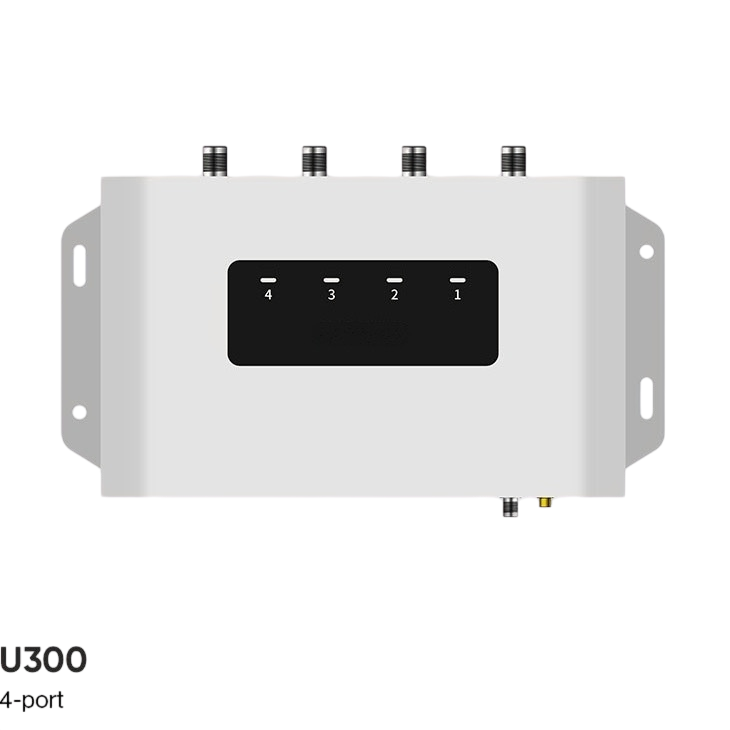
U300 Fixed RFID Reader
Fixed UHF RFID reader on Android 11 with a 2.0GHz quad-core CPU, 1300+ tags/sec read rate and a choice of 4 or 8 RP-TNC antenna ports.
View Details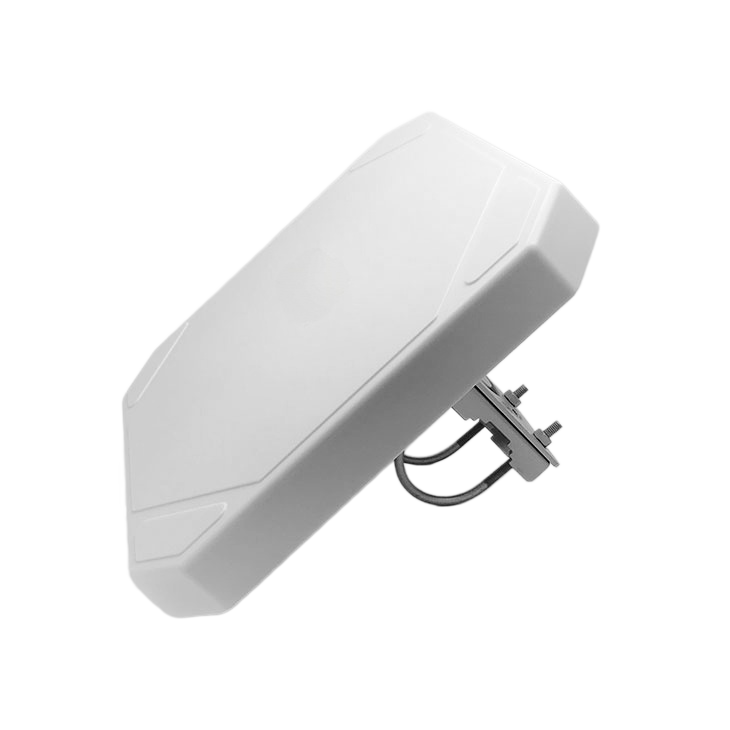
9dBi UHF RFID Panel Antenna
9dBi RHCP panel antenna, 60 by 55 degree 3dB beam-width, N-Type Female at 50 ohms, IP67 sealed, 255 by 255 by 30 mm.
View Details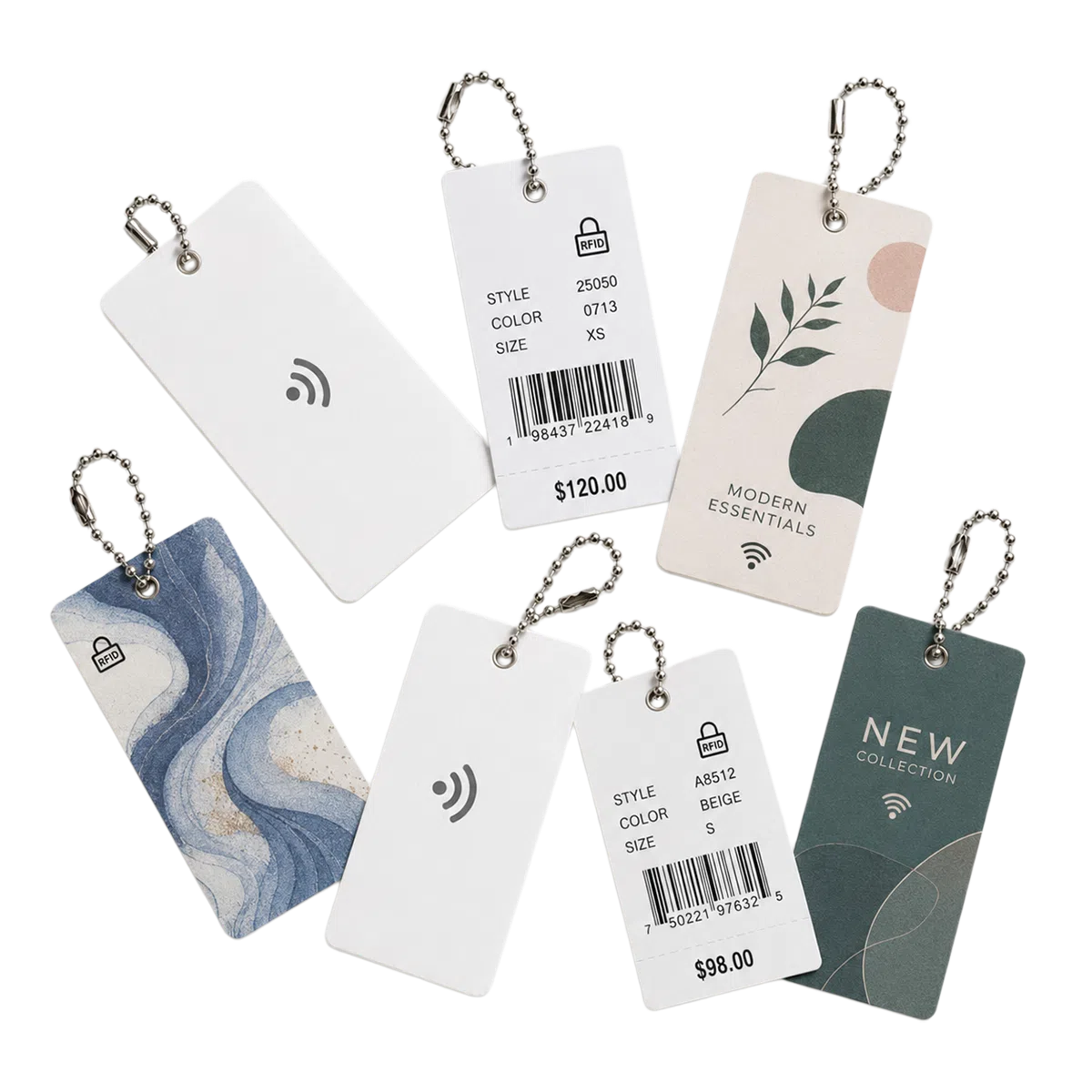
RFID Apparel Hang Tags for Retail Inventory & NFC Engagement
Custom RFID apparel hang tags from CedaGlo with UHF, NFC, barcode, QR code, artwork printing, EPC encoding and packaging options.
View Details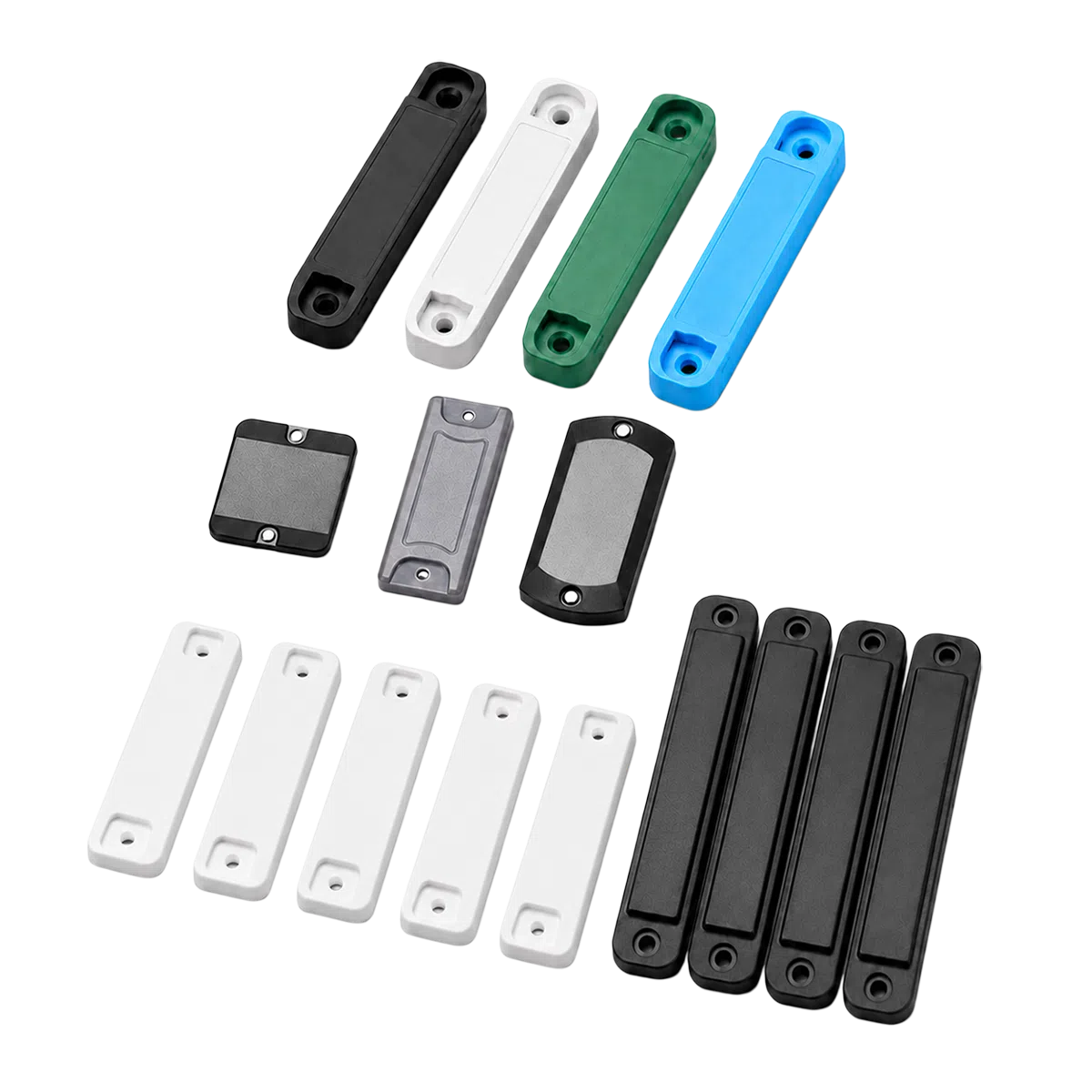
ABS UHF Anti-Metal RFID Tags for Industrial Asset Tracking
Durable on-metal RFID tags from CedaGlo for asset management, warehouse racks, tools, data centers, utilities and equipment tracking.
View DetailsTell Us How the Counter Is Wired
Every R3S runs the same Impinj E Series engine and the same 1 to 30 output power range, whether it draws from USB, a DC supply, or a PoE+ switch. A mixed rollout of tills and kiosks therefore stays on one software image and one spare. Send your tag model, host operating system, and frequency band.